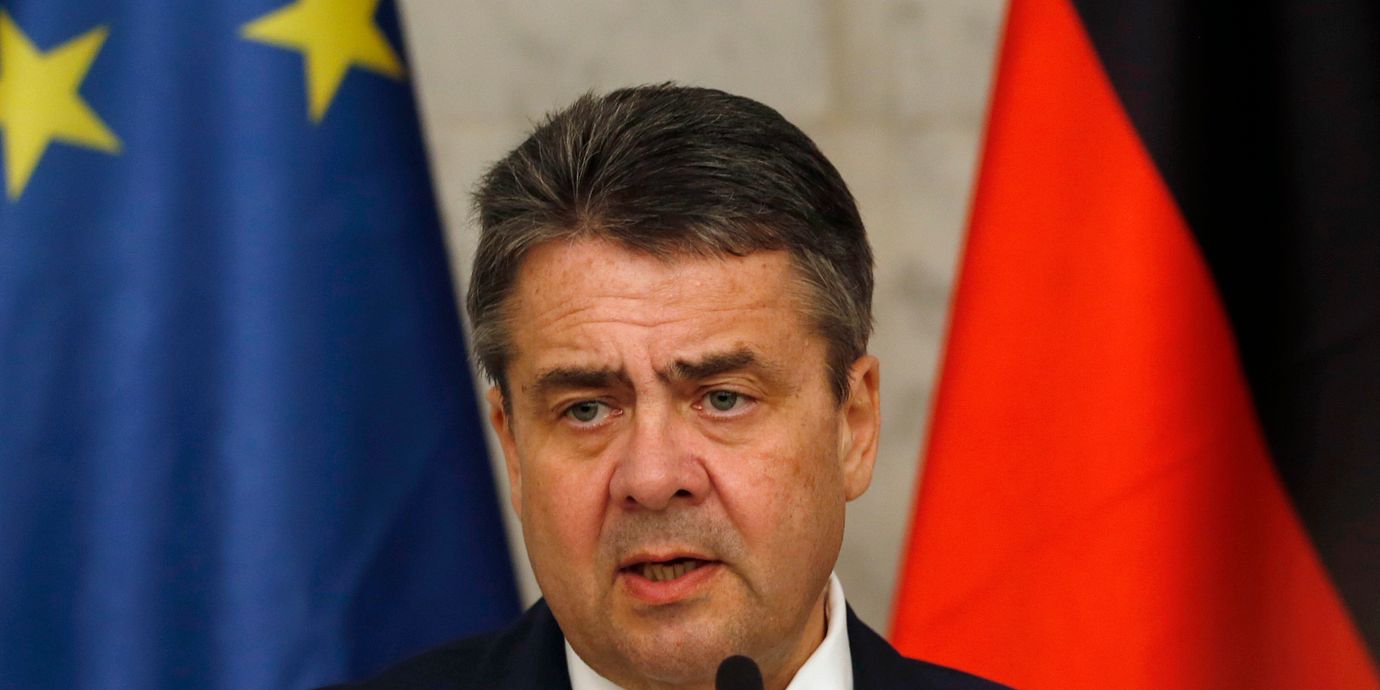
Tyskland redo att stödja serbisk EU-kandidatur
Den tyske utrikesministern Sigmar Gabriel sa efter ett möte med Serbiens blivande president att Tyskland är redo att stödja landets kandidatur till att gå med i EU. Serbien är, enligt Gabriel, en stabilitetsfaktor på västra Balkan.
Stödet kommer dock med några brasklappar, skriver Reuters. Landet behöver genomföra en rad reformer och bättra på relationen till Kosovo som tidigare var en serbisk provins.
bakgrund
Serbien
Wikipedia (en)
Serbia (/ˈsɜːrbiə/, Serbian: Србија/Srbija, IPA: [sř̩bija]), officially the Republic of Serbia (Serbian: Република Србија/Republika Srbija), is a sovereign state situated at the crossroads of Central and Southeast Europe, covering the southern part of the Pannonian Plain and the central Balkans. Relative to its small territory, it is a diverse country distinguished by a transitional character, situated along cultural, geographic, climatic and other boundaries. Serbia is landlocked and borders Hungary to the north; Romania and Bulgaria to the east; Macedonia to the south; and Croatia, Bosnia and Herzegovina, and Montenegro to the southwest; it also claims a border with Albania through the disputed territory of Kosovo. Serbia numbers around 7 million residents, and its capital, Belgrade, ranks among the largest cities in Southeast Europe.
Following the Slavic migrations to the Balkans from the 6th century onwards, Serbs established several states in the early Middle Ages. The Serbian Kingdom obtained recognition by Rome and the Byzantine Empire in 1217; it reached its peak in 1346 as a relatively short-lived Serbian Empire. By the mid-16th century, the entire modern-day Serbia was annexed by the Ottomans, at times interrupted by the Habsburg Empire, which started expanding towards Central Serbia from the end of the 17th century, while maintaining a foothold in modern-day Vojvodina. In the early 19th century, the Serbian Revolution established the nation-state as the region's first constitutional monarchy, which subsequently expanded its territory. Following disastrous casualties in World War I, and the subsequent unification of the former Habsburg crownland of Vojvodina (and other territories) with Serbia, the country co-founded Yugoslavia with other South Slavic peoples, which would exist in various political formations until the Yugoslav Wars of the 1990s. During the breakup of Yugoslavia, Serbia formed a union with Montenegro which dissolved peacefully in 2006, when Serbia reestablished its independence. In 2008 the parliament of the province of Kosovo unilaterally declared independence, with mixed responses from the international community.
Serbia is a member of numerous organizations such as the UN, CoE, OSCE, PfP, BSEC, and CEFTA. An EU membership candidate since 2012, Serbia has been negotiating its EU accession since January 2014. The country is acceding to the WTO and is a militarily neutral state. Serbia is an upper-middle income economy with dominant service sector, followed by the industrial sector and agriculture. The country ranks high on the Social Progress Index (47th) as well as the Global Peace Index (48th), relatively high on the Human Development Index (66th), and is an economically moderately free country.
Omni är politiskt obundna och oberoende. Vi strävar efter att ge fler perspektiv på nyheterna. Har du frågor eller synpunkter kring vår rapportering? Kontakta redaktionen