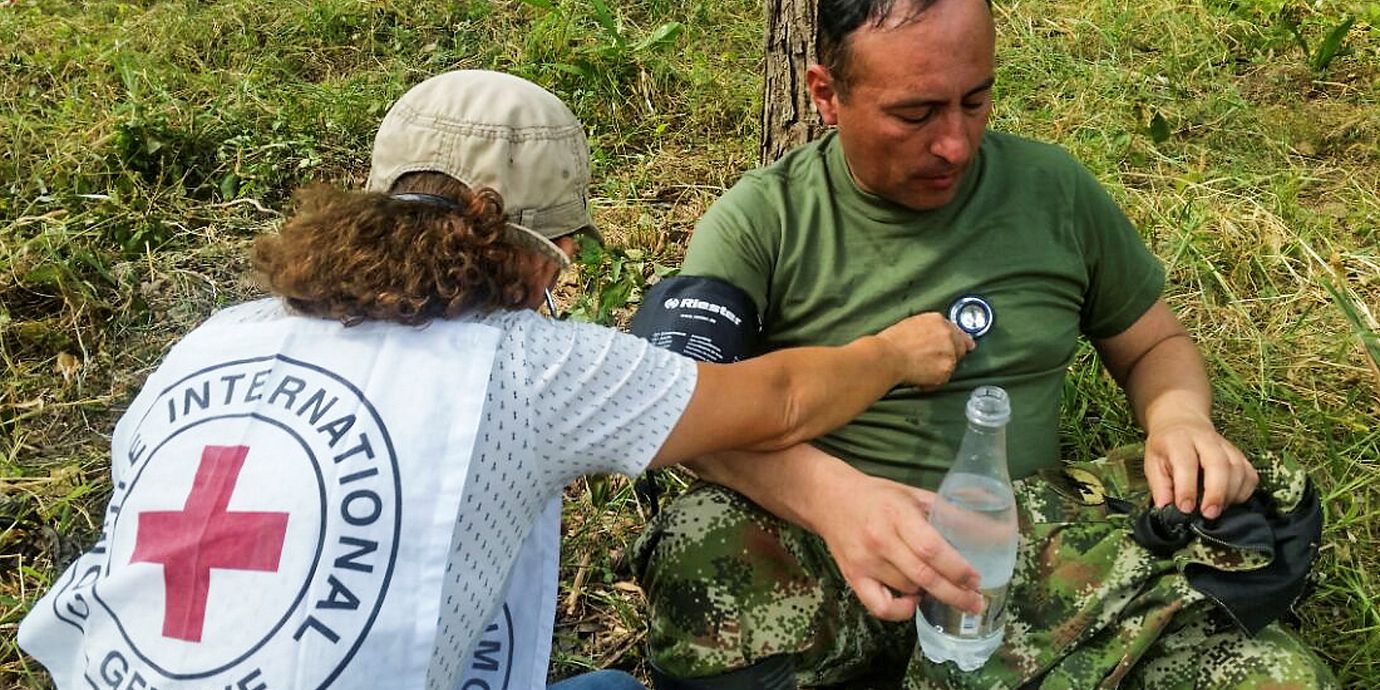
Gerilla friger soldatfånge inför fredssamtal
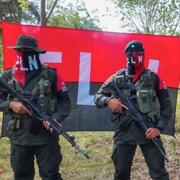
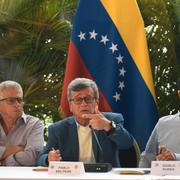
Colombias sista aktiva rebellgrupp ELN har frigett en kidnappad soldat, dagen före fredssamtalen med regeringen, skriver AFP.
– Vi är säkra på att den här gesten kommer att förstärka förtroendet mellan den colombianska regeringen och ELN, säger chefen för Röda korset i landet i ett uttalande.
Konflikten, där även Farcgerillan deltagit, har kostat över 260 000 människor livet.
bakgrund
Konflikten i Colombia
Wikipedia (en)
The Colombian Conflict began in the mid-1960s and is a low-intensity asymmetric war between Colombian governments, paramilitary groups, crime syndicates, and left-wing guerrillas such as the Revolutionary Armed Forces of Colombia (FARC), and the National Liberation Army (ELN), fighting each other to increase their influence in Colombian territory.
It is historically rooted in the conflict known as La Violencia, which was triggered by the 1948 assassination of populist political leader Jorge Eliécer Gaitán, and in the aftermath of United States-backed strong anti-communist repression in rural Colombia in the 1960s that led liberal and communist militants to re-organize into FARC.
The reasons for fighting vary from group to group. The FARC and other guerrilla movements claim to be fighting for the rights of the poor in Colombia to protect them from government violence and to provide social justice through communism. The Colombian government claims to be fighting for order and stability, and seeking to protect the rights and interests of its citizens. The paramilitary groups claim to be reacting to perceived threats by guerrilla movements. Both guerrilla and paramilitary groups have been accused of engaging in drug trafficking and terrorism. All of the parties engaged in the conflict have been criticized for numerous human rights violations.
According to a study by Colombia's National Centre for Historical Memory, 220,000 people have died in the conflict between 1958 and 2013, most of them civilians (177,307 civilians and 40,787 fighters) and more than five million civilians were forced from their homes between 1985 – 2012, generating the world's second largest population of internally displaced persons (IDPs). 16.9% of the population in Colombia has been a direct victim of the war. 2.3 million children have been displaced from their homes, and 45,000 children killed, according to national figures cited by Unicef. In total, one in three of the 7.6 million registered victims of the conflict are children, and since 1985, 8,000 minors have disappeared. Since the peace talks with the FARC began four years ago, some 1,000 children have been forcibly recruited by some of the myriad armed groups in the country, 75 have been killed, and 65 schools have been damaged by fighting.
Colombian President Juan Manuel Santos said that a peace deal with the FARC by 20 July 2016 would end the conflict with this organization if the talks which started in 2012 were successfully concluded. On 23 June 2016, the Colombian government and the FARC rebels signed a historic ceasefire deal, bringing them closer to ending more than five decades of conflict. However, on October 2, 2016, a majority of the Colombian public rejected the deal. In October 2016, Juan Manuel Santos was awarded the Nobel Peace Prize for his efforts to bring the country's more than 50-year-long civil war to an end. The Colombian government and the FARC on November 24 signed a revised peace deal and the revised agreement was be submitted to Congress for approval. The House of Representatives unanimously approved the plan on November 30, a day after the Senate also gave its backing.
Omni är politiskt obundna och oberoende. Vi strävar efter att ge fler perspektiv på nyheterna. Har du frågor eller synpunkter kring vår rapportering? Kontakta redaktionen