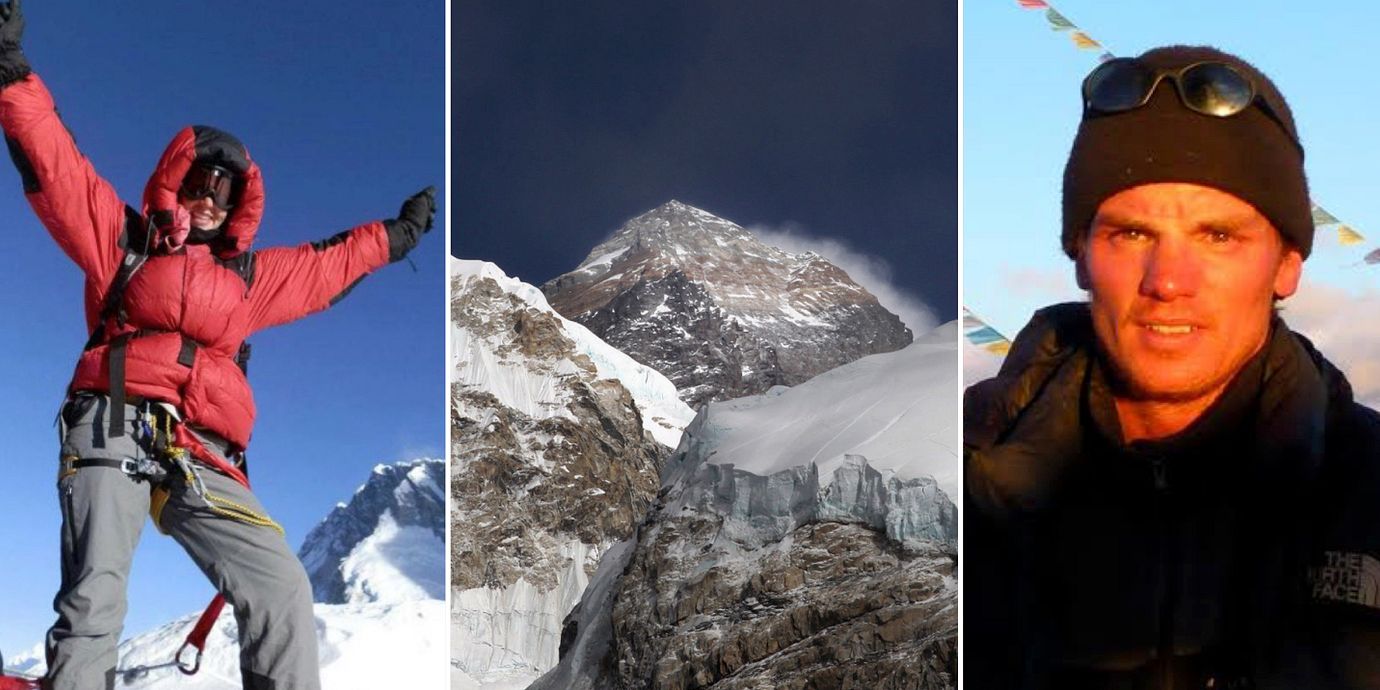
Man och kvinna döda på Mount Everest
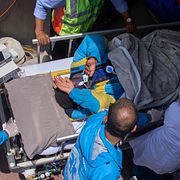
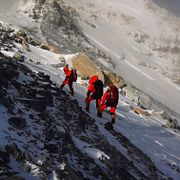
En 36-årig bergsklättrare har dött på vägen ned från Mount Everests topp, skriver AP. Eric Arnold från Nederländerna dog av höjdsjuka under natten till lördagen. Han var årets första dödsfall på världens högsta berg.
Under dagen har också 34-åriga Maria Strydom från Australien dött, skriver Aftonbladet. Hon drabbades först av snöblindhet och fick senare en stroke.
bakgrund
Lista över personer som dött när de bestigit Everest
Wikipedia (en)
Mount Everest, at 8,848 metres (29,029 ft) is the world's highest mountain and a particularly desirable peak for mountaineers. More than 250 people have died trying to climb it.
Most deaths have been attributed to avalanche, injury from fall or ice collapse, exposure or health problems related to conditions on the mountain. Not all bodies have been located, so details on those fatalities are not available. Most bodies still remain on the mountain, even in cases of easy recovery.
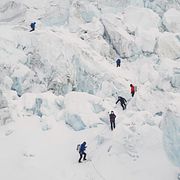
The most dangerous steps on Everest are between 5,400 to 6,400 metres (17,700–21,000 ft). Various steps are actually being avoided by many climbers because hired Nepalese Sherpas undertake them by installing fixed ropes, carrying gear, and breaking tracks on the route to the top.
The upper reaches of the mountain are in the death zone. The death zone is a mountaineering term for altitudes above a certain point – around 8,000 m (26,000 ft), or less than 356 millibars (5.16 psi) of atmospheric pressure – where the oxygen level is not sufficient to sustain human life. Many deaths in high-altitude mountaineering have been caused by the effects of the death zone, either directly (loss of vital functions) or indirectly (unwise decisions made under stress or physical weakening leading to accidents). In the death zone, the human body cannot acclimatize, as it uses oxygen faster than it can be replenished. An extended stay in the zone without supplementary oxygen will result in deterioration of bodily functions, loss of consciousness and, ultimately, death.
Mount Everest, Nepal

Omni är politiskt obundna och oberoende. Vi strävar efter att ge fler perspektiv på nyheterna. Har du frågor eller synpunkter kring vår rapportering? Kontakta redaktionen