Svensk dopfunt ska visa hur brittiskt mord rörde Europa
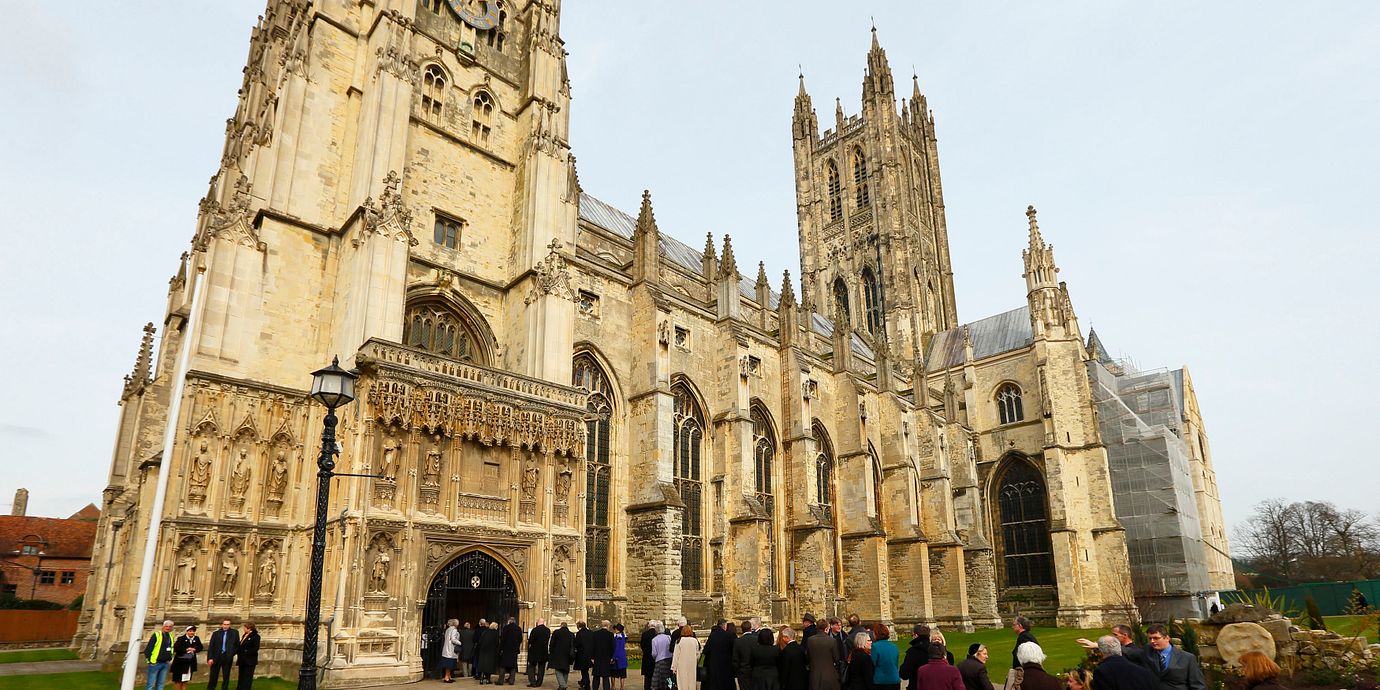
Mordet på kyrkomannen Thomas Becket inne i katedralen i Canterbury är temat för en ny utställning på British Museum i London, rapporterar The Guardian.
Becket mördades år 1170 på uppdrag av kung Henrik II och mordet fick genomslag i hela Europa.
– Det är ingen överdrift att säga att det var århundradets brott, säger Naomi Speakman, en av dem som skapat utställningen, till The Guardian.
För att visa hur historien fick genomslag även utanför de brittiska öarna har British Museum lånat in ett antal föremål, och ett av de mest framträdande kommer från Sverige.
Det är 1100-talsdopfunten i Lyngsjö kyrka, söder om Kristianstad, som i flera scener visar mordet på Becket, som nu visas i London.
bakgrund
Thomas Becket
Wikipedia (sv)
Thomas Becket, eller Thomas à Becket, född 21 december 1118 i Cheapside, London, död 29 december 1170 i katedralen i Canterbury, Kent, var en engelsk kyrkoman och ärkebiskop av Canterbury från 1162 till 1170. Han vördas som helgon inom Romersk-katolska kyrkan med minnesdag 29 december.
bakgrund
British Museum
Wikipedia (en)
The British Museum, in the Bloomsbury area of London, England, is a public institution dedicated to human history, art and culture. Its permanent collection of some eight million works is among the largest and most comprehensive in existence, having been widely collected during the era of the British Empire. It documents the story of human culture from its beginnings to the present. It was the first public national museum in the world. The Museum was established in 1753, largely based on the collections of the Irish physician and scientist Sir Hans Sloane. It first opened to the public in 1759, in Montagu House, on the site of the current building. Its expansion over the following 250 years was largely a result of expanding British colonisation and has resulted in the creation of several branch institutions, the first being the Natural History Museum in 1881.
In 1973, the British Library Act 1972 detached the library department from the British Museum, but it continued to host the now separated British Library in the same Reading Room and building as the museum until 1997. The museum is a non-departmental public body sponsored by the Department for Digital, Culture, Media and Sport, and as with all national museums in the UK it charges no admission fee, except for loan exhibitions.Its ownership of some of its most famous objects originating in other countries is disputed and remains the subject of international controversy, most notably in the case of the Elgin Marbles of Greece, and the Rosetta Stone of Egypt.
Omni är politiskt obundna och oberoende. Vi strävar efter att ge fler perspektiv på nyheterna. Har du frågor eller synpunkter kring vår rapportering? Kontakta redaktionen