Venezuela anklagar USA för att vilja störta Maduro
Venezuela anklagar USA för att ha planerat att störta president Nicolas Maduro som fört landet nära ruinens rand, skriver New York Times.
Enligt uppgifter till tidningen har medlemmar i Trumpadministrationen haft hemliga möten med militärer i Venezuela för att planera en statskupp. Mötena, som pågått under de senaste året, utmynnade i att USA valde att inte stödja kuppmakarna.
”Vi fördömer inför resten av världen USA:s planer på att involveras i militära konspirationer mot Venezuela”, skriver landets utrikesminister Jorge Arreaza på Twitter och tillägger att artikeln har satt ”nytt ljus på nya och grova bevis” på en sådan konspiration.
bakgrund
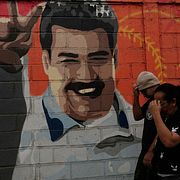
Nicolás Maduro
Wikipedia (en)
Nicolás Maduro Moros (Spanish: [nikoˈlas maˈðuɾo ˈmoɾos]; born 23 November 1962) is a Venezuelan politician who has served as the 63rd President of Venezuela since 2013 and previously served under President Hugo Chávez as Minister of Foreign Affairs from 2006 to 2013 and as Vice President of Venezuela from 2012 to 2013.
Starting off as a bus driver, Maduro rose to become a trade union leader before being elected to the National Assembly in 2000. He was appointed to a number of positions within the Venezuelan government under Chávez, ultimately being made Foreign Minister in 2006. He was described during this time as the "most capable administrator and politician of Chávez's inner circle". After Chávez's death was announced on 5 March 2013, Maduro assumed the powers and responsibilities of the President. A special election was held on 14 April 2013 to elect a new President, and Maduro won with 50.62% of the votes as the candidate of the United Socialist Party of Venezuela. He was formally inaugurated on 19 April.Maduro has ruled Venezuela by decree since 19 November 2013. His presidency has coincided with a decline in Venezuela's socioeconomic status, with crime, inflation, poverty and hunger increasing; analysts have attributed Venezuela's decline to both Chávez and Maduro's economic policies, while Maduro has blamed speculation and an "economic war" waged by his political opponents. Shortages in Venezuela and decreased living standards resulted in protests beginning in 2014 that escalated into daily marches nationwide, resulting in 43 deaths and a decrease in Maduro's popularity. Maduro's loss of popularity saw the election of an opposition-led National Assembly in 2015 and a movement toward recalling Maduro in 2016, though Maduro still maintains power through loyal political bodies, such as the Supreme Court, National Electoral Council and military.After entering a constitutional crisis when the Supreme Tribunal removed power from the National Assembly, months of protests occurred in 2017, leading Maduro to call for a rewrite of the constitution. The Constituent Assembly of Venezuela was elected into office 30 July 2017, with the majority of its members being pro-Maduro. On 20 May 2018, Maduro was reelected into the presidency in what the Atlantic Council and Financial Times described as a show election which had the lowest voter turnout in Venezuela's modern history.Like Chávez, Maduro has been accused of authoritarian leadership, with mainstream media describing him as a dictator, especially following the suspension of the recall movement that was directed towards him. Following the 2017 Venezuelan Constituent Assembly election, the United States sanctioned Maduro, freezing his U.S. assets and prohibited him from entering the country, stating that he was a "dictator". The majority of nations in the Americas and the Western world also refused to recognize the Constituent Assembly and the validity of his 2018 reelection, initiating their own sanctions against him and his administration as well.
Omni är politiskt obundna och oberoende. Vi strävar efter att ge fler perspektiv på nyheterna. Har du frågor eller synpunkter kring vår rapportering? Kontakta redaktionen