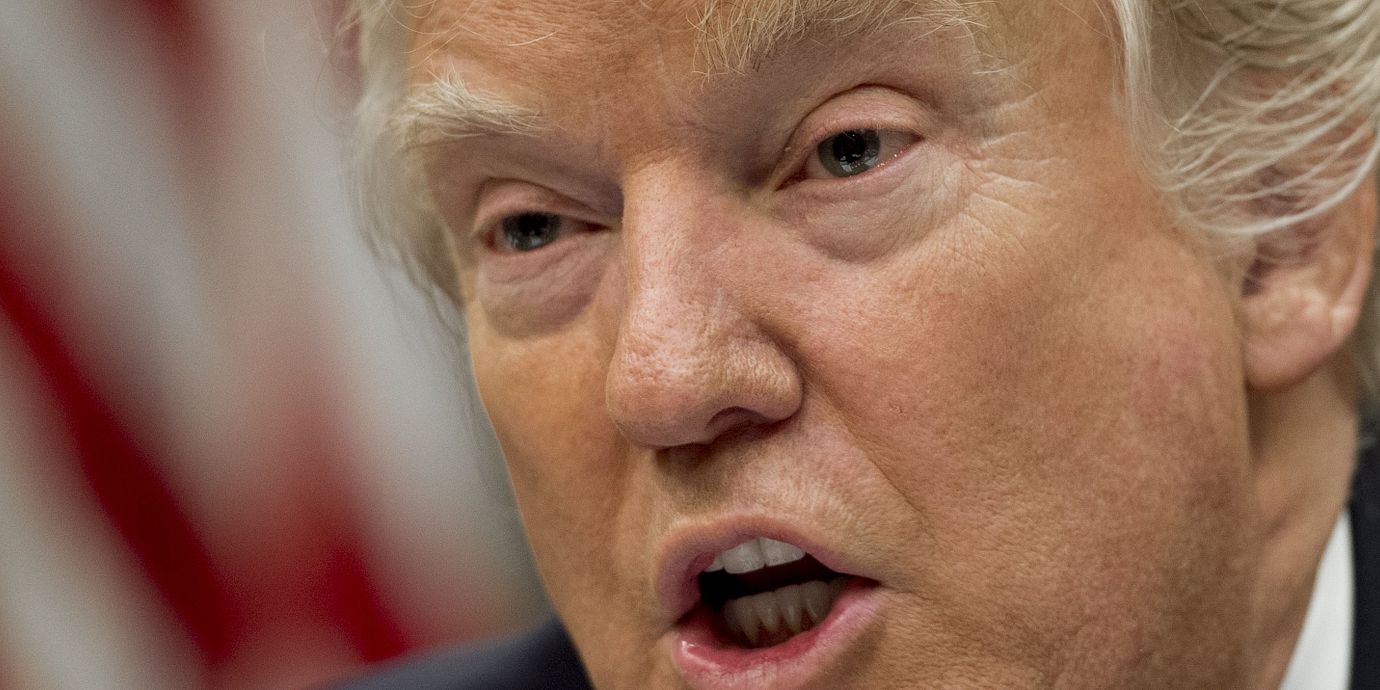
Arkivbild. (SAUL LOEB / AFP)

Analyser: Trump måste få siffrorna att gå ihop

Efter att Republikanerna tvingades dra tillbaka sin vårdreform har Donald Trump signalerat att han kan tänka sig att lägga förslaget på is för att i stället fokusera på skatterna, skriver Financial Times Sam Fleming i en analys. Partiet vill lätta på skattetrycket för både personer och företag i ett omvälvande reformprogram som man hoppas ska bidra till att stärka tillväxten i USA.

Men de politiska motsättningarna är stora, skriver Fleming. ”Republikanerna kan till slut tvingas nöja sig med en mindre ambitiös skattereform av rädsla för att inte kunna visa upp något av betydelse i kongressvalet 2018”.

Reuters kolumnist Gina Cohn konstaterar att det är en komplex uppgift som Trump är på väg att åta sig – en uppgift som ingen lyckats lösa på över tre decennier. Ett av Trumps problem är en regel, Byrd-regeln, som står i vägen för förslag som ger ökat budgetunderskott på mer än tio års sikt.

”Trumps kampanjlöften skulle minska statskassan med uppemot 4 000 miljarder dollar på 10 år”, skriver Cohn och konstaterar att det hade varit lättare för Trump att nå upp till kravet om Obamacare och dess subventioner lagts åt sidan. ”Nu sätts ribban för att nå upp till Byrd-regeln ännu högre. Trump må förakta processen i Washington men han kommer att behöva få siffrorna att gå ihop.”


bakgrund
 
Byrd-regeln
Wikipedia (en)
The Byrd Rule is a United States Senate rule that amends the Congressional Budget Act of 1974 to allow Senators during the Reconciliation Process to block legislation if it possibly would increase significantly the federal deficit beyond a ten-year term or is otherwise an "extraneous matter" as set forth in the Budget Act. It is named after West Virginia Senator Robert Byrd. Reconciliation generally involves legislation that changes the Federal budget deficit (or conceivably, the surplus). The "Byrd Rule" (2 U.S.C. § 644) was adopted in 1985 and amended in 1990 to outline which provisions reconciliation can and cannot be used for. The Byrd Rule defines a provision to be "extraneous" and therefore ineligible for reconciliation in six cases: if it does not produce a change in outlays or revenues; if it produces an outlay increase or revenue decrease when the instructed committee is not in compliance with its instructions; if it is outside the jurisdiction of the committee that submitted the title or provision for inclusion in the reconciliation measure; if it produces a change in outlays or revenues which is merely incidental to the non-budgetary components of the provision; if it would increase the deficit for a fiscal year beyond those covered by the reconciliation measure, though the provisions in question may receive an exception if they in total in a Title of the measure net to a reduction in the deficit; and if it recommends changes in Social Security. Any senator may raise a procedural objection to a provision believed to be extraneous, which will then be ruled on by the Presiding Officer of the United States Senate, customarily on the advice of the Parliamentarian of the United States Senate. A vote of 60 senators is required to overturn the ruling. The Presiding Officer need not necessarily follow the advice of the Parliamentarian, and the Parliamentarian can be replaced by the Senate Majority Leader. However, this has not been done since 1975.
Omni är politiskt obundna och oberoende. Vi strävar efter att ge fler perspektiv på nyheterna. Har du frågor eller synpunkter kring vår rapportering? Kontakta redaktionen