Statoil säljer oljefält i USA för 3,3 miljarder
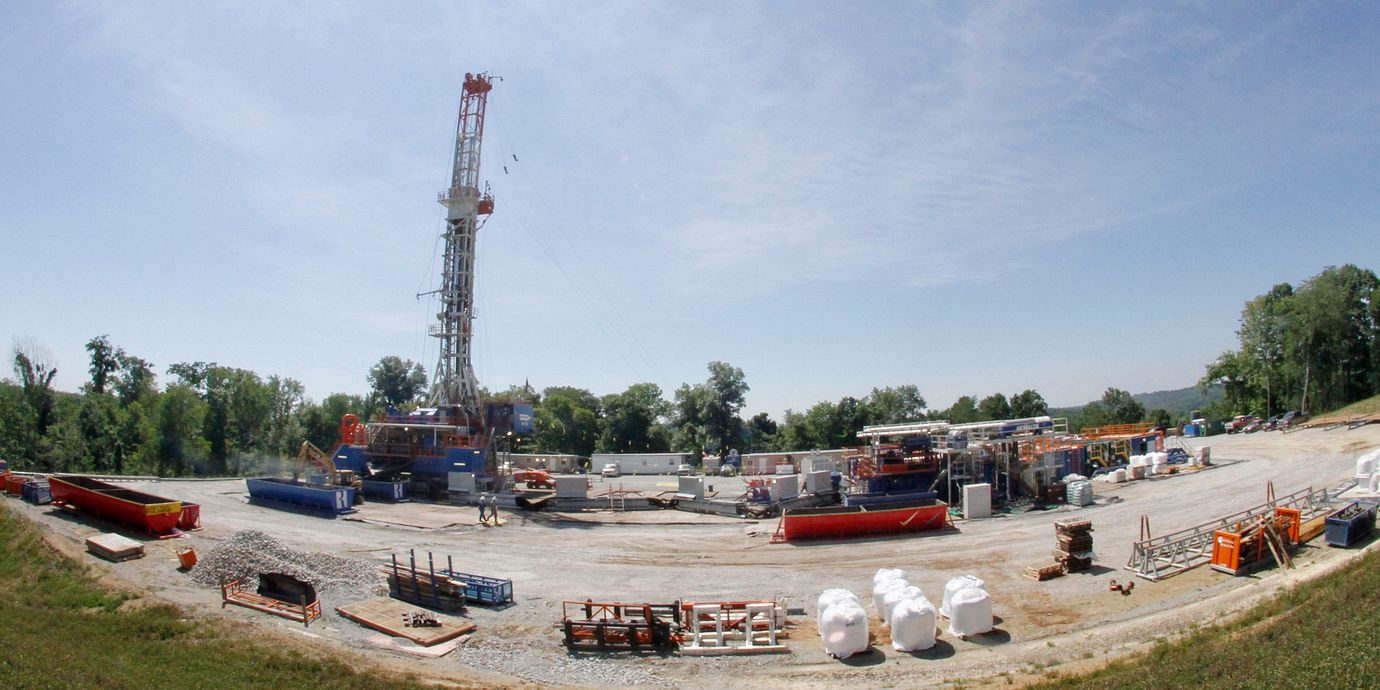
Norska oljejätten Statoil säljer sin ägarandel i oljefältet Marcellus i West Virgina, enligt ett pressmeddelande från företaget.
Priset ligger på 407 miljoner dollar, motsvarande nästan 3,3 miljarder kronor. Köpare är energibolaget EQT Corporation.
bakgrund
Marcellusfältet
Wikipedia (en)
The Marcellus natural gas trend is a large and prolific area of shale gas extraction from the Marcellus Formation of Devonian age in the eastern United States. The trend encompasses 104,000 square miles and stretches across Pennsylvania and West Virginia, and into southeast Ohio and upstate New York. It is the largest source of natural gas in the United States, and production was still growing rapidly in 2013. The natural gas is trapped in low-permeability shale, and requires the well completion method of hydraulic fracturing to allow the gas to flow to the well bore. The surge in drilling activity in the Marcellus Shale since 2008 has generated both economic benefits and considerable controversy.
Although before 2008 the Marcellus Shale was considered to have inconsequential natural gas potential, it is now believed to hold the largest volume of recoverable natural gas resource in the United States. In 2012, it was estimated to have 141 trillion cubic feet of technically recoverable gas by the US Energy Information Administration, and 88 trillion cubic feet by the US Geological Survey. In September 2012, the Marcellus Shale overtook the Haynesville Shale of northwest Louisiana as the leading producer of both shale gas and overall natural gas in the United States. In February 2014, Marcellus gas wells produced 14.0 billion cubic feet per day, a 42 percent increase over the year previous, and comprising 21 percent of all the dry gas produced that month in the United States.
The impervious limestone layers of the Onondaga directly below the Marcellus, and the Tully Limestone at the top of the Hamilton Group, have trapped valuable natural gas reserves in this formation. The gas is produced by thermogenic decomposition of organic materials in the sediments under the high temperature and pressure generated after the formation was buried deep below the surface of the earth. The rock holds most of the gas in the pore spaces of the shale, with vertical fractures or joints providing additional storage as well as pathways for the gas to flow; gas is also adsorbed on mineral grains,
and the carbon in the shale.
Omni är politiskt obundna och oberoende. Vi strävar efter att ge fler perspektiv på nyheterna. Har du frågor eller synpunkter kring vår rapportering? Kontakta redaktionen