bakgrund
Navier–Stokes-ekvationen
Wikipedia (en)
The Navier–Stokes equations ( nav-YAY STOHKS) describe the motion of viscous fluids. This system of partial differential equations was named after Claude-Louis Navier and George Gabriel Stokes, who developed them over a few decades of progressive work, from 1822 (Navier) to 1842–1850 (Stokes). Siméon Denis Poisson independently achieved the same results.
The Navier–Stokes equations mathematically express momentum balance for Newtonian fluids and make use of the conservation of mass. They are sometimes accompanied by an equation of state relating pressure, temperature and density. They arise from applying Newton's second law to fluid motion, together with the assumption that the stress in the fluid is the sum of a diffusing viscous term (proportional to the gradient of velocity) and a pressure term—hence describing viscous flow. The Navier–Stokes equations generalize the Euler equations in that the latter model only considers inviscid flow.
The Navier–Stokes equations are of great scientific and engineering interest because they may be used to model a wide variety of scenarios. In their full or simplified forms, they can assist in the design of aircraft and cars, the study of blood flow, the design of power stations, the analysis of pollution, and many other problems. Coupled with Maxwell's equations, they comprise the fundamentals of magnetohydrodynamics.
The Navier–Stokes equations are also of great interest to pure mathematics. The Navier–Stokes existence and smoothness problem concerns whether they have smooth (meaning infinitely differentiable) or bounded solutions in three dimensions, as opposed to a breakdown of solutions. This is one of seven Millennium Prize Problems, notable open mathematics problems for which the Clay Mathematics Institute offered $1 million prizes in 2000 for correct solutions.
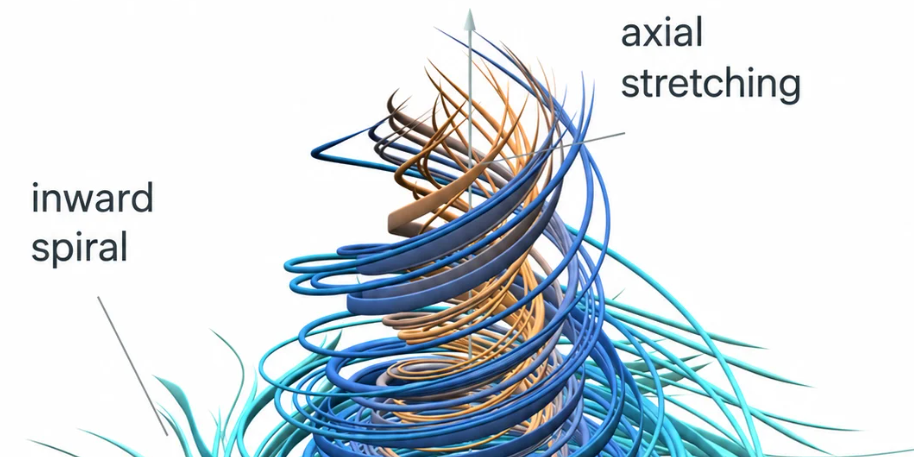
On 8 September 2026, artificial intelligence company OpenAI announced a proof of a breakdown of Navier–Stokes solutions in three-dimensional Euclidean space, developed by its researchers using as many as 10,000 coordinated agents running an internal frontier model, along with a formalization in the Lean proof assistant. The claim has not been verified by external mathematicians or the Clay Mathematics Institute, while OpenAI stated it would not claim the Millennium Prize. The announcement was accompanied by a priority dispute with Levent Alpöge (employed at rival AI company Anthropic) and Tristan Buckmaster, who had derived a set of closely related results on the Euler equations. The method used to generate the claimed solution built upon a method developed by Diego Cordoba and Luis Martinez Zoroa in 2023 to prove blowup phenomena in related fluid equations.