Analys: Spionen kan vara toppen på ett isberg
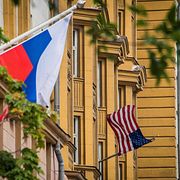
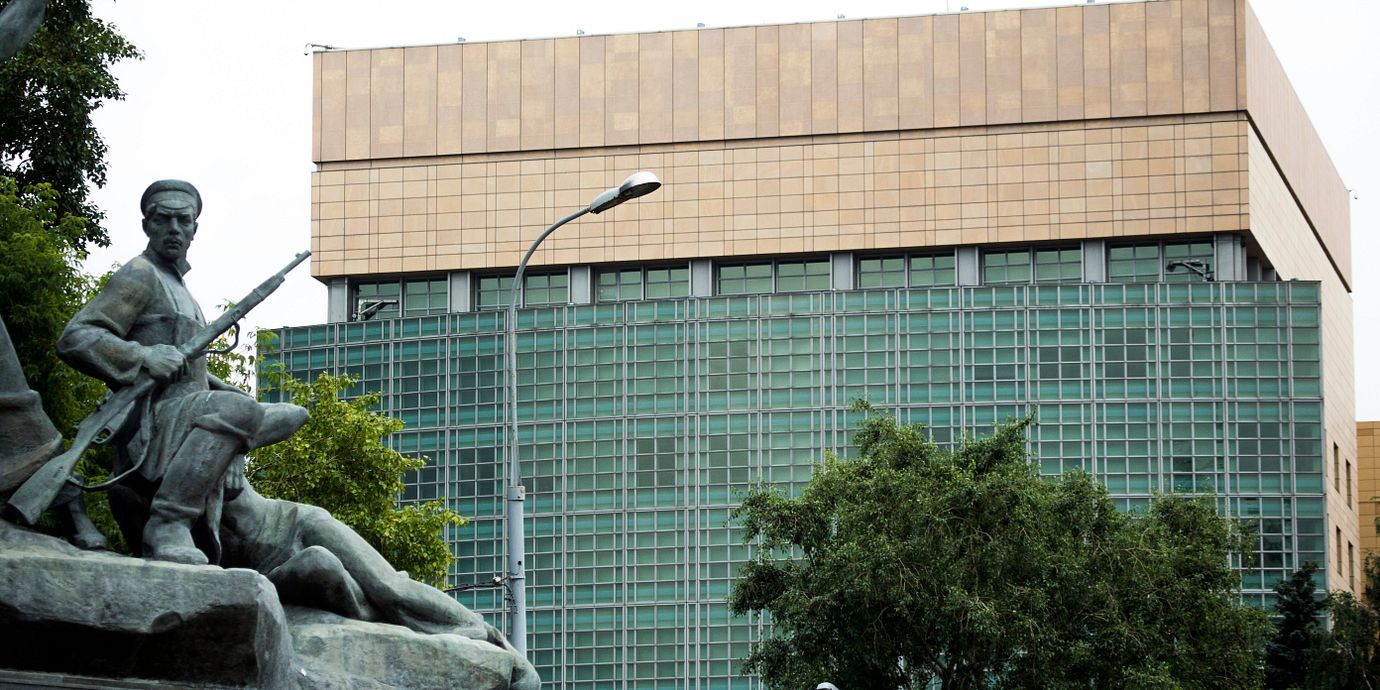
Efter avslöjandet om att en rysk spion arbetat på USA:s ambassad i Moskva i tio år innan hon upptäcktes säger analytiker att det här fallet bara kan vara toppen på ett isberg, skriver David Smith i en analys i The Guardian.
Enligt analytiker som han har pratat med är det troligt att liknande händelser inträffat även på andra ambassader, speciellt västerländska ambassader i Moskva.
”Även om upptäckten av den misstänkta spionen kommer vid ett känsligt tillfälle – med Rysslandsutredningen, Maria Butinas försök att infiltrera Republikanerna och novitjok-förgiftningen i Storbritannien – så pekar det på ett hot som är både utbrett och decennier gammalt”, skriver han.
bakgrund
FSB
Wikipedia (en)
The Federal Security Service of the Russian Federation (FSB; Russian: Федеральная служба безопасности Российской Федерации (ФСБ), tr. Federal'naya sluzhba bezopasnosti Rossiyskoy Federatsii, IPA: [fʲɪdʲɪˈralʲnəjə ˈsluʐbə bʲɪzɐˈpasnəstʲɪ rɐˈsʲijskəj fʲɪdʲɪˈratsɨjɪ]) is the principal security agency of Russia and the main successor agency to the USSR's Committee of State Security (KGB). Its main responsibilities are within the country and include counter-intelligence, internal and border security, counter-terrorism, and surveillance as well as investigating some other types of grave crimes and federal law violations. It is headquartered in Lubyanka Square, Moscow's centre, in the main building of the former KGB. The Director of the FSB since 2008 is general of the army Alexander Bortnikov.
The immediate predecessor of the FSB was the Federal Counterintelligence Service (FSK) of Russia, itself a successor to the KGB: on 12 April 1995, Russian president Boris Yeltsin signed a law mandating a reorganization of the FSK, which resulted in the creation of the FSB. In 2003, the FSB's responsibilities were widened by incorporating the previously independent Border Guard Service and a major part of the abolished Federal Agency of Government Communication and Information (FAPSI). The two major structural components of the former KGB that remain administratively independent of the FSB are the Foreign Intelligence Service (SVR) and the State Guards (FSO).
Under Russian federal law, the FSB is a military service just like the armed forces, the MVD, the FSO, the SVR, the FSKN, Main Directorate for Drugs Control and EMERCOM's civil defence, but its commissioned officers do not usually wear military uniforms.
The FSB is mainly responsible for internal security of the Russian state, counterintelligence, and the fight against organized crime, terrorism, and drug smuggling. Since 2003, when the Federal Border Guards Service was incorporated to the FSB, it has also been responsible for overseeing border security. The FSB is engaged mostly in domestic affairs, while espionage duties are responsibility of the Russian Foreign Intelligence Service. However, the FSB also includes the FAPSI agency, which conducts electronic surveillance abroad. All law enforcement and intelligence agencies in Russia work under the guidance of FSB, if needed.The FSB combines functions and powers similar to those exercised by the United States FBI National Security Branch, Immigration and Customs Enforcement (ICE), the Federal Protective Service, the National Security Agency (NSA), US Customs and Border Protection, United States Coast Guard, and partly the Drug Enforcement Administration. The FSB employs about 66,200 uniformed staff, including about 4,000 special forces troops. It also employs about 160,000–200,000 border guards.Under Article 32 of the Federal Constitutional Law On the Government of the Russian Federation, the FSB head answers directly to the RF president and the FSB director is the RF president's appointment, though he is a member of the RF government which is headed by the Chairman of Government; he also, ex officio, is a permanent member of the Security Council of Russia presided over by the president and chairman of the National Anti-terrorism Committee of Russia.
Omni är politiskt obundna och oberoende. Vi strävar efter att ge fler perspektiv på nyheterna. Har du frågor eller synpunkter kring vår rapportering? Kontakta redaktionen