Wikipedia (en)
On 8 November 2016, the Government of India announced the demonetisation, commonly called notebandi, of all ₹500 (US$7.80) and ₹1,000 (US$16) banknotes of the Mahatma Gandhi Series. The government claimed that the action would curtail the shadow economy and crack down on the use of illicit and counterfeit cash to fund illegal activity and terrorism. The sudden nature of the announcement—and the prolonged cash shortages in the weeks that followed—created significant disruption throughout the economy, threatening economic output.
Prime Minister of India Narendra Modi announced the demonetisation in an unscheduled live televised address at 20:00 Indian Standard Time (IST) on 8 November. In the announcement, Modi declared that use of all ₹500 and ₹1000 banknotes of the Mahatma Gandhi Series would be invalid past midnight, and announced the issuance of new ₹500 and ₹2000 banknotes of the Mahatma Gandhi New Series in exchange for the old banknotes.
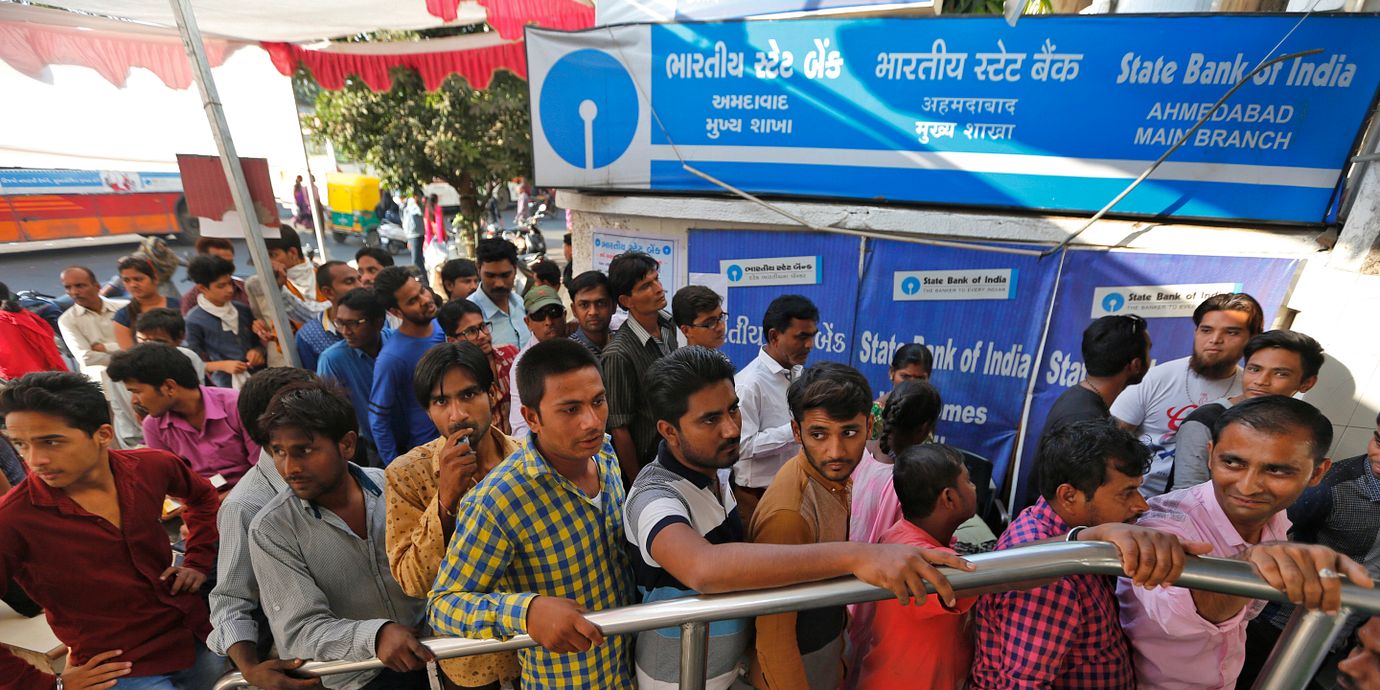
The BSE SENSEX and NIFTY 50 stock indices fell over 6 percent on the day after the announcement. In the days following the demonetisation, the country faced severe cash shortages with severe detrimental effects across the economy. People seeking to exchange their bank notes had to stand in lengthy queues, and several deaths were linked to the rush to exchange cash.
Initially, the move received support from several bankers as well as from some international commentators. The move has also been criticised as poorly planned and unfair, and was met with protests, litigation, and strikes against the government in several places across India. Debates also took place concerning the move in both houses of parliament. The move reduced the country's industrial production and its GDP growth rate.
By the end of August 2017, 99% of the banned currency was deposited in banks, leaving only around ₹14,000 crore of the total demonetised currency discarded.