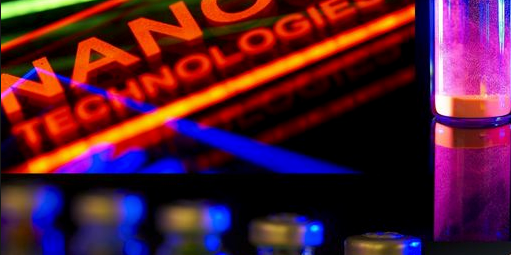
”Apple har skrotat planer på Quantum Dot-kameror”
Enligt uppgifter från källor till brittiska The Telegraph så ska Apple ha fört samtal med det brittiska bolaget Nanoco kring kamerateknologi för kommande Iphone-enheter. Nanoco har specialiserat sig på så kallad Quantum Dot-teknologi, som medger att kamerasensorerna kan ta in ljus mer effektivt än vad klassisk kamerateknologi medger. Men Apple ska ha valt att skrota planerna på Quantum Dot-baserade kameror i sina telefoner, då det skulle bli alldeles för dyrt.
Om Apple hade valt att satsa på Quantum Dot-teknologi så hade man höjt ribban för mobilfoto rejält, menar flera experter.
Quantum dot
Wikipedia (en)
Quantum dots (QDs) are tiny semiconductor particles a few nanometres in size, having optical and electronic properties that differ from larger LED particles. They are a central theme in nanotechnology. When the quantum dots are illuminated by UV light, some of the electrons receive enough energy to break free from the atoms. This capability allows them to move around the nanoparticle, creating a conductance band in which electrons are free to move through a material and conduct electricity. When these electrons drop back into the outer orbit around the atom (the valence band), as illustrated in the following figure, they emit light. The color of that light depends on the energy difference between the conductance band and the valence band.
In the language of materials science, nanoscale semiconductor materials tightly confine either electrons or electron holes. Quantum dots are sometimes referred to as artificial atoms, emphasizing their singularity, having bound, discrete electronic states, like naturally occurring atoms or molecules.Quantum dots have properties intermediate between bulk semiconductors and discrete atoms or molecules. Their optoelectronic properties change as a function of both size and shape. Larger QDs of 5–6 nm diameter emit longer wavelengths, with colors such as orange or red. Smaller QDs (2–3 nm) emit shorter wavelengths, yielding colors like blue and green, although the specific colors and sizes vary depending on the exact composition of the QD.
Because of their highly tunable properties, QDs are of wide interest. Potential applications include transistors, solar cells, LEDs, diode lasers and second-harmonic generation, quantum computing, and medical imaging. Their small size allows for QDs to be suspended in solution, which may lead to use in inkjet printing and spin-coating. They have been used in Langmuir-Blodgett thin-films. These processing techniques result in less expensive and less time-consuming methods of semiconductor fabrication.
Omni är politiskt obundna och oberoende. Vi strävar efter att ge fler perspektiv på nyheterna. Har du frågor eller synpunkter kring vår rapportering? Kontakta redaktionen