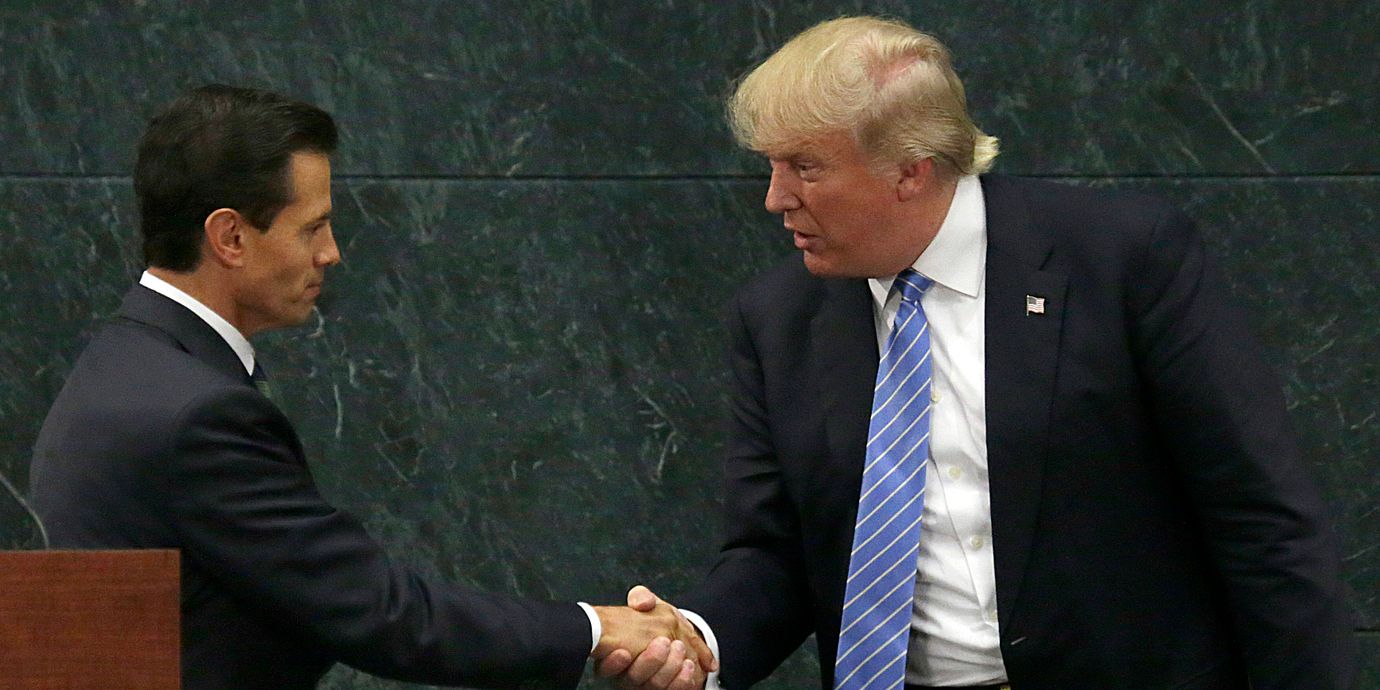
Efter Trumps hot: Mexiko öppnar för ”modernt” Nafta
Mexiko öppnar för att diskutera frihandelsavtalet Nafta med motparterna USA och Kanada, skriver Bloomberg. Enligt nyhetsbyrån kan president Enrique Peña Nieto tänka sig att modernisera avtalet, något han aviserade under helgens Apac-möte i Peru.
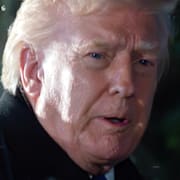
USA:s tillträdande president Donald Trump riktade under sin valkampanj hård kritik mot Nafta, som han bland annat hävdade har kostat amerikanska jobb. Han hotade bland annat att riva upp avtalet och kallade det för ”det värsta avtalet någonsin”, enligt Bloomberg.
bakgrund
North American Free Trade Agreement (Nafta)
Wikipedia (en)
The North American Free Trade Agreement (NAFTA; Spanish: Tratado de Libre Comercio de América del Norte, TLCAN; French: Accord de libre-échange nord-américain, ALÉNA) is an agreement signed by Canada, Mexico, and the United States, creating a trilateral trade bloc in North America. The agreement came into force on January 1, 1994. It superseded the Canada–United States Free Trade Agreement between the U.S. and Canada.
NAFTA has two supplements: the North American Agreement on Environmental Cooperation (NAAEC) and the North American Agreement on Labor Cooperation (NAALC).
bakgrund
Asia-Pacific Economic Cooperation
Wikipedia (en)
Asia-Pacific Economic Cooperation (APEC) is a forum for 21 Pacific Rim member economies that promotes free trade throughout the Asia-Pacific region. It was established in 1989 in response to the growing interdependence of Asia-Pacific economies and the advent of regional trade blocs in other parts of the world; to defuse fears that highly industrialised Japan (a member of G8) would come to dominate economic activity in the Asia-Pacific region; and to establish new markets for agricultural products and raw materials beyond Europe.
An annual APEC Economic Leaders' Meeting is attended by the heads of government of all APEC members except Taiwan (which is represented by a ministerial-level official under the name Chinese Taipei as economic leader). The location of the meeting rotates annually among the member economies, and a famous tradition, followed for most (but not all) summits, involves the attending leaders dressing in a national costume of the host country.
Omni är politiskt obundna och oberoende. Vi strävar efter att ge fler perspektiv på nyheterna. Har du frågor eller synpunkter kring vår rapportering? Kontakta redaktionen