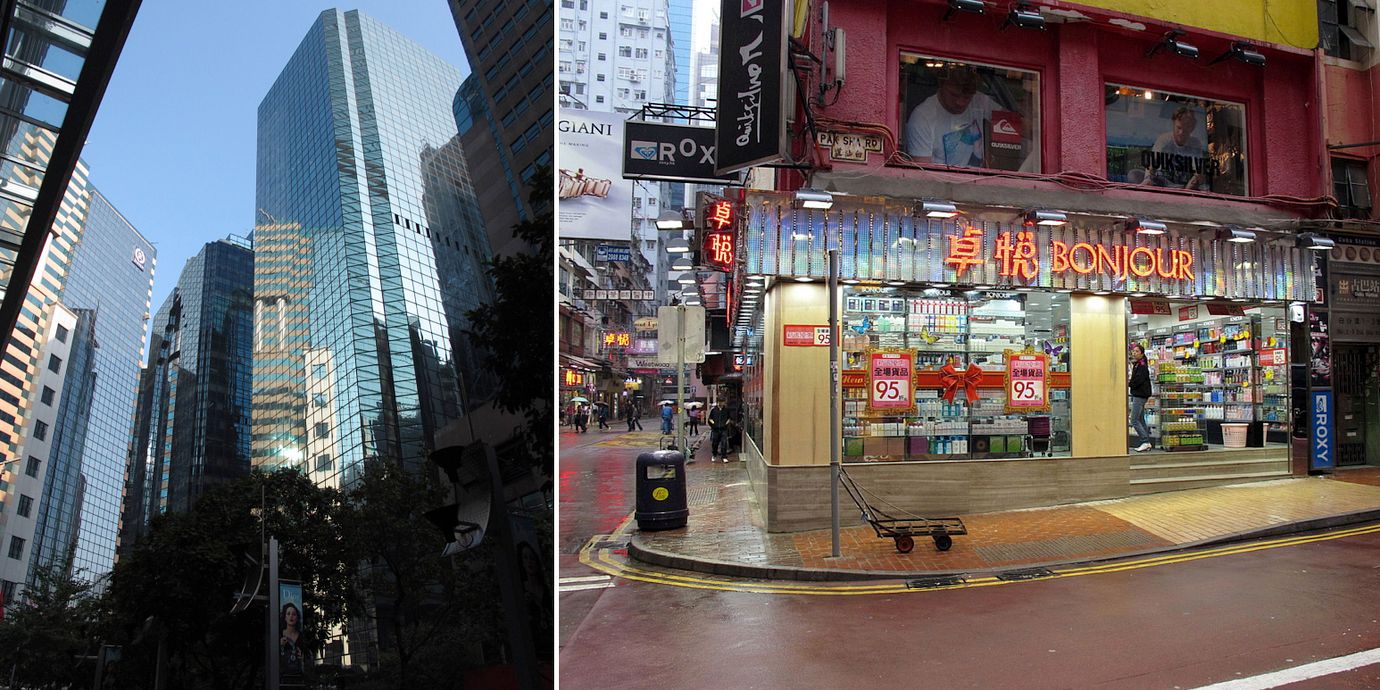
Hongkong tappar status som Kinas ”shoppingcenter”
Trots skyltar såsom ”galen rea” lyser kunderna med sin frånvaro i en gång världens dyraste affärsdistrikt, Causeway Bay i Hongkong.
– Vår kundtillströmning har minskat med 60–70 procent, säger Jacky Sze, butikschef på Kingdom Jewellery, till Financial Times.
Före den kinesiske presidenten Xi Jinpings offensiv mot korruption kunde kinesiska kunder gladeligen spendera över 100 000 kronor på ett köp i affären – nu är det inte många som är villiga att köpa för en tiondel av den summan, skriver tidningen.
Detaljhandeln har minskat med 10 procent under årets första sju månader i Hongkong, som förlorat statusen som Kinas ”stora shoppingcenter”, skriver FT.
bakgrund
Xi Jinpings offensiv mot korruption
Wikipedia (en)
A far-reaching campaign against corruption began in China following the conclusion of the 18th National Congress of the Communist Party of China in 2012. The campaign, carried out under the aegis of Xi Jinping, General Secretary of the Communist Party of China (paramount leader), was the largest organized anti-graft effort in the history of Communist rule in China.
Upon taking office, Xi vowed to crack down on "tigers and flies", that is, high-level officials and local civil servants alike. Most of the officials investigated were removed from office and faced accusations of bribery and abuse of power, although the range of alleged abuses varied widely. As of 2016, the campaign has 'netted' over 120 high-ranking officials, including about a dozen high-ranking military officers, several senior executives of state-owned companies, and five national leaders. More than 100,000 people have been indicted for corruption. The campaign is part of a much wider drive to clean up malfeasance within party ranks and shore up party unity. It has become an emblematic feature of Xi Jinping's political brand.
Executed largely under the direction of the Central Commission for Discipline Inspection and its Secretary Wang Qishan along with corresponding military and judicial organs, the campaign was notable in implicating both incumbent and former national-level leaders, including former Politburo Standing Committee (PSC) member Zhou Yongkang and former military leaders Xu Caihou and Guo Boxiong. Such investigations broke the unspoken rule regarding 'PSC criminal immunity' (Chinese: 刑不上常委) that has been the norm since the end of the Cultural Revolution.
Omni är politiskt obundna och oberoende. Vi strävar efter att ge fler perspektiv på nyheterna. Har du frågor eller synpunkter kring vår rapportering? Kontakta redaktionen