Kärnvapenexpert: Nej, kan inte sova lugnt med Trump
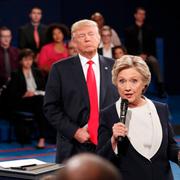
Demokraternas presidentkandidat Hillary Clinton har sagt att en lättstött person som Donald Trump aldrig borde få tillgång till kärnvapen.
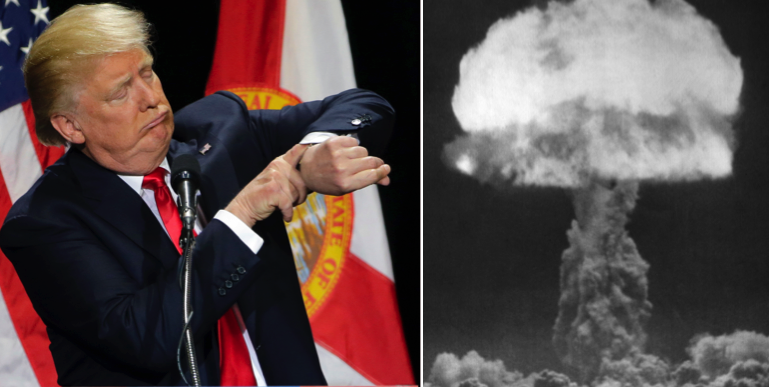
I en analys på sajten Politico redogör kärnvapenexperten Bruce Blair för förutsättningarna att använda ”den röda knappen”.
Hur skulle Trump agera om han väcktes mitt i natten och ställdes inför en akut nationell säkerhetskris? Vilka beslut skulle han ta?
”Trumps temperament, defensiva personlighet som gränsar till paranoia och förakt för alla som kritiserar honom skapar inte en särskilt stark tilltro till försiktighet från hans sida”, konstaterar Blair.
Samtidigt, menar han, kan vi inte vara säkra på att någon president är redo att fatta ett riktigt beslut om kärnvapen i en sådan extrem situation.
bakgrund
Kärnvapen i USA
Wikipedia (en)
The United States was the first country to manufacture nuclear weapons, and is the only country to have used them in combat, with the separate bombings of Hiroshima and Nagasaki in World War II. Before and during the Cold War, it conducted over a thousand nuclear tests and tested many long-range weapon delivery systems.
Between 1940 and 1996, the U.S. government spent at least $8.78 trillion in present-day terms on nuclear weapons, including platforms development (aircraft, rockets and facilities), command and control, maintenance, waste management and administrative costs. It is estimated that, since 1945, the United States produced more than 70,000 nuclear warheads, which is more than all other nuclear weapon states combined. The Soviet Union/Russia has produced approximately 55,000 nuclear warheads since 1949, France built 1110 warheads since 1960, the United Kingdom built 835 warheads since 1952, China built about 600 warheads since 1964, and other nuclear powers built fewer than 500 warheads all together since they developed their first nuclear weapons. Until November 1962, the vast majority of U.S. nuclear tests were aboveground. After the acceptance of the Partial Test Ban Treaty, all testing was relegated underground, in order to prevent the dispersion of nuclear fallout.
By February 2006 over $1.2 billion in compensation had been paid to U.S. citizens exposed to nuclear hazards as a result of the U.S. nuclear weapons program, and by 1998 at least $759 million had been paid to the Marshall Islanders in compensation for their exposure to U.S. nuclear testing.
In 2015, the United States maintained an arsenal of 4,760 warheads and facilities for their construction and design, though many of the Cold War facilities have since been deactivated and are sites for environmental remediation.
Omni är politiskt obundna och oberoende. Vi strävar efter att ge fler perspektiv på nyheterna. Har du frågor eller synpunkter kring vår rapportering? Kontakta redaktionen