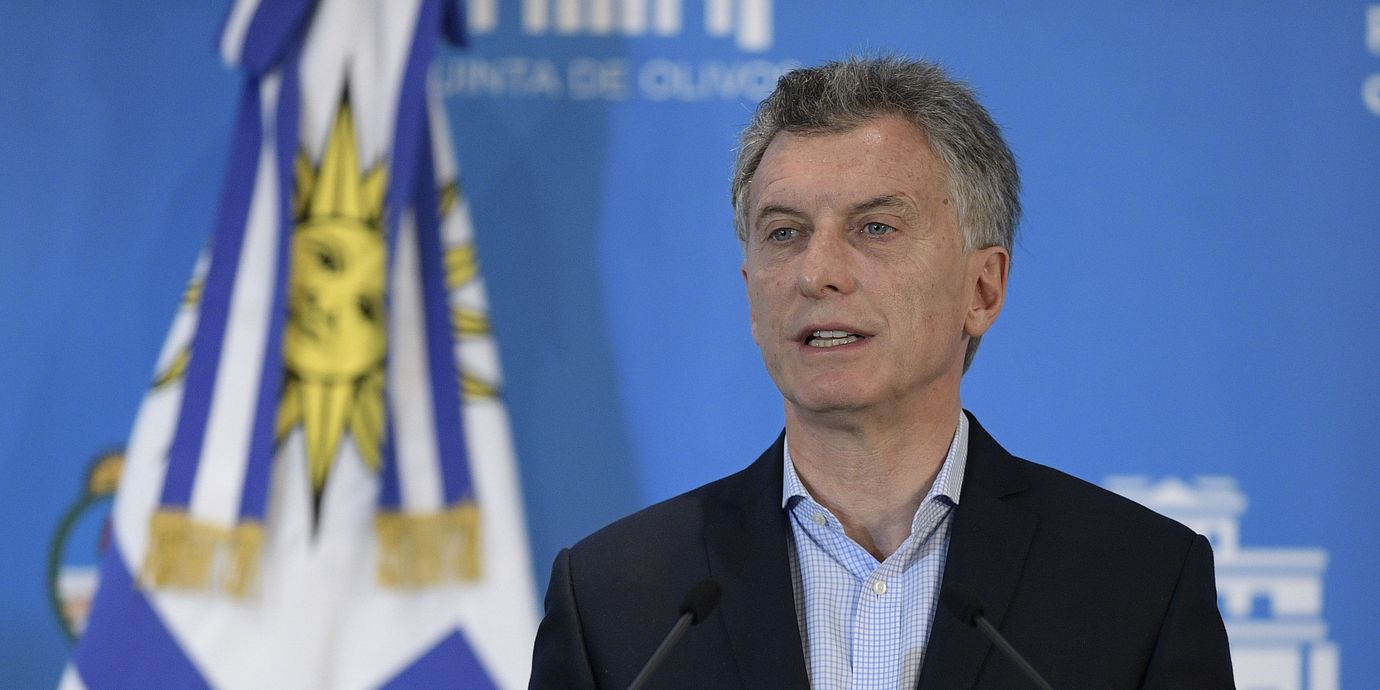
Kaxigt Argentina lånar stora belopp på statspapper
Argentinas regering skrämmer upp investerare genom en aggressiv upplåning genom statsobligationer, skriver Financial Times. Bara de senaste veckorna har landet emitterat långa obligationer med fasta räntor till ett värde motsvarande 76 miljarder kronor för att trygga finansieringen av nya reformer. Finansieringsstrategin beskrivs som ett tecken på att regeringen har ett starkt förtroende för att den ska klara av att stabilisera landets ekonomi, trots att den ärvde en tvåsiffrig inflationstakt från den tidigare populistregeringen.
– Det här visar på en fast övertygelse om att man ska klara få ner inflationen till ensiffriga nivåer inom de närmsta åren, säger hedgefondförvaltaren Anders Cummings till FT.
bakgrund
President Mauricio Macri satte stopp för en mångårig rekonstruktion av landets skulder
Wikipedia (en)
The Argentine debt restructuring is a process of debt restructuring by Argentina that began on January 14, 2005, and allowed it to resume payment on 76% of the US$82 billion in sovereign bonds that defaulted in 2001 at the depth of the worst economic crisis in the nation's history. A second debt restructuring in 2010 brought the percentage of bonds under some form of repayment to 93%, though ongoing disputes with holdouts remained. Bondholders who participated in the restructuring settled for repayments of around 30% of face value and deferred payment terms, and began to be paid punctually; the value of their nearly worthless bonds also began to rise. The remaining 7% of bondholders later won the right to be repaid in full.
As part of the restructuring process, Argentina drafted agreements in which repayments would be handled through a New York corporation and governed by United States law. The holdout bondholders found themselves unable to seize Argentine sovereign assets in settlement, but realized that Argentina had omitted to provide for holdout situations and had instead deemed all bonds repayable on pari passu (equal) terms that prevented preferential treatment among bondholders. The holdout bondholders therefore sought, and won, an injunction in 2012 that prohibited Argentina from repaying the 93% of bonds that had been renegotiated, unless they simultaneously paid the 7% holdouts their full amount due as well. Together with the agreement's rights upon future offers ("RUFO") clause, this created a deadlock in which the 93% of renegotiated bondholders could not be paid without paying the 7% holdouts, but any payment to the holdouts would potentially (according to Argentina) trigger the 93% being due repayment at full value too; a sum of around $100 billion that Argentina could not afford. The courts ruled that as Argentina had itself drafted the agreement, and chosen the terms it wished to propose, it could not now claim the terms were unreasonable or unfair, and that this could not be worked around by asserting sovereign status since the injunction did not affect sovereign assets, but simply ruled that Argentina must not give preferential treatment of any group of bondholders over any other group when making repayments.
Subsequently, though Argentina wanted to repay some creditors, the judgment prevented Argentina from doing so, because being forced to repay all creditors, including the holdouts, would have totaled around $100 billion. The country was therefore categorized as being in selective default by Standard & Poor's and in restricted default by Fitch. The ruling affected New York law Argentine bonds; Argentine bonds issued under Buenos Aires and European law were not affected.
Proposed solutions include seeking waivers of the RUFO clause from bondholders, or waiting for the RUFO clause to expire at the end of 2014. The dilemma raised concerns internationally about the ability of a small minority to forestall an otherwise-agreed debt restructuring of an insolvent country, and the ruling that led to it was widely criticized both within the United States and internationally. The default ended in 2016, during the presidency of Mauricio Macri.
bakgrund
Argentina
Wikipedia (sv)
Argentina , formellt Republiken Argentina, (spanska: República Argentina, uttal: reˈpuβlika arxenˈtina), är det näst största landet i Sydamerika, bildat som en federation av 23 provinser och en självständig stad vid namn Buenos Aires. Argentina är det åttonde största landet i världen till ytan och är befolkningsmässigt den fjärde största spansktalande nationen efter Mexiko, Colombia och Spanien. Det är även världens största spanskspråkiga stat sett till ytan. Dess kontinentala område sträcker sig mellan bergskedjan Anderna i väster och Atlanten i öster. Argentina gränsar till Paraguay och Bolivia i norr, Brasilien och Uruguay i nordost, och Chile i väst och syd. Argentina gör anspråk på de brittiska utomeuropeiska territorierna Falklandsöarna/Malvinerna och Sydgeorgien och Sydsandwichöarna. Det gör även anspråk på en del av Antarktis, även om processen med olika länders anspråk på delar av Antarktis avbröts av Antarktisfördraget.
Argentina har den näst högsta Human Development Index och högsta BNP per capita i köpkraftsparitet i Latinamerika. Argentina är med i G20, med världens 30:e största nominella BNP, och den 23:e största när köpkraften beaktas. Landet klassificeras som ett övre medelinkomstland eller som ett sekundärt framväxande land av Världsbanken.
Omni är politiskt obundna och oberoende. Vi strävar efter att ge fler perspektiv på nyheterna. Har du frågor eller synpunkter kring vår rapportering? Kontakta redaktionen