Kina och Indien överens om snabb nedtrappning
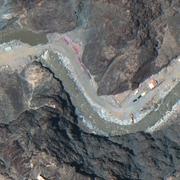
Efter ett möte mellan Kinas och Indiens utrikesministrar har länderna lagt fram ett gemensamt uttalande om att ”snabbt trappa ner” den spända situationen vid ett gränsområde i Himalaya, rapporterar BBC.
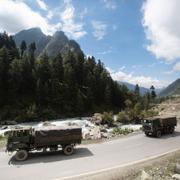
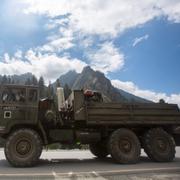
Länderna har under sommaren skickat tiotusentals soldater till Ladakh-regionen och både indier och kineser har dött vid tidigare sammandrabbningar. De närmsta dagarna ska militära ledare hålla möten om hur nedtrappningen ska gå till, skriver Hindustan Times.
Tvisten om området har pågått sedan 1950-talet och under 1962 eskalerade det till ett kortvarigt krig. Diskussioner om gränsdragningar i området har pågått sedan dess.
bakgrund
Konflikten mellan Indien och Kina under 2020
Wikipedia (en)
The 2020 China–India skirmishes are part of an ongoing military standoff between China and India. Since 5 May 2020, Chinese and Indian troops have engaged in aggressive melee, face-offs and skirmishes at locations along the Sino-Indian border, including near the disputed Pangong Lake in Ladakh and the Tibet Autonomous Region, and near the border between Sikkim and the Tibet Autonomous Region. Additional clashes also took place at locations in eastern Ladakh along the Line of Actual Control (LAC).
In late May, Chinese forces objected to Indian road construction in the Galwan River valley. According to Indian sources, melee fighting on 15/16 June 2020 resulted in the deaths of 20 Indian soldiers (including an officer) and casualties of 43 Chinese soldiers (including the death of an officer). Media reports stated that soldiers were taken captive on both sides and released in the coming few days. On the Indian side ten soldiers were reported to have been taken captive while the Chinese numbers remain unconfirmed. Later the Chinese Foreign Ministry and the Indian Army denied any detention of Indian soldiers.On 25 July, news reports emerged of disengagement at Galwan, Hot Springs and Gogra. As of 30 July, disengagement remained incomplete at Pangong Tso and at PP 17A Gogra while "complete disengagement and de-escalation" between India and China was remaining. The Indian Army has maintained that it will continue enhanced deployment of troops even through winter if the disengagement process is not complete. At the end of August and beginning of September, the Chushul sector saw Indian troops occupy multiple heights along the LAC which overlook Chinese fixtures at Spanggur Gap and Spanggur Tso. On 7 September, for the first time in 45 years, shots were fired along the LAC, with both sides blaming each other for the firing. Indian media also reported that Indian troops fired warning shots at the PLA on 30 August.Amid the standoff, India reinforced the region with approximately 12,000 additional workers, who would assist India's Border Roads Organisation in completing the development of Indian infrastructure along the Sino-Indian border. Experts have postulated that the standoffs are Chinese pre-emptive measures in responding to the Darbuk–Shyok–DBO Road infrastructure project in Ladakh. The Chinese have also extensively developed their infrastructure in these disputed border regions and are continuing to do so. The revocation of the special status of Jammu and Kashmir, in August 2019, by the Indian government has also troubled the Chinese. However, India and China have both maintained that there are enough bilateral mechanisms to resolve the situation through quiet diplomacy.Following the Galwan Valley skirmish on 15 June, numerous Indian government officials said that border tensions will not impact trade between India and China despite some Indian campaigns about boycotting Chinese products. However, in the following days, various types of action were taken on the economic front including cancellation and additional scrutiny of certain contracts with Chinese firms, and calls were also made to stop the entry of the Chinese into strategic markets in India such as the telecom sector.
Ladakh

Omni är politiskt obundna och oberoende. Vi strävar efter att ge fler perspektiv på nyheterna. Har du frågor eller synpunkter kring vår rapportering? Kontakta redaktionen