Delhi tar till konstgjort regn för att rena luften
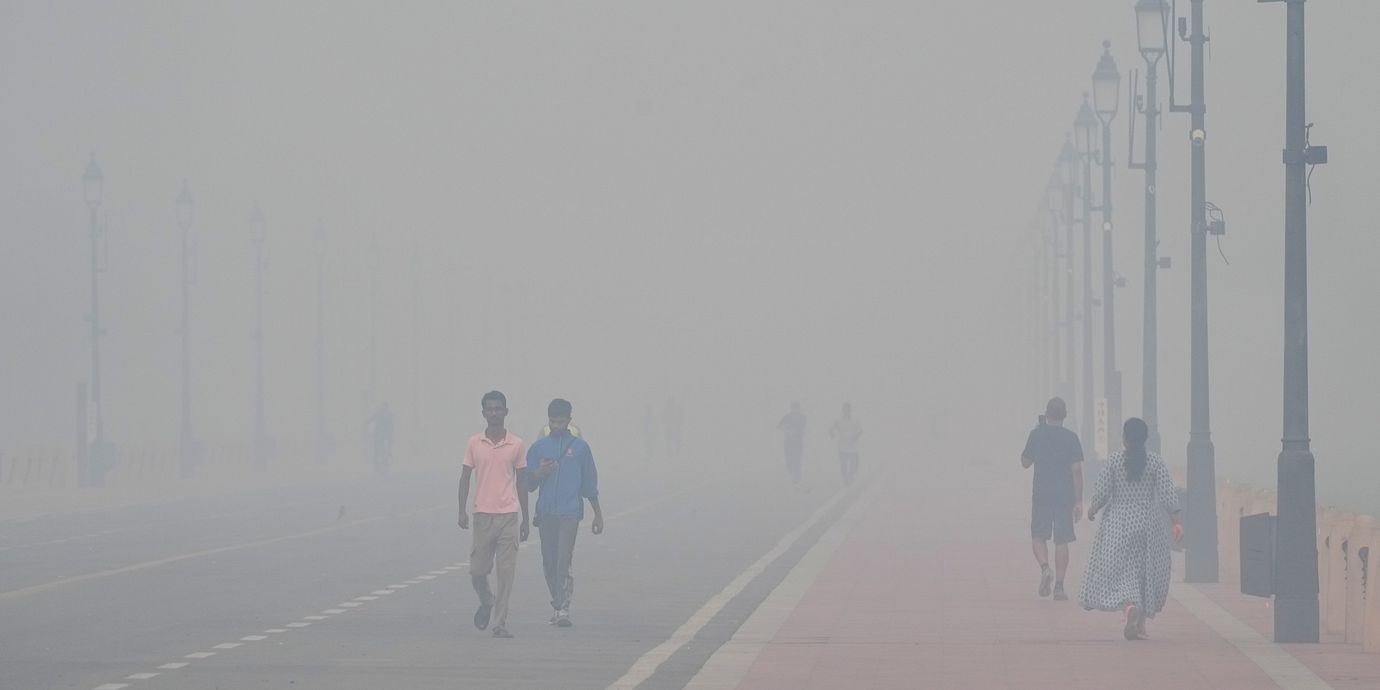
Indien har inlett ett pilotprojekt med konstgjort regn för att rena luften i Delhi, där föroreningarna legat tunga efter alla fyrverkerier under ljushögtiden Diwali tidigare i veckan, skriver The Guardian.
Sedan partiet BJP tog makten i regionen tidigare i år har de förespråkat så kallad molnsådd för att få bukt med luftföroreningarna i mångmiljonstaden. Metoden går ut på att med plan eller drönare sprida partiklar av silverjodid i luften för att påverka molnen kemiskt och framkalla nederbörd.
I torsdags genomfördes ett första test med spridning av silverjodid.
– Om förhållandena förblir gynnsamma kommer Delhi att uppleva sitt första konstgjorda regn den 29 oktober, säger Delhis chefsminister Rekha Gupta.
bakgrund
Molnsådd
Wikipedia (en)
Cloud seeding is a type of weather modification that aims to change the amount or type of precipitation, mitigate hail, or disperse fog. The usual objective is to increase rain or snow, either for its own sake or to prevent precipitation from occurring in days afterward.
Cloud seeding is undertaken by dispersing substances into the air that serve as cloud condensation or ice nuclei. Common agents include silver iodide, potassium iodide, and dry ice, with hygroscopic materials like table salt gaining popularity due to their ability to attract moisture. Techniques vary from static seeding, which encourages ice particle formation in supercooled clouds to increase precipitation, to dynamic seeding, designed to enhance convective cloud development through the release of latent heat.
Methods of dispersion include aircraft and ground-based generators, with newer approaches involving drones delivering electric charges to stimulate rainfall, or infrared laser pulses aimed at inducing particle formation. Despite decades of research and application, cloud seeding's effectiveness remains a subject of debate among scientists, with studies offering mixed results on its impact on precipitation enhancement.
Environmental and health impacts are considered minimal due to the low concentrations of substances used, but concerns persist over the potential accumulation of seeding agents in sensitive ecosystems. The practice has a long history, with initial experiments dating back to the 1940s, and has been used for various purposes, including agricultural benefits, water supply augmentation, and event planning. Legal frameworks primarily focus on prohibiting the military or hostile use of weather modification techniques, leaving the ownership and regulation of cloud-seeding activities to national discretion. Despite skepticism and debate over its efficacy and environmental impact, cloud seeding continues to be explored and applied in regions worldwide as a tool for weather modification.
Omni är politiskt obundna och oberoende. Vi strävar efter att ge fler perspektiv på nyheterna. Har du frågor eller synpunkter kring vår rapportering? Kontakta redaktionen