Kung fu-nunnorna i Nepal: ”Krossar könsbarriärer”
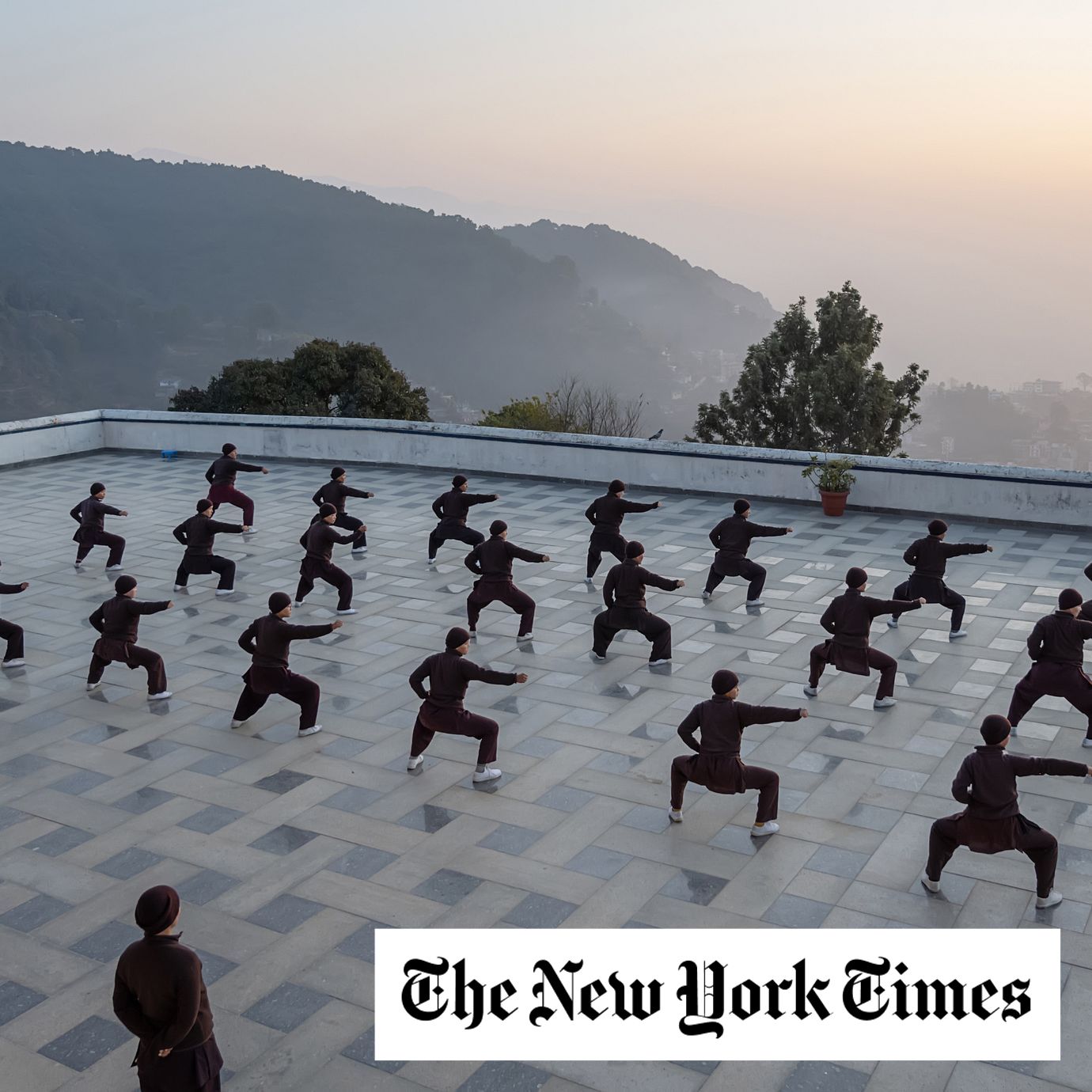
Nuns practice fung fu early in the morning at Druk Amitabha Nunnery, on a hill overlooking Kathmandu, Nepal, Feb. 3, 2023. (SAUMYA KHANDELWAL / NYT)

Inom Himalaya-buddhismen har nunnor under lång tid varit begränsade av regler och seder. Men en religiös orden i Nepal, kända som Kung fu-nunnorna, håller på att ändra på det.

Gruppen härstammar från den 800 år gamla Buddistsekten Drukpa, ett tibetanskt ord för drake. I Himalaya och andra delar av världen blandar utövarna meditation med kampsport och miljöaktivism. Det ses som ett led i att uppnå jämlikhet och fysisk hälsa, skriver The New York Times.

– Kung fu hjälper till att krossa könsbarriärer och utveckla inre självförtroende, säger 34-åriga nunnan Jigme Rabsal Lhamo.

– Vi ändrar spelreglerna. Det räcker inte att meditera på en kudde i ett kloster, säger 29-åriga Konchok Lhamo.

The New York Times

Kung Fu Nuns of Nepal Smash Convention

In Himalayan Buddhism, the religious roles of nuns have long been restricted by rules and customs. But one sect is changing that, mixing meditation with martial arts and environmental activism.

Sameer Yasir

February 26, 2023

NAGARJUN, Nepal — As the first rays of sun pierced through the clouds covering snowcapped Himalayan peaks, Jigme Rabsal Lhamo, a Buddhist nun, drew a sword from behind her back and thrust it toward her opponent, toppling her to the ground.

“Eyes on the target! Concentrate!” Lhamo yelled at the knocked-down nun, looking straight into her eyes outside a whitewashed temple in the Druk Amitabha nunnery on a hill overlooking Kathmandu, the capital of Nepal.

Lhamo and the other members of her religious order are known as the Kung Fu nuns, part of an 800-year-old Buddhist sect called Drukpa, the Tibetan word for dragon. Across the Himalayan region, and the wider world, its followers now mix meditation with martial arts.

Nuns participate in Nolsang, prayers offered for the sick or deceased, at Druk Amitabha Nunnery in Kathmandu, Nepal, Feb. 3, 2023. (SAUMYA KHANDELWAL / NYT)

Every day, the nuns swap their maroon robes for an umber brown uniform to practice Kung Fu, the ancient Chinese martial art. It’s part of their spiritual mission to achieve gender equality and physical fitness; their Buddhist beliefs also call on them to lead an environmentally friendly life.

Mornings inside the nunnery are filled with the thuds of heavy footsteps and the clanking of swords as the nuns train under Lhamo’s tutelage. Amid a soft rustle of their loose uniforms, they cartwheel, punch and kick one another.

“Kung Fu helps us to break gender barriers and develop inner confidence,” said Lhamo, 34, who arrived at the nunnery a dozen years ago from Ladakh, in northern India. “It also helps to take care of others during crises.”

Nuns practice Kung Fu early in the morning at Druk Amitabha Nunnery, on a hill overlooking Kathmandu, Nepal, Feb. 3, 2023. (SAUMYA KHANDELWAL / NYT)

For as long as scholars of Buddhism remember, women in the Himalayas who sought to practice as spiritual equals with male monks were stigmatized, both by religious leaders and broader social customs.

Barred from engaging in the intense philosophic debates encouraged among monks, women were confined to chores like cooking and cleaning inside monasteries and temples. They were forbidden from activities involving physical exertion or from leading prayers or even from singing.

In recent decades, those restrictions have become the heart of a raging battle waged by thousands of nuns across many sects of Himalayan Buddhism.

Nuns leave the temple after morning prayers at Druk Amitabha Nunnery, on a hill overlooking Kathmandu, Nepal, Feb. 3, 2023. (SAUMYA KHANDELWAL / NYT)

Leading the charge for change are the Kung Fu nuns, whose Drukpa sect began a reformist movement 30 years ago under the leadership of Jigme Pema Wangchen, who is also known as the 12th Gyalwang Drukpa. He was willing to disrupt centuries of tradition and wanted nuns who would carry the sect’s religious message outside monastery walls.

“We are changing rules of the game,” said Konchok Lhamo, 29, a Kung Fu nun. “It is not enough to meditate on a cushion inside a monastery.”

Today, Drukpa nuns not only practice Kung Fu but also lead prayers and walk for months on pilgrimages to pick up plastic litter and make people aware of climate change.

Nuns warm up before an early morning kung fu lesson at Druk Amitabha Nunnery, on a hill overlooking Kathmandu, Nepal, Feb. 4, 2023. (SAUMYA KHANDELWAL / NYT)

Every year for the past 20, except for a hiatus during the pandemic, the nuns have cycled about 1,250 miles from Kathmandu to Ladakh, high in the Himalayas, to promote green transportation.

Along the way, they stop to educate people in rural parts of both Nepal and India about gender equality and the importance of girls.

The sect’s nuns were first introduced to martial arts in 2008 by followers from Vietnam, who had come to the nunnery to learn scriptures and how to play the instruments used during prayers.

Since then, about 800 nuns have been trained in martial arts basics, with around 90 going through intense lessons to become trainers.

Nuns offer prayers for the sick or deceased at Druk Amitabha Nunnery, on a hill overlooking Kathmandu, Nepal, Feb. 4, 2023. (SAUMYA KHANDELWAL / NYT)

The 12th Gyalwang Drukpa has also been training the nuns to become chant masters, a position once reserved only for men. He has also given them the highest level of teaching, called Mahamudra, a Sanskrit word for “great seal,” an advanced system of meditation.

The nuns have become well known both in Hindu-majority Nepal, which is about 9% Buddhist, and beyond the country’s borders.

But the changes for the sect have not come without intense backlash, and conservative Buddhists have threatened to burn Drukpa temples.

During their trips down the steep slopes from the nunnery to the local market, the nuns have been verbally abused by monks from other sects. But that doesn’t deter them, they say. When they travel, heads shaved, on trips in their open vans, they can look like soldiers ready to be deployed on the front line and capable of confronting any bias.

Nuns practice kung fu with swords at Druk Amitabha Nunnery, on a hill overlooking Kathmandu, Nepal, Feb. 4, 2023. (SAUMYA KHANDELWAL / NYT)

The sect’s vast campus is home to 350 nuns, who live with ducks, turkeys, swans, goats, 20 dogs, a horse and a cow, all rescued either from the knife of butchers or from the streets. The women work as painters, artists, plumbers, gardeners, electricians and masons, and also manage a library and medical clinic for laypeople.

“When people come to the monastery and see us working, they start thinking being a nun is not being ‘useless,’” said Zekit Lhamo, 28, referring to an insult sometimes hurled at the nuns. “We are not only taking care of our religion but the society, too.”

Their work has inspired other women in Nepal’s capital.

“When I look at them, I want to become a nun,” said Ajali Shahi, a graduate student at Tribhuvan University in Kathmandu. “They look so cool, and you want to leave everything behind.”

A woman dance around pigeons in Kathmandu, Nepal, where the Drukpa nuns are known for their kung fu expertise, Feb. 4, 2023. (SAUMYA KHANDELWAL / NYT)

Every day, the nunnery receives at least a dozen inquiries about joining the order from places as far as Mexico, Ireland, Germany and the United States.

“But everyone can’t do this,” said Jigme Yangchen Ghamo, a nun. “It looks attractive from outside, but inside it is a hard life.”

“Our lives,” she added, “are bound by so many rules that even having a pocket in your robes comes with restrictions.”

On a recent day, the nuns woke up at 3 a.m. and began meditating in their dormitories. Before dawn broke, they walked toward the main temple, where a nun chant master, Tsondus Chuskit, led prayers. Sitting cross-legged on benches, the nuns scrolled through the prayer text on their iPads, introduced to minimize use of paper.

Nuns demonstrate kung fu at Druk Amitabha Nunnery, on a hill overlooking Kathmandu, Nepal, Feb. 3, 2023. (SAUMYA KHANDELWAL / NYT)

Then in unison they began to chant, and the bright-colored temple filled with the sound of drums, horns and ring bells.

After the prayers, the nuns gathered outside.

Jigmet Namdak Dolker was about 12 when she noticed a stream of Drukpa nuns walking past her uncle’s house in Ladakh in India. An adopted child, she ran out and started walking with them.

She wanted to become a nun and begged her uncle to let her join Drukpa nunnery, but he refused.

Some nuns scroll through the prayer texts on iPads, introduced to minimize the use of paper, at Druk Amitabha Nunnery, on a hill overlooking Kathmandu, Nepal, Feb. 3, 2023. (SAUMYA KHANDELWAL / NYT)

One day, four years later, she left the house and joined thousands of people celebrating the birthday of Jigme Pema Wangchen, the sect’s head. She eventually made her way to the nunnery and never returned.

And how does she feel after seven years, six of which she has spent practicing Kung Fu?

“Proud. Freedom to do whatever I like,” she said, “And so strong from inside that I can do anything.”

© 2023 The New York Times Company. Read the original article at The New York Times.

Omni är politiskt obundna och oberoende. Vi strävar efter att ge fler perspektiv på nyheterna. Har du frågor eller synpunkter kring vår rapportering? Kontakta redaktionen