Nationella fronten drabbat av tungt avhopp
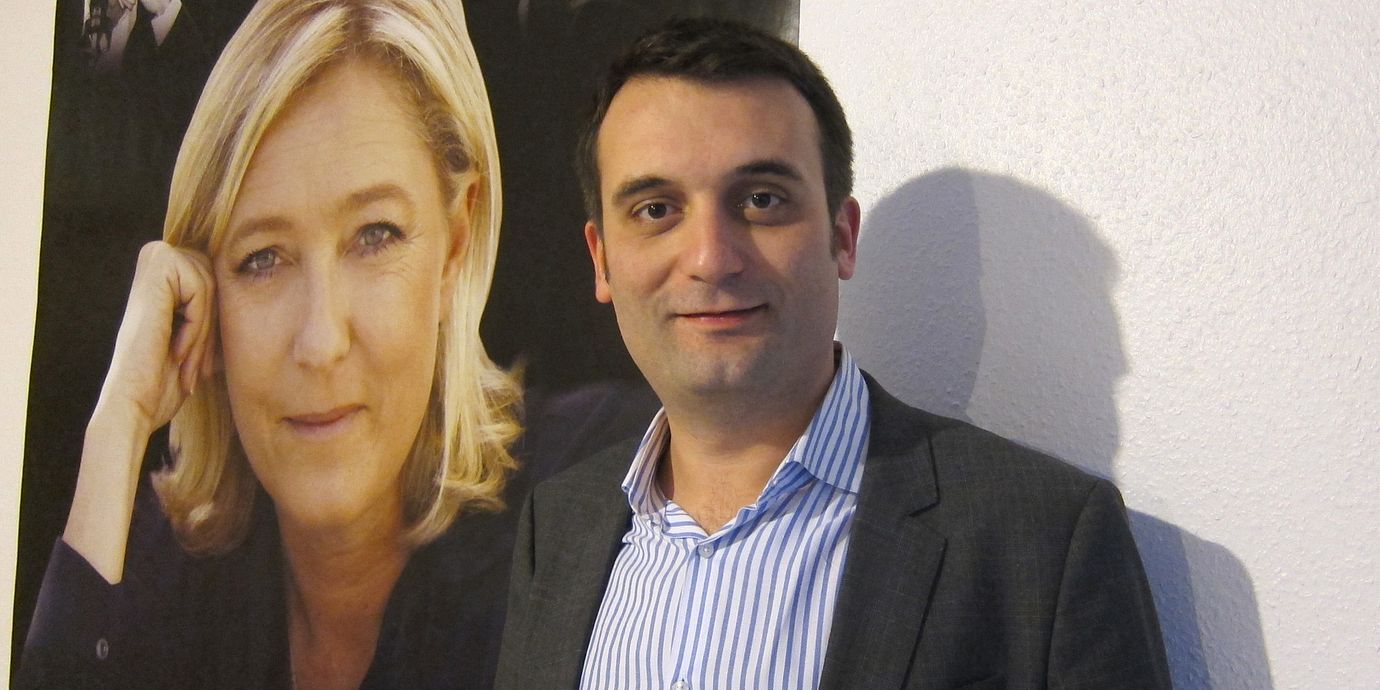
Nationella frontens biträdande partiledare Florian Philippot lämnar partiet. Avhoppet kommer efter en konflikt om partiets inriktning efter Marine Le Pens nederlag i presidentvalets andra omgång i våras.
– Jag gillar inte att förlöjligas. Jag har aldrig gillat att inte ha något att göra så naturligtvis lämnar jag Nationella fronten, sade Philippot till tv-kanalen France 2.
35-åringen har varit drivande bakom partiets starka euromotstånd – något som politiska analytiker sett som en bidragande anledning till att man inte fick fler röster i valet.
bakgrund
Nationella fronten
Wikipedia (en)
The National Front (French: Front national, pronounced [fʁɔ̃ na.sjɔ.nal]; FN) is a right-wing populist and nationalist political party in France. Most political commentators place the FN on the far-right but other sources suggest that the party's position on the political spectrum has become more difficult to define clearly. Owing to the French electoral system, the party's representation in public office has been limited, despite its significant share of the vote.
Its major policies include opposition to the French membership of the European Union, the Schengen Area and the Eurozone, economic protectionism, a zero tolerance approach to law and order issues, and opposition to free migration. As an anti-European Union party, the FN has opposed the European Union since its creation.
The party was founded in 1972 to unify a variety of French nationalist movements of the time. Jean-Marie Le Pen was the party's first leader and the undisputed centre of the party from its start until his resignation in 2011. While the party struggled as a marginal force for its first ten years, since 1984 it has been the major force of French nationalism. The 2002 presidential election was the first in France to include a National Front candidate in the run-off, after Jean-Marie Le Pen beat the Socialist candidate in the first round. In the run-off, he finished a distant second to Jacques Chirac. Marine Le Pen, his daughter, was elected to succeed him. In April 2017 she temporarily stepped down in order to concentrate on being the presidential candidate and to unite voters.
While her father was nicknamed the "Devil of the Republic" by mainstream media, Marine Le Pen pursued a policy of "de-demonisation" of the party by softening its image. She endeavoured to extract it from its far-right cultural roots, and to normalize it by giving it a culture of government, expelling controversial members like her father, who was suspended, and then expelled by his own party in 2015 after he referred, once again, to the Nazi gas chambers as "a point of detail of the history of the Second World War"; (he later set up the Blue, White and Red Rally.). Since her election as the leader of the party in 2011, the popularity of the FN continued to grow apace: the party won several municipalities at the 2014 municipal elections; it became the first French party at the 2014 European elections with 25% of the votes; and again in the last departmental elections in France. They, once again, came out in 1st place in the last regional elections with a historic result of just under 28% of the votes. By 2015, the FN has established itself as one of the largest political forces in France, unusually being both most popular and most unpopular political party.
Omni är politiskt obundna och oberoende. Vi strävar efter att ge fler perspektiv på nyheterna. Har du frågor eller synpunkter kring vår rapportering? Kontakta redaktionen