Överlevande hittade sex dagar efter krasch
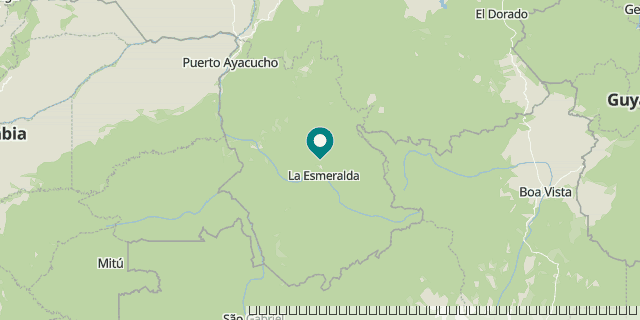
Sex dagar efter att en militärhelikopter försvann över ett område i Amazonas har man hittat överlevande från kraschen. Det rapporterar BBC med hänvisning till den venezuelanska tidningen El Nacional.
Tretton personer, däribland civila, befann sig ombord på helikoptern när den försvann den 30 december. Enligt tidningen har de militära besättningsmännen ombord överlevt, men det är oklart om några av de civila passagerarna klarat sig.
Guvernören för delstaten Amazonas i Venezuela, Liborio Guarulla, skriver på Twitter att helikoptern upptäcktes av medlemmar ur stammen Yecuana vid berget Cerro Duida.
bakgrund
Yecuana
Wikipedia (en)
The Ye'kuana, also called Ye'kwana, Ye'Kuana, Yekuana, Yequana, Yecuana, Dekuana, Maquiritare, Makiritare, So'to or Maiongong, are a Cariban-speaking tropical rain forest tribe who live in the Caura River and Orinoco River regions of Venezuela in Bolivar State and Amazonas State. In Brazil, they inhabit the northeast of Roraima State. In Venezuela, the Ye'kuana live alongside their former enemies, the Sanumá (Yanomami subgroup).
When the Ye’kuana wish to refer to themselves, they use the word So’to, which can be translated as "people", "person". Ye’kuana, in turn, can be translated as "canoe people", "people of the canoes" or even "people of the branch in the river".
They live in communal houses called Atta or ëttë. The circular structure has a cone-shaped roof made of palm leaves. Building the atta is considered a spiritual activity in which the group reproduces the great cosmic home of the Creator.
The first reference to the Ye'kuana was in 1744 by a Jesuit priest called Manuel Román.
There are some 6,250 Ye'kuana in Venezuela, according to the 2001 census, with some 430 in Brazil.
Jean Liedloff came into contact with the Ye'kuana in the 1950s, while working as a photographer for Italian diamond hunters, and in subsequent personal visits. She based her book The Continuum Concept: In Search of Happiness Lost on their way of life, particularly the upbringing of their children. Liedloff noted the stark contrast between the treatment of Western and Ye'kuana infants, who are normally held "in-arms" 24 hours a day by their mother and other familiar adults and children who take care of them.
Omni är politiskt obundna och oberoende. Vi strävar efter att ge fler perspektiv på nyheterna. Har du frågor eller synpunkter kring vår rapportering? Kontakta redaktionen