Rouhani: Iran och Irak kan nära fördubbla handeln
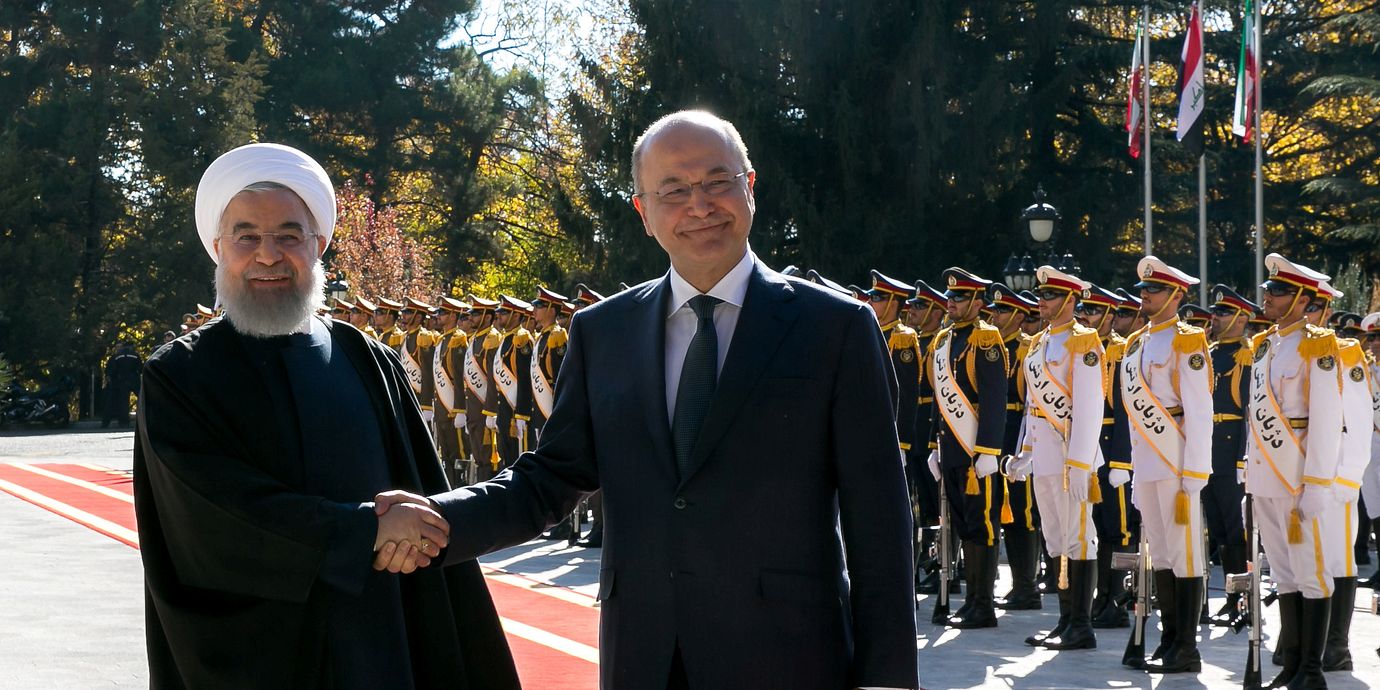
Sanktionsdrabbade Iran vill öka handeln med grannlandet Irak till 20 miljarder dollar årligen, från dagens nivå på 12 miljarder dollar. Det säger presidenten Hassan Rouhani i samband med att han träffar sin irakiske motsvarighet Barham Salih, skriver Reuters.
Mötet äger rum två veckor efter att de amerikanska sanktionerna mot Tehran trädde i kraft.
Förra veckan bekräftade irakiska tjänstemän för Reuters att Irak har kommit överens med Iran om att byta matvaror mot energi.
bakgrund
Sanktionerna mot Iran
Wikipedia (en)
Following the Iranian Revolution of 1979 and the resulting hostage crisis, the United States imposed an asset freeze and trade embargo against Iran. While those sanctions were later lifted, the United States imposed new sanctions in 1987 after Iran's actions against shipping in the Persian Gulf and support of international terrorism, in 1987 the United States imposed economic sanctions against Iran. The sanctions were expanded in 1995 to include firms dealing with the Iranian government. In 2006, the UN Security Council passed Resolution 1696 and imposed sanctions after Iran refused to suspend its uranium enrichment program. U.S. sanctions initially targeted investments in oil, gas, and petrochemicals, exports of refined petroleum products, and business dealings with the Islamic Revolutionary Guard Corps (IRGC). This encompasses banking and insurance transactions (including with the Central Bank of Iran), shipping, web-hosting services for commercial endeavors, and domain name registration services.Over the years, sanctions have taken a serious toll on Iran's economy and people. Since 1979, the United States has led international efforts to use sanctions to influence Iran's policies, including Iran's uranium enrichment program, which Western governments fear is intended for developing the capability to produce nuclear weapons. Iran counters that its nuclear program is for civilian purposes, including generating electricity and medical purposes.When nuclear talks between Iran and Western governments were stalled and seen as a failure, they were cited as a reason to enforce stronger economic sanctions on Iran. On 2 April 2015, the P5+1 and Iran, meeting in Lausanne, Switzerland, reached a provisional agreement on a framework that, once finalized and implemented, would lift most of the sanctions in exchange for limits on Iran's nuclear programs extending for at least ten years. As a result, UN sanctions were lifted on 16 January 2016.
Omni är politiskt obundna och oberoende. Vi strävar efter att ge fler perspektiv på nyheterna. Har du frågor eller synpunkter kring vår rapportering? Kontakta redaktionen