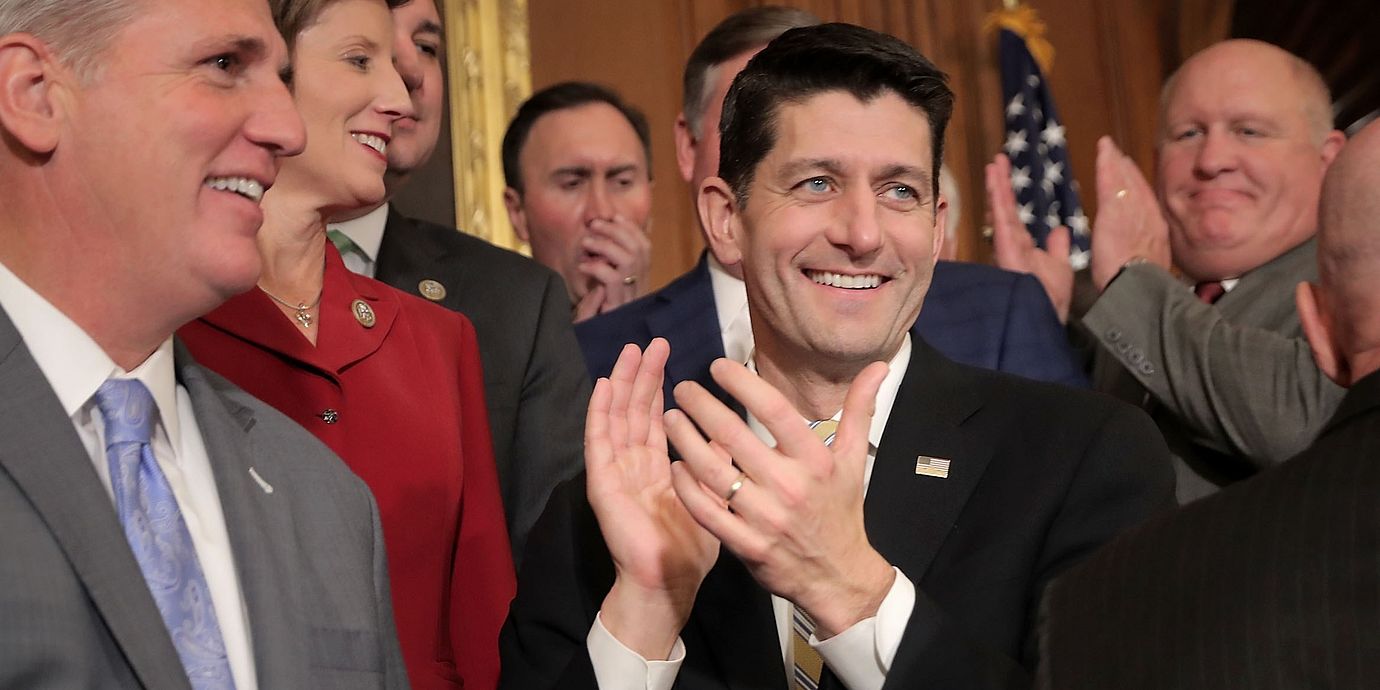
Ryan: ”Hårt arbetande ska få mer kvar i plånboken”
Att rösta igenom de kraftiga skattesänkningarna var den ”enskilt största” åtgärden för att få ekonomin att växa, menar republikanen och representanthusets talman Paul Ryan.
– Det här handlar om att ge hårt arbetande skattebetalare mer i plånboken, säger Ryan enligt Politico.
Talmannen framhöll att skattereformen kommer att få ekonomin att växa snabbare, ge högre löner, fler jobb och återigen sätta USA i förarsätet i den globala ekonomin.
Republikanerna vann torsdagens omröstning om Tax Cuts and Jobs Act i representanthuset med rösterna 227–205. 13 republikaner röstade dock emot sitt partis förslag, liksom samtliga demokrater.
Amerikanska medier om omröstningen
Svenska medier
Mer om lagen
bakgrund
Tax Cuts and Jobs Act
Wikipedia (en)
The Tax Cuts and Reform Act of 2017 is a United States Congress bill to simplify the Internal Revenue Code of 1986, effectively altering the rate of taxation for individuals and businesses. The bill also calls for the elimination for several deductions. It is the major tax reform advocated by the Trump administration.
Implementing the Act would add an estimated $1.7 trillion to the debt over 10 years. Businesses (C-corporations and pass-through entities like partnerships and S-corporations) would receive $1.1 trillion in net benefits and individuals would receive $200 billion in net benefits over a decade. In addition, the very wealthiest taxpayers would have estate taxes eliminated over time, a $150 billion benefit to them. Within given income groups, most would receive tax cuts, with a minority of taxpayers paying more. The benefits of the individual tax cuts fade over time, so the share of those with tax cuts decreases.
It was introduced in the United States House of Representatives on November 2, 2017 by Congressman Kevin Brady (TX). The bill was referred to the House Committee on Ways and Means. On November 9, 2017, the committee voted along party lines, advancing the bill to a full house floor vote. The Senate is also preparing its own version.
Mer om lagen
bakgrund
Tax Cuts and Jobs Act
Wikipedia (en)
The Tax Cuts and Reform Act of 2017 is a United States Congress bill to simplify the Internal Revenue Code of 1986, effectively altering the rate of taxation for individuals and businesses. The bill also calls for the elimination for several deductions. It is the major tax reform advocated by the Trump administration.
Implementing the Act would add an estimated $1.7 trillion to the debt over 10 years. Businesses (C-corporations and pass-through entities like partnerships and S-corporations) would receive $1.1 trillion in net benefits and individuals would receive $200 billion in net benefits over a decade. In addition, the very wealthiest taxpayers would have estate taxes eliminated over time, a $150 billion benefit to them. Within given income groups, most would receive tax cuts, with a minority of taxpayers paying more. The benefits of the individual tax cuts fade over time, so the share of those with tax cuts decreases.
It was introduced in the United States House of Representatives on November 2, 2017 by Congressman Kevin Brady (TX). The bill was referred to the House Committee on Ways and Means. On November 9, 2017, the committee voted along party lines, advancing the bill to a full house floor vote. The Senate is also preparing its own version.
Omni är politiskt obundna och oberoende. Vi strävar efter att ge fler perspektiv på nyheterna. Har du frågor eller synpunkter kring vår rapportering? Kontakta redaktionen