Hem
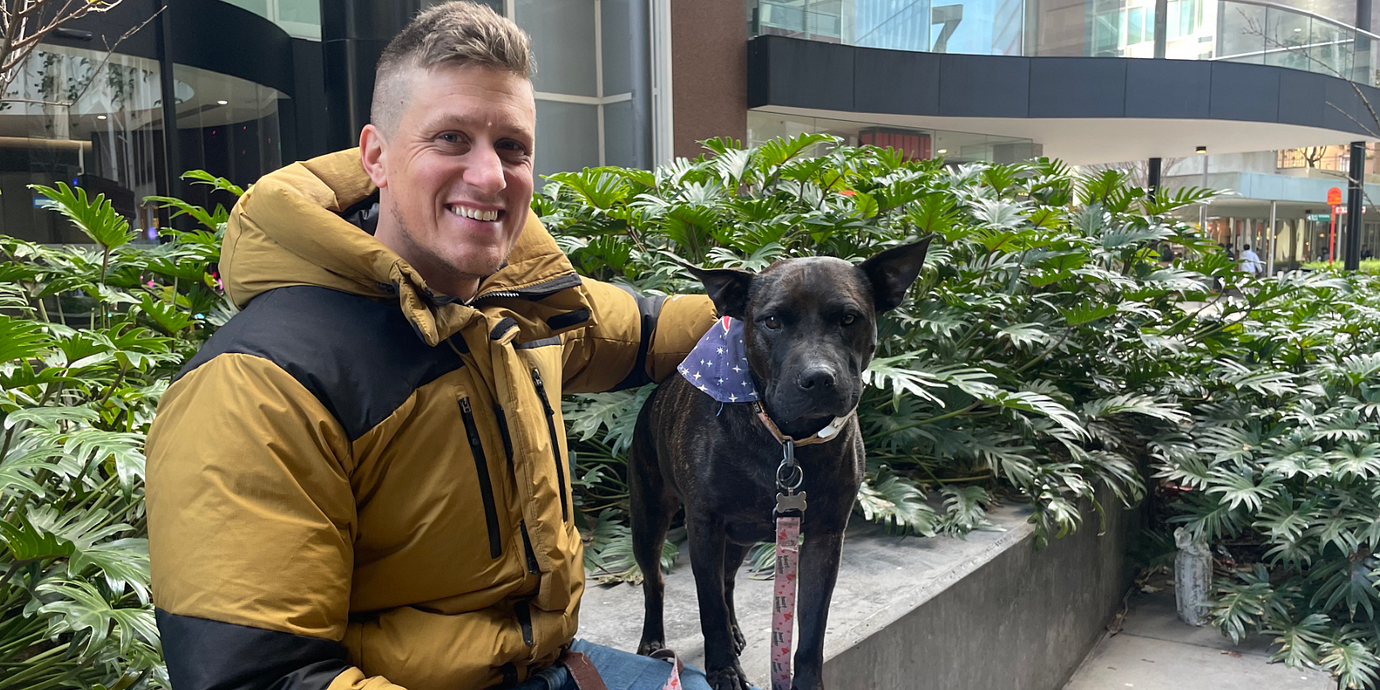
Paul Conyngham med hunden Rosie. (Paul Conyngham)

Techentreprenör tog fram cancervaccin till sin sjuka hund – med hjälp av AI

Den australiske techentreprenören Paul Conyngham har använt AI för att utveckla ett skräddarsytt mrna-vaccin till sin cancersjuka hund Rosie.

– Rosie är min bästa vän, hon har alltid varit vid min sida, säger han till tidningen The Australian.

Forskare vid University of New South Wales (UNSW) kartlade Rosies dna, därefter använde Conyngham Chat GPT och Googles AI-verktyg Alphafold för att identifiera muterade proteiner som skulle kunna behandlas.

Pall Thordarson, forskare inom nanomedicin vid UNSW:s RNA-institut, utgick från datan för att ta fram mrna-vaccinet. Han säger att fallet med Rosie visar potentialen i tekniken.

– Så småningom ska vi använda det här för att hjälpa människor.

Han betonar att vaccinet sannolikt har gett hunden mer tid och bättre livskvalitet, men att behandlingen inte ska ses som ett botemedel.


Se inslaget här
 
Mrna-vaccin
Wikipedia (en)
An mRNA vaccine is a type of vaccine that uses a copy of a molecule called messenger RNA (mRNA) to produce an immune response. The vaccine delivers molecules of antigen-encoding mRNA into cells, which use the designed mRNA as a blueprint to build foreign protein that would normally be produced by a pathogen (such as a virus) or by a cancer cell. These protein molecules stimulate an adaptive immune response that teaches the body to identify and destroy the corresponding pathogen or cancer cells. The mRNA is delivered by a co-formulation of the RNA encapsulated in lipid nanoparticles that protect the RNA strands and help their absorption into the cells. Reactogenicity, the tendency of a vaccine to produce adverse reactions, is similar to that of conventional non-RNA vaccines. People susceptible to an autoimmune response may have an adverse reaction to messenger RNA vaccines. The advantages of mRNA vaccines over traditional vaccines are ease of design, speed and lower cost of production, the induction of both cellular and humoral immunity, and lack of interaction with the genomic DNA. While some messenger RNA vaccines, such as the Pfizer–BioNTech COVID-19 vaccine, have the disadvantage of requiring ultracold storage before distribution, other mRNA vaccines, such as the Moderna vaccine, do not have such requirements. In RNA therapeutics, messenger RNA vaccines have attracted considerable interest as COVID-19 vaccines. In December 2020, Pfizer–BioNTech and Moderna obtained authorization for their mRNA-based COVID-19 vaccines. On 2 December, the UK Medicines and Healthcare products Regulatory Agency (MHRA) became the first medicines regulator to approve an mRNA vaccine, authorizing the Pfizer–BioNTech vaccine for widespread use. On 11 December, the US Food and Drug Administration (FDA) issued an emergency use authorization for the Pfizer–BioNTech vaccine and a week later similarly authorized the Moderna vaccine. In 2023 the Nobel Prize in Physiology or Medicine was awarded to Katalin Karikó and Drew Weissman for their discoveries concerning modified nucleosides that enabled the development of effective mRNA vaccines against COVID-19.
Omni är politiskt obundna och oberoende. Vi strävar efter att ge fler perspektiv på nyheterna. Har du frågor eller synpunkter kring vår rapportering? Kontakta redaktionen