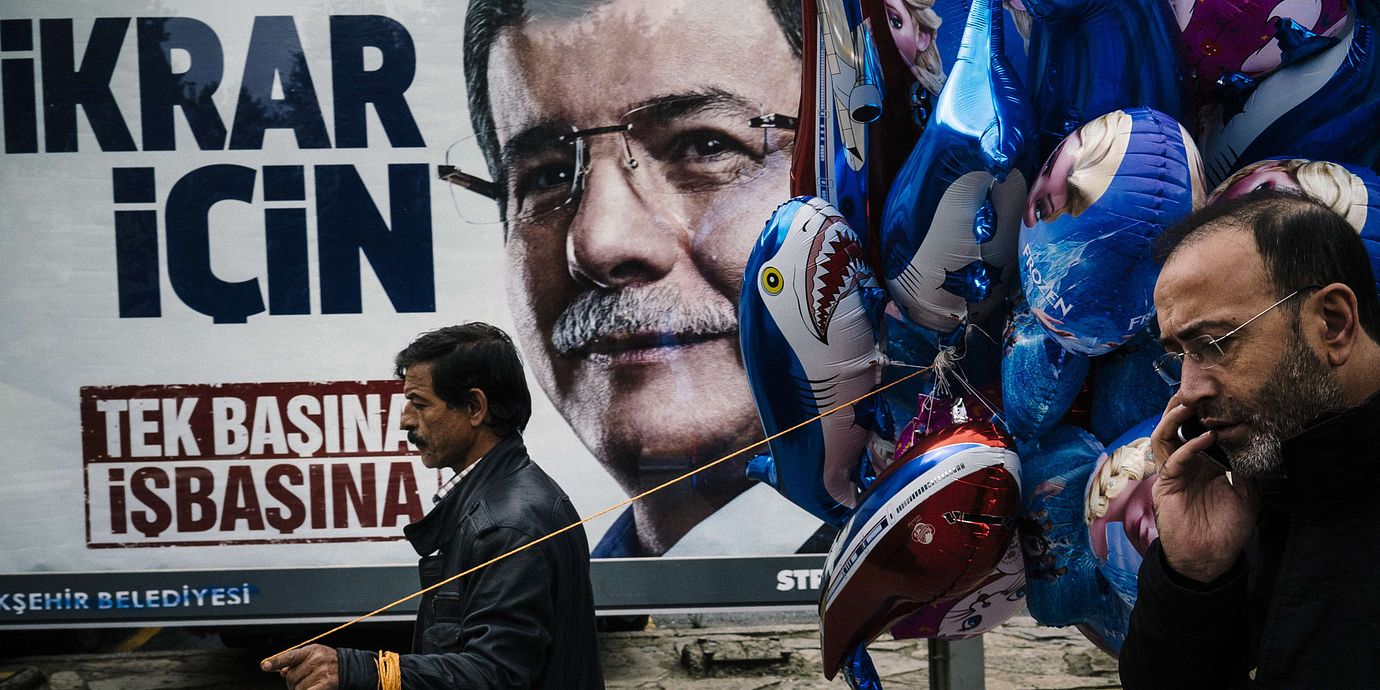
Turkiet går till nyval nära inbördeskrig
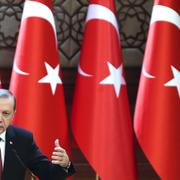
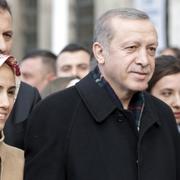
På söndag är det nyval i Turkiet och det regerande AKP-partiet hoppas återfå majoriteten i parlamentet. Men tillståndet i landet är bräckligt och sedan vapenvilan mellan staten och den kurdiska gerillan PKK bröts i somras råder den nästan inbördeskrig, skriver SVT.
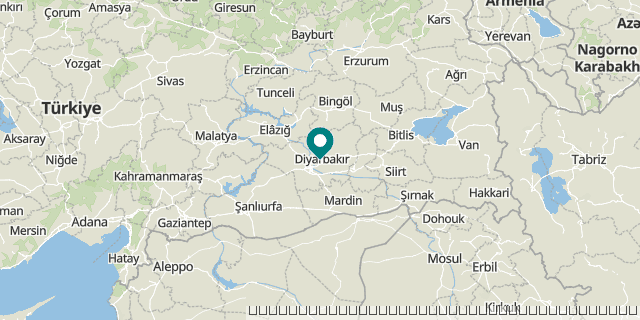
– Det här valet är oerhört viktigt för oss. Vi vill ha trygghet och en regering vi kan lita på, säger Mehmed Balci som är frisör i den kurddominerade staden Sur.
bakgrund
Valet i Turkiet
Wikipedia (en)
The Turkish general election of November 2015 will be held on 1 November 2015 throughout the 85 electoral districts of Turkey to elect 550 members to the Grand National Assembly. It is the 25th general election in the history of the Turkish Republic and will elect the country's 26th Parliament.
The snap election was called by President Recep Tayyip Erdoğan on 24 August 2015 after coalition negotiations between the governing Justice and Development Party (AKP) and the opposition broke down, amid claims that a vast number of AKP politicians favoured calling an early election rather than going into coalition. The previous general election held in June 2015 had resulted in a hung parliament, with the AKP falling 18 seats short of a majority. The election, which was dubbed as a 're-run' of the inconclusive June election by Erdoğan, will be the 7th early election in the history of Turkish multi-party politics and the first to be overseen by an interim election government. The election will render the 25th Parliamentary session, elected in June 2015, the shortest in the Grand National Assembly's history, lasting for just four months.
The election will take place amid security concerns after an escalation of violence predominantly in the south-east of the country. A ceasefire between the government and the Kurdistan Workers' Party (PKK) fell apart in July after the government authorised airstrikes against both Islamic State of Iraq and the Levant (ISIL) militants Syria and PKK militants in Northern Iraq. This was in response to a suicide bombing in Suruç, believed to be perpetrated by ISIL, that killed 32 activists on 20 July. The conflict led to over 200 deaths of both civilians and military personnel in three months, with the situation in the mainly Kurdish south-east being described as 'a worsening bloodshed'. This led to security concerns being raised over whether an election could be peacefully held in the region, while the governing Justice and Development Party (AKP) was accused of deliberately sparking the conflict to both win back votes from the Nationalist Movement Party (MHP) and to decrease the turnout in the south-eastern Peoples' Democratic Party (HDP) strongholds. The election was preceded by the deadliest terrorist attack in Turkey's modern history, after two suicide bombers killed 102 people attending a peace rally in central Ankara. Numerous political parties, notably the main opposition Republican People's Party (CHP), ended up either entirely cancelling or significantly toning down their election campaigns following the attack.
The election was predominately fought over the issues of terrorism and national security. Nevertheless, public polling and media commentators have indicated that they do not expect a different result to the June 2015 election, with some even speculating that a second early vote could possibly be held during 2016. Campaigning before the election was described as particularly polarising, with AKP leader Ahmet Davutoğlu, MHP leader Devlet Bahçeli and HDP co-leader Selahattin Demirtaş all being subject to legal investigations over defamation and misconduct during the lead-up to the vote. Fehmi Demir, the leader of the Rights and Freedoms Party (HAK-PAR), was killed in a traffic accident six days before the election.
Sur
Omni är politiskt obundna och oberoende. Vi strävar efter att ge fler perspektiv på nyheterna. Har du frågor eller synpunkter kring vår rapportering? Kontakta redaktionen