Iran: Attacken kommer att få ”eviga konsekvenser”
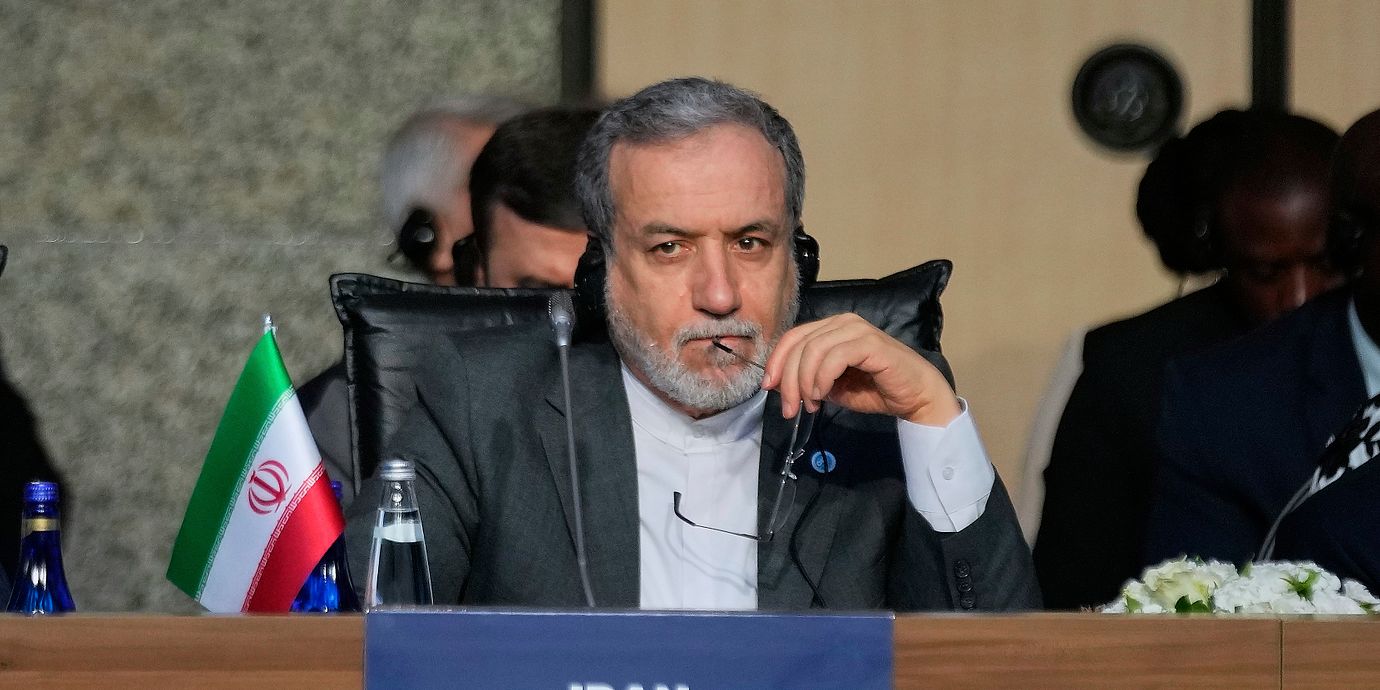
Irans utrikesminister Abbas Araghchi reagerar på nattens bombningar av iranska kärnenergianläggningar. På X skriver han att USA har begått ett allvarligt brott mot FN-stadgan, internationell rätt och icke-spridningsavtalet (NPT).
”Dagens händelser är upprörande och kommer att få eviga konsekvenser. Varje enskild medlemsstat i FN bör känna djup oro över detta extremt farliga, laglösa och kriminella agerande.”
Han skriver vidare att Iran kommer att ”vidta alla nödvändiga åtgärder för att försvara sin suveränitet, sina intressen och sitt folk.”
Icke-spridningsavtalet
Wikipedia (en)
The Treaty on the Non-Proliferation of Nuclear Weapons, commonly known as the Non-Proliferation Treaty or NPT, is an international treaty whose objective is to prevent the spread of nuclear weapons and weapons technology, to promote cooperation in the peaceful uses of nuclear energy, and to further the goal of achieving nuclear disarmament and general and complete disarmament. Between 1965 and 1968, the treaty was negotiated by the Eighteen Nation Committee on Disarmament, a United Nations-sponsored organization based in Geneva, Switzerland.
Opened for signature in 1968, the treaty entered into force in 1970. As required by the text, after twenty-five years, NPT parties met in May 1995 and agreed to extend the treaty indefinitely. More countries are parties to the NPT than any other arms limitation and disarmament agreement, a testament to the treaty's significance. As of August 2016, 191 states have become parties to the treaty, though North Korea, which acceded in 1985 but never came into compliance, announced its withdrawal from the NPT in 2003, following detonation of nuclear devices in violation of core obligations. Four UN member states have never accepted the NPT, three of which possess or are thought to possess nuclear weapons: India, Israel, and Pakistan. In addition, South Sudan, founded in 2011, has not joined.
The treaty defines nuclear-weapon states as those that have built and tested a nuclear explosive device before 1 January 1967; these are the United States (1945), Russia (1949), the United Kingdom (1952), France (1960), and China (1964). Four other states are known or believed to possess nuclear weapons: India, Pakistan, and North Korea have openly tested and declared that they possess nuclear weapons, while Israel is deliberately ambiguous regarding its nuclear weapons status.
The NPT is often seen to be based on a central bargain:
the NPT non-nuclear-weapon states agree never to acquire nuclear weapons and the NPT nuclear-weapon states in exchange agree to share the benefits of peaceful nuclear technology and to pursue nuclear disarmament aimed at the ultimate elimination of their nuclear arsenals.
The treaty is reviewed every five years in meetings called Review Conferences. Even though the treaty was originally conceived with a limited duration of 25 years, the signing parties decided, by consensus, to unconditionally extend the treaty indefinitely during the Review Conference in New York City on 11 May 1995, in the culmination of U.S. government efforts led by Ambassador Thomas Graham Jr.
At the time the NPT was proposed, there were predictions of 25–30 nuclear weapon states within 20 years. Instead, over forty years later, five states are not parties to the NPT, and they include the only four additional states believed to possess nuclear weapons. Several additional measures have been adopted to strengthen the NPT and the broader nuclear nonproliferation regime and make it difficult for states to acquire the capability to produce nuclear weapons, including the export controls of the Nuclear Suppliers Group and the enhanced verification measures of the International Atomic Energy Agency (IAEA) Additional Protocol.
Critics argue that the NPT cannot stop the proliferation of nuclear weapons or the motivation to acquire them. They express disappointment with the limited progress on nuclear disarmament, where the five authorized nuclear weapons states still have 13,400 warheads in their combined stockpile. Several high-ranking officials within the United Nations have said that they can do little to stop states using nuclear reactors to produce nuclear weapons.
Direktrapporter
Omni är politiskt obundna och oberoende. Vi strävar efter att ge fler perspektiv på nyheterna. Har du frågor eller synpunkter kring vår rapportering? Kontakta redaktionen