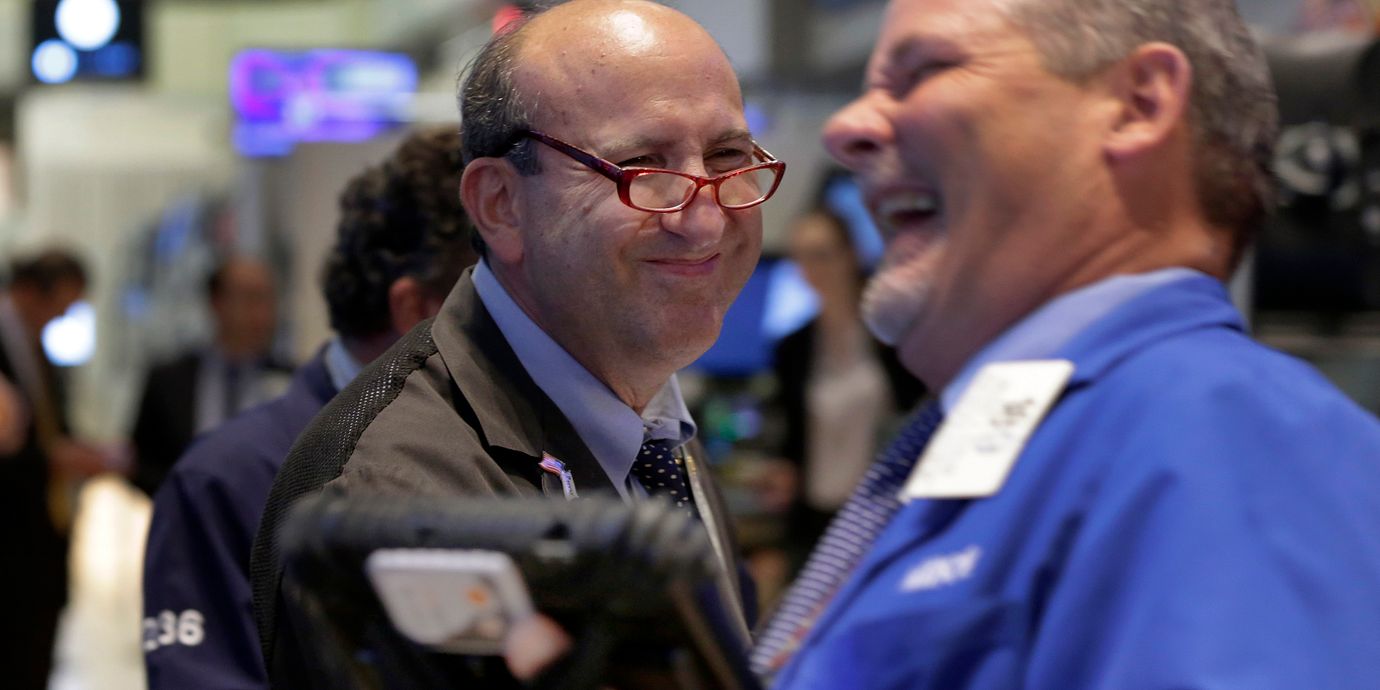
Börhandlarna och aktieägarna lär bli glada av Trumps skattepolitik, enligt Reuters Jeffrey Goldfarb. (Richard Drew / TT / NTB Scanpix)

”Trump gynnar aktieägarna – inte arbetarna”

Donald Trump har signalerat en engångsskattesänkning till 10 procent för amerikanska företag som plockar hem vinster från utländsk verksamhet. Det beräknas innebära att motsvarande 23 000 miljarder kronor hittar hem och enligt Trump kommer det att betyda nya fabriker och fler jobb i USA. Men den slutsatsen är felaktig, skriver Jeffrey Goldfarb i en analys för Reuters.

”I själva verket kommer aktieägarna att tjäna mest, åtminstone på kort sikt”, skriver han.

Vid den senaste engångsskattesänkningen 2004 använde exempelvis företagen pengarna för att köpa tillbaka aktier samtidigt som man drog ner på arbetskraft.

”Arbetsgivarna investerar i fabriker, forskning och anställningar i syfte att tillgodose efterfrågan, inte på grund av en skänk från ovan från en regering”, skriver Goldfarb.


bakgrund
 
Repatriation tax holiday (engångsskattesänkning för att ta hem utländska vinster)
Wikipedia (en)
A repatriation tax holiday is a tax holiday specifically directed towards individuals and businesses in one country who repatriate to that country income earned in other countries. The theory supporting such an action is that multinational companies headquartered in one country, but which earn income in a second country will be unlikely to bring income from the second country back to their home country if high taxes will be assessed on this income when it is brought back. By allowing those companies to bring income back to the home country at a reduced tax rate, money will be injected into the economy of the home country that otherwise would remain in the second country. In 2004, the United States Congress enacted such a tax holiday for U.S. multinational companies, allowing them to repatriate foreign profits to the United States at a 5.25% tax rate. Under this law, corporations brought $362 billion into the American economy, primarily for the purposes of paying dividends to investors, repurchasing shares, and purchasing other corporations. In 2011, Senate Democrats, arguing against another repatriation tax holiday, issued a report asserting that the previous effort had actually cost the United States Treasury $3.3 billion, and that companies receiving the tax breaks had thereafter cut over 20,000 jobs. A second repatriation tax holiday was defeated in the United States Senate in 2009.

Läs också

Omni är politiskt obundna och oberoende. Vi strävar efter att ge fler perspektiv på nyheterna. Har du frågor eller synpunkter kring vår rapportering? Kontakta redaktionen