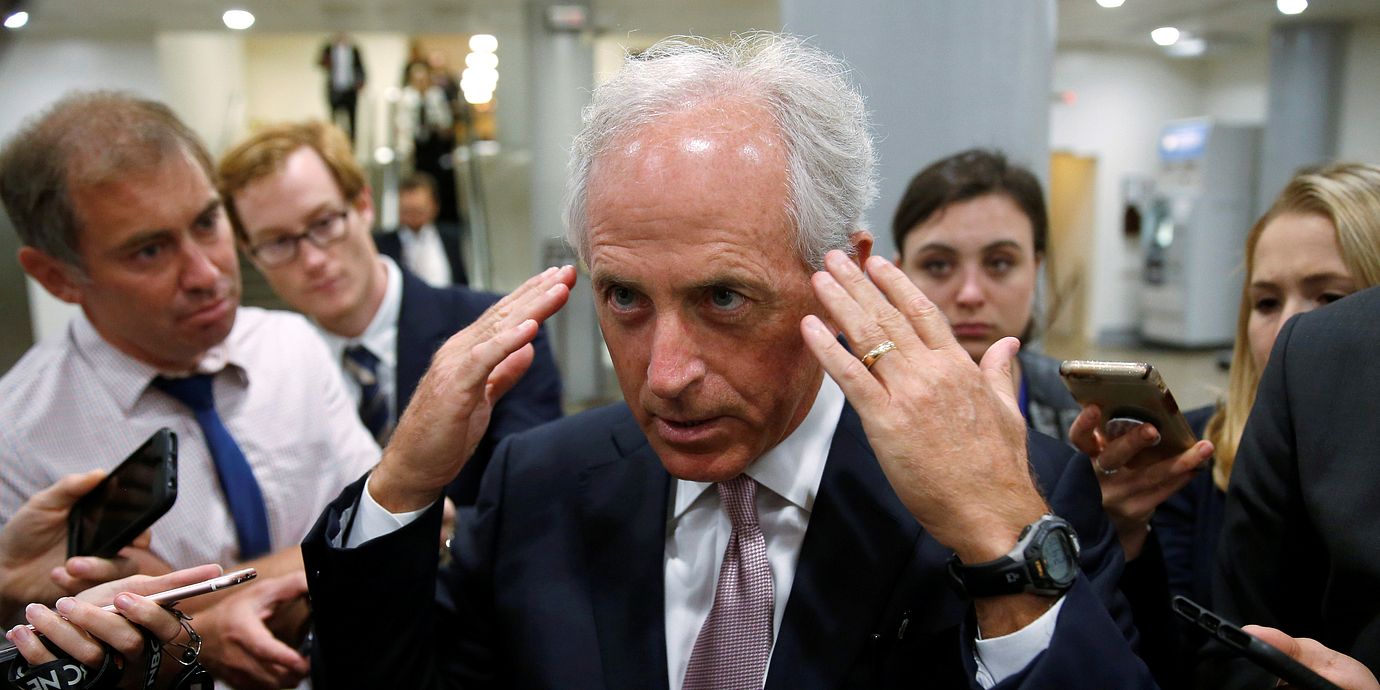
Bob Corker. Arkivbild. (JOSHUA ROBERTS / TT NYHETSBYRÅN)

Nästa strid: Republikaner mot nationalekonomer

Med planer på stora skattesänkningar gör sig Republikanerna i USA nu redo att kämpa mot en tung motståndare – nationalekonomer. Att kongressens regler gör det svårare att få igenom lagförslag som långsiktigt ökar budgetunderskottet ger nämligen kongressens opolitiska expertorgan stor makt, skriver New York Times.

Senatorn Bob Corker menar att skatter går att sänka på ett sätt så att de betalar sig själva genom tillväxt och vill använda ”giltiga modeller” från ”riktiga ekonomer”. Men Corker får mothugg från nationalekonomer. Douglas Holtz-Eakin, en konservativ ekonom som tjänstgjorde under George W Bush, säger till New York Times att genomarbetade skatteförändringar delvis kan motverka skattebortfallet. Men han säger samtidigt att det ”inte finns några bevis någonstans för att en skattesänkning av den magnituden” kan kompenseras genom tillväxt, oavsett hur den är utformad.


Mer om skatteförslaget

bakgrund
 
Bolagsskatt i USA
Wikipedia (en)
Corporate tax is imposed in the United States at the federal, most state, and some local levels on the income of entities treated for tax purposes as corporations. Federal tax rates on corporate taxable income vary from 15% to 35%. State and local taxes and rules vary by jurisdiction, though many are based on federal concepts and definitions. Taxable income may differ from book income both as to timing of income and tax deductions and as to what is taxable. Corporations are also subject to a federal Alternative Minimum Tax and alternative state taxes. Like individuals, corporations must file tax returns every year. They must make quarterly estimated tax payments. Controlled groups of corporations may file a consolidated return. Some corporate transactions are not taxable. These include most formations and some types of mergers, acquisitions, and liquidations. Shareholders of a corporation are taxed on dividends distributed by the corporation. Corporations may be subject to foreign income taxes, and may be granted a foreign tax credit for such taxes. Shareholders of most corporations are not taxed directly on corporate income, but must pay tax on dividends paid by the corporation. However, shareholders of S corporations and mutual funds are taxed currently on corporate income, and do not pay tax on dividends. In 2014 the United States had the third highest general top marginal corporate income tax rate in the world at 39.1 percent (consisting of the 35% federal rate plus a combined state rate), exceeded only by Chad and the United Arab Emirates. However, the average corporate tax rate in 2011 dipped to 12.1%, its lowest level since before World War I, largely due to the great recession and a bonus depreciation tax break.
Omni är politiskt obundna och oberoende. Vi strävar efter att ge fler perspektiv på nyheterna. Har du frågor eller synpunkter kring vår rapportering? Kontakta redaktionen