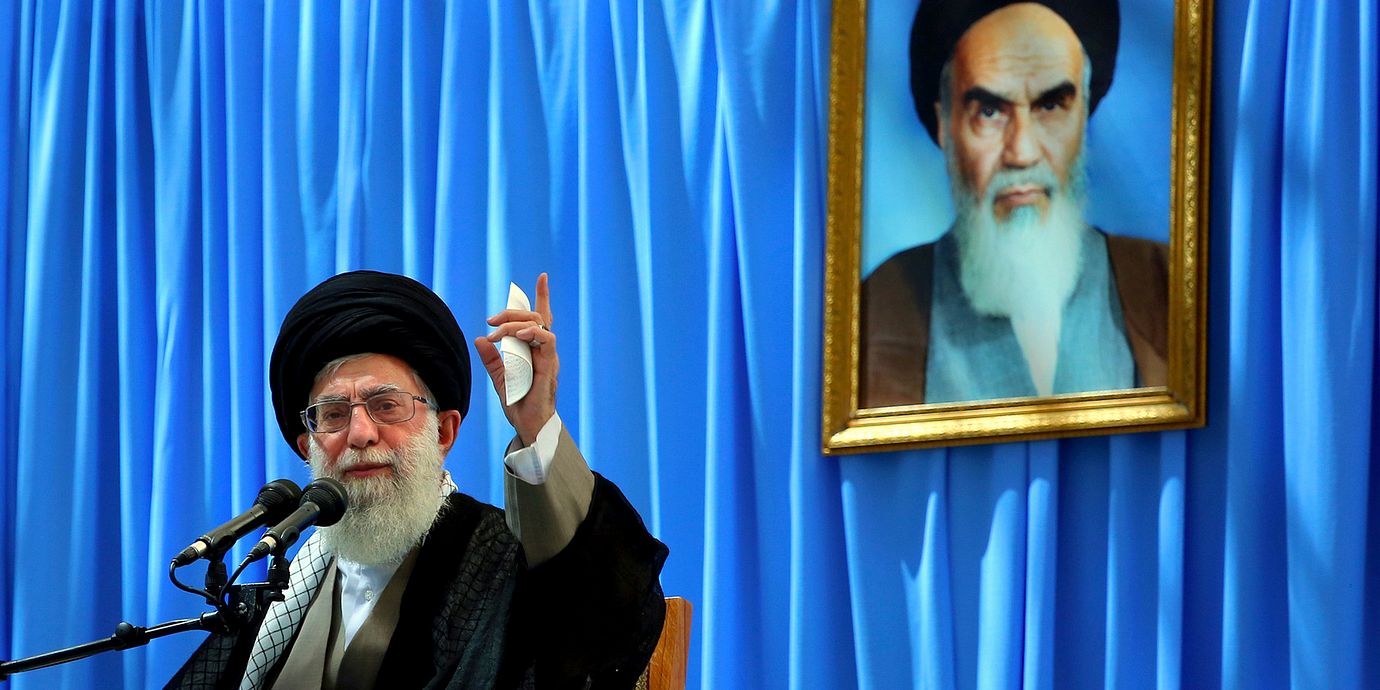
Godkänner kärnavtalet – med viss reservation
Irans överhuvud, ayatolla Ali Khameini, godkänner kärnavtalet mellan Iran och de andra världsmakterna. Det rapporterar flera nyhetsbyråer.
Han har skrivit ett brev till presidenten Hassan Rouhani som lästes upp i nationell tv. Där säger han att avtalet kan implementeras – men under vissa villkor.
Khameini vill bland annat att USA och EU går ut och tydligt annonserar att sanktionerna mot Iran lyfts. Han varnar också, i allmänhet, för att det inte går att lita på USA.
bakgrund
I Iran är det ayatollan som har sista ordet, även i politiken
Wikipedia (en)
Sayyed Ali Hosseini Khamenei (Persian: سید علی حسینی خامنهای pronounced [ʔæˈliː hoseiˈniː xɒːmeneˈʔiː] ; born 17 July 1939) is the second and current Supreme Leader of Iran and a Muslim cleric. Ali Khamenei succeeded Ruhollah Khomeini, the leader of the Iranian Revolution, after Khomeini's death, being elected as the new Supreme Leader by the Assembly of Experts on 4 June 1989. He had also served as the President of Iran from 1981 to 1989. In 2012, 2013, and 2014 Forbes selected him 21st, 23rd, and 19th respectively in the list of The World's Most Powerful People.
Khamenei is a head of state, and is considered the most powerful political authority in Iran. Khamenei was the victim of an attempted assassination in June 1981 that paralysed his right arm. According to his official website, Khamenei was arrested six times before being sent into exile for three years during Mohammad Reza Pahlavi's reign. Ali Khamenei has reportedly reissued a fatwa saying that the production, stockpiling and use of nuclear weapons is forbidden under Islam.
Omni är politiskt obundna och oberoende. Vi strävar efter att ge fler perspektiv på nyheterna. Har du frågor eller synpunkter kring vår rapportering? Kontakta redaktionen