Pundet rusade mot dollarn efter uttalanden från May
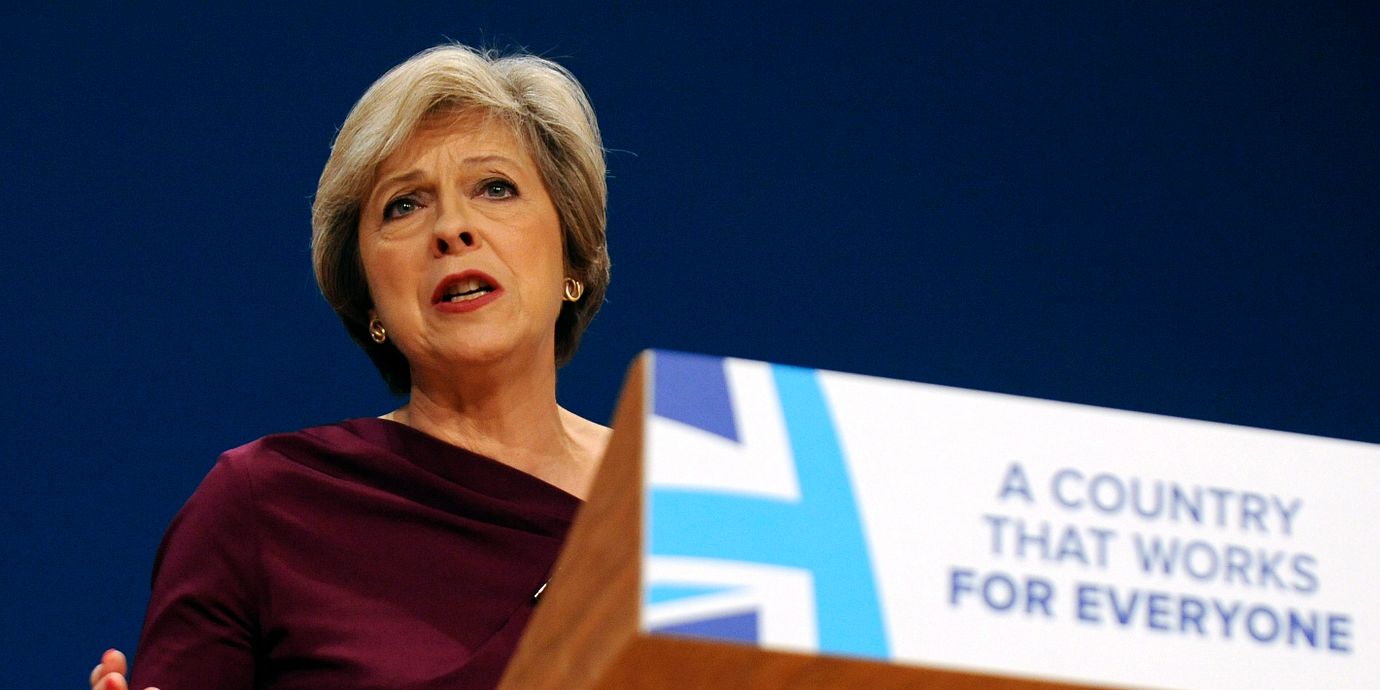
Farhågor om att Storbritannien är på väg att göra en ”hård brexit” och lämna så väl EU som den inre marknaden har under den här månaden tvingat ner pundet till bottennivåer. Men nu har premiärminister Theresa Mays uttalanden om att hon tänker låta det brittiska parlamentet rösta om uppgörelsen om ett utträde fått valutakursen att vända tvärt uppåt. Pundet steg med åtminstone 0,7 procent gentemot alla 31 valutor i en valutakorg. Mot dollarn var ökningen den största sedan i augusti.
bakgrund
Brexit
Wikipedia (en)
The United Kingdom intends to withdraw from the European Union (EU), a process commonly known as Brexit, as a result of a June 2016 referendum in which 51.9% voted to leave the EU. The separation process is complex, causing political and economic changes for the United Kingdom (UK) and other countries. On 2 October 2016, British Prime Minister Theresa May announced she would trigger Article 50 by the end of March 2017 which would make the UK set to leave the EU by the end of March 2019. The terms for withdrawal have not been established; however May has promised a bill to remove the European Communities Act 1972 from the statute book and to transfer existing EU laws into the UK domestic law. In the meantime, the UK remains a full member of the European Union. The term "Brexit" is a portmanteau of the words "British" and "exit".
The process of withdrawal from the European Union has, since 2007, been governed by Article 50 of the Treaty on European Union. No member state has ever left the EU. Under Article 50 the withdrawal must be in accordance with the Member State's constitutional requirements and uncertainty exists as to the constitutional requirements in the UK. Unless extensions are agreed to unanimously by the Council of the European Union, the timing for leaving under the article is two years from when the UK gives official notice, but this official notice was not given immediately following the referendum in June 2016. The assumption is that during the two-year window new agreements will be negotiated, but there is no requirement that there be new agreements. Some aspects, such as trade agreements, may be made difficult to negotiate by the EU until after Britain has formally left the EU.
Withdrawal has been the goal of various individuals, advocacy groups, and political parties since the UK joined the European Economic Community (EEC), the predecessor of the EU, in 1973, though continued membership of the EEC and the Common Market was approved in a 1975 referendum by 67.2% of votes.
Omni är politiskt obundna och oberoende. Vi strävar efter att ge fler perspektiv på nyheterna. Har du frågor eller synpunkter kring vår rapportering? Kontakta redaktionen