En majoritet i USA ger stöd åt Trumps Nordkoreapolitik
USA:s president Donald Trump noterar sitt högsta stöd hittills i en politisk fråga i en opinionsmätning beställd av AP. Enligt mätningen stöder en majoritet, 55 procent, av amerikanerna hans Nordkoreapolitik. Det är en ökning från 42 procent i mars och 34 procent i oktober förra året.
Även personer som normalt sett inte uppskattar Trumps presidentskap säger sig beundra hans ansträngningar till nedtrappning med Nordkorea, skriver nyhetsbyrån.
Den positiva bilden av Trumps insatser i Nordkoreafrågan tycks inte ha påverkat den allmänna synen på presidenten. Förtroendet för honom ligger kvar på 41 procent och har inte förändrats mycket sedan mars.
bakgrund
Relationen mellan Nordkorea och USA
Wikipedia (en)
North Korea–United States relations (Chosŏn'gŭl: 조미관계; Hancha: 朝美關係; RR: Jomi gwangye; MR: Chomi kwan'gye) have been historically hostile and developed primarily during the Korean War. In recent years relations have been largely defined by North Korea's six tests of nuclear weapons, its development of long-range missiles capable of striking targets thousands of miles away, and its ongoing threats to strike the United States and South Korea with nuclear weapons and conventional forces. During presidency, George W. Bush referred to North Korea as part of "the Axis of Evil" because of the threat of its nuclear capabilities.
As North Korea and the United States of America have started some formal diplomatic relations after the Trump-Kim Summit. Sweden acts as the protecting power of United States interests in North Korea for consular matters. Since the Korean War, the United States has maintained a strong military presence in South Korea. However, the United States has considered, de jure, South Korea as the sole legitimate representative of all of Korea.
Support among the American public for US forces to defend South Korea has increased steadily. While was at a mere 26% in 1990, it has now nearly tripled to 62%. A majority of the American public also have a positive view of Moon Jae-In, the South Korean President as of 2017.
In 2015, according to Gallup's annual World Affairs survey, only 9% of Americans have a favorable view of North Korea, while 87% of Americans have a negative view. According to a 2014 BBC World Service Poll, only 4% of Americans view North Korea's influence positively with 90% expressing a negative view, one of the most negative perceptions of North Korea in the world.
2017 marked a significant rise of tensions and amplified rhetoric from both sides as Donald Trump took the presidency, after it appeared that North Korea's nuclear weapons program was developing at a faster rate than previously thought. The increasing rhetoric (as well as Trump's more aggressive approach to handling North Korea), missile testing and increasing military presence on the Korean Peninsula sparked speculation of a nuclear conflict.
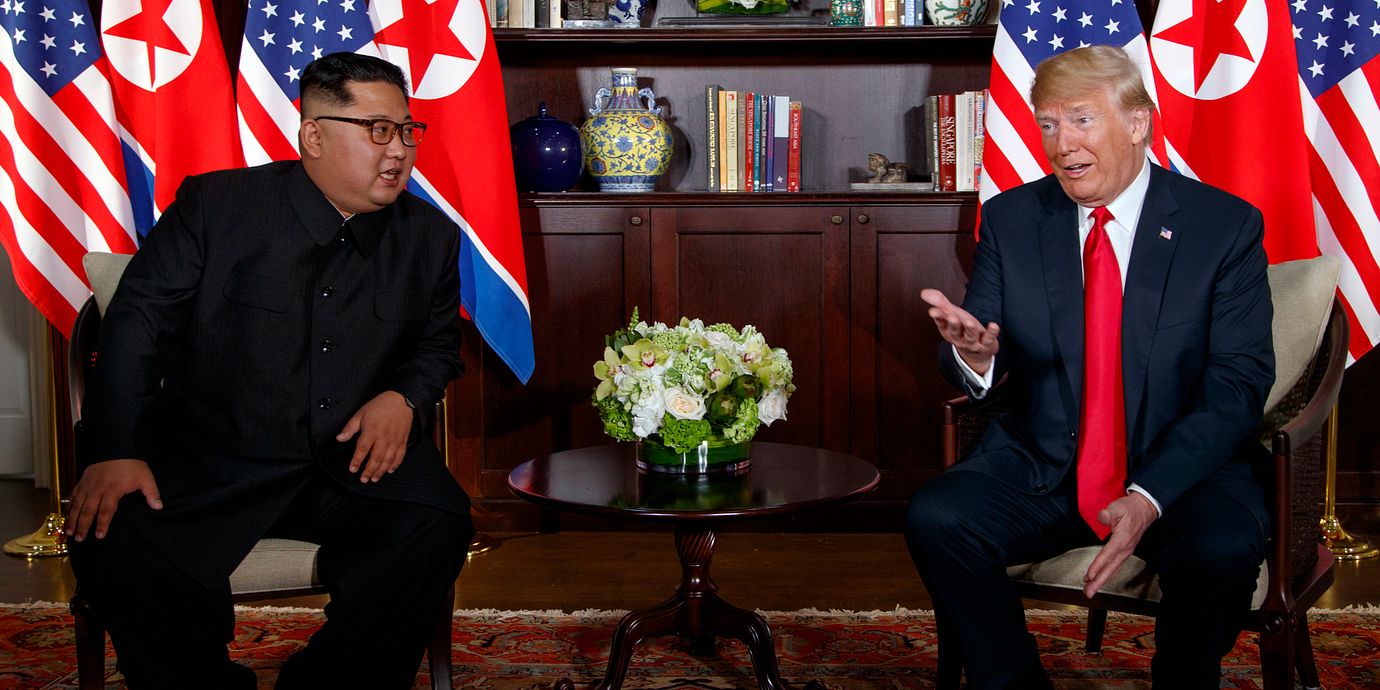
Despite fears of a massive conflict, a détente began to develop when on March 8, 2018, the White House confirmed that Trump would accept a meeting invitation from Kim Jong-un. At the time, they were supposed to meet in May. On May 15, 2018, North Korea cut off talks with South Korea and threatened to cancel the planned U.S.-North Korea summit, citing military exercises between the United States and South Korea. This cancellation was quickly reversed when Trump received an uncharacteristically friendly reply from Kim. On June 12, 2018, Trump and Kim met at the summit in Singapore, in the first summit meeting between the leaders of the two countries. Over the course of the summit, the two leaders engaged in several discussions and signed a joint statement calling for security, stability, and lasting peace.
Omni är politiskt obundna och oberoende. Vi strävar efter att ge fler perspektiv på nyheterna. Har du frågor eller synpunkter kring vår rapportering? Kontakta redaktionen