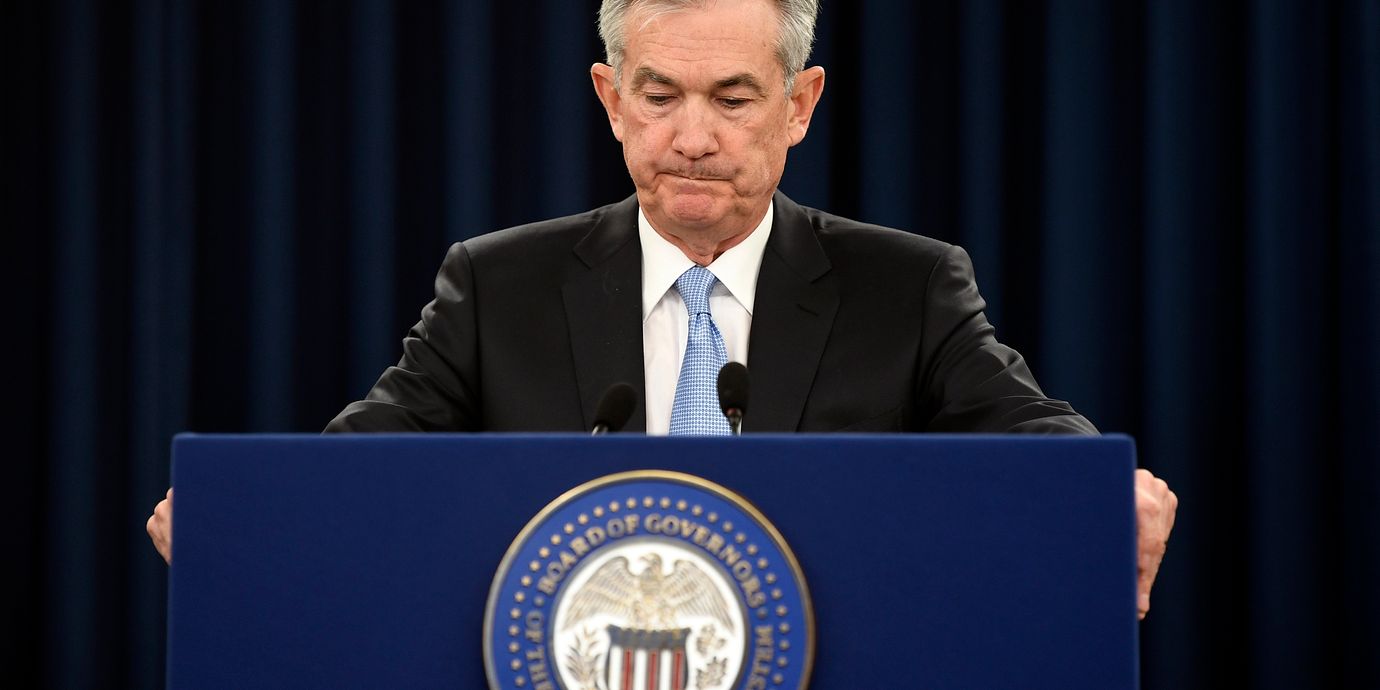
Federal Reserve lämnar styrräntan oförändrad
Federal Reserve lämnar som väntat den amerikanska styrräntan oförändrad i intervallet 2,25–2,50 procent. Fed uppger samtidigt att man kommer att vara tålmodiga med fortsatt justering av styrräntan Fed Funds, skriver Nyhetsbyrån Direkt.
Brist på en starkare inflation vägde upp den starka ekonomin och bidrog till beslutet som fattades av en enhällig Fed-kommitté, skriver CNBC.
Samtidigt gör centralbanken en teknisk justering, IOER-räntan sänks med 5 punkter till 2,35 procent. Det är en ränta som betalas på bankernas reservkapital hos Fed.
bakgrund
IOER-ränta
Wikipedia (en)
In banking, excess reserves are bank reserves in excess of a reserve requirement set by a central bank.In the United States, bank reserves for a commercial bank are held in part as a credit balance in an account for the commercial bank at the applicable Federal Reserve bank (FRB). This credit balance is not separated into separate "minimum reserves" and "excess reserves" accounts. The total amount of FRB credits held in all FRB accounts for all commercial banks, together with all currency and vault cash, form the M0 monetary base. Holding excess reserves has an opportunity cost if higher risk-adjusted interest can be earned by putting the funds elsewhere. For banks in the U.S. Federal Reserve System, this earning process is accomplished by a given bank in the very short term by making short-term (usually overnight) loans on the federal funds market to another bank that may be short of its reserve requirements. Over longer periods, banks have the opportunity to choose how much to hold in excess reserves versus in loans to the non-bank public. Therefore, the amount of its assets that a bank chooses to hold as excess reserves is a decreasing function of the amount by which the market rate for loans to the non-bank public from banks exceeds the interest rate on excess reserves and of the amount by which the federal funds rate exceeds the interest rate on excess reserves. Even with a substantial opportunity cost, banks may choose to hold some excess reserves to facilitate upcoming transactions or to meet contractual clearing balance requirements.
Läs också
Omni är politiskt obundna och oberoende. Vi strävar efter att ge fler perspektiv på nyheterna. Har du frågor eller synpunkter kring vår rapportering? Kontakta redaktionen