Australien: Kinas skuldberg hot mot stabiliteten
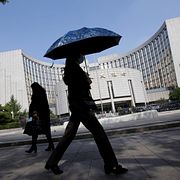
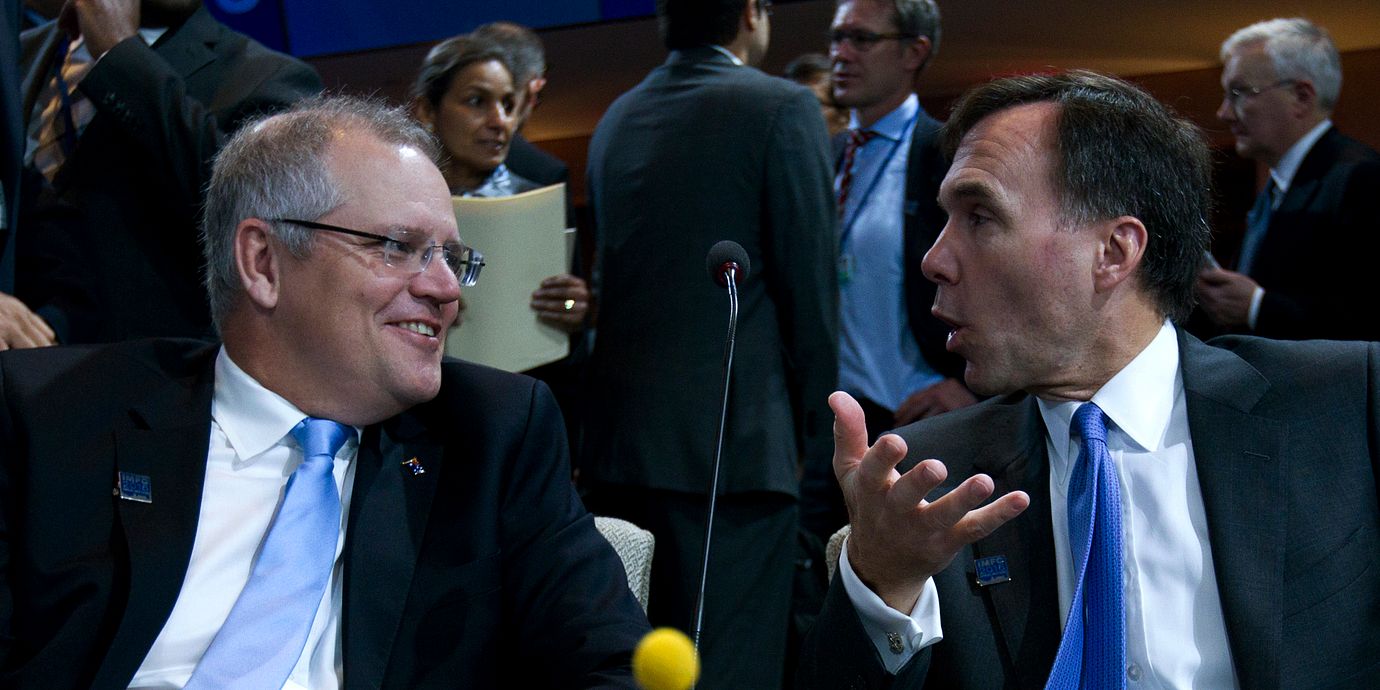
Den australiensiska finansministern Scott Morrison pekar ut Kinas växande skulder som ett hot mot Australiens finansiella stabilitet.
– Vi hyser ingen rosaskimrande optimism om Kina. Vi gör en praktisk och reell uppskattning av landets sårbarheter, säger han till Financial Times och sällar sig därmed till IMF och investeringsgurun George Soros, som också varnat för det kinesiska skuldberget.
Kina är Australiens viktigaste handelspartner och kinesiska investeringar är också viktiga för landet.
bakgrund
Kinas ekonomi
Wikipedia (en)
China's socialist market economy is the world's second largest economy by nominal GDP, and the world's largest economy by purchasing power parity according to the IMF, although China's National Bureau of Statistics rejects this claim. Until 2015 China was the world's fastest-growing major economy, with growth rates averaging 10% over 30 years. Due to historical and political facts of China's developing economy, China's public sector accounts for a bigger share of the national economy than the burgeoning private sector.
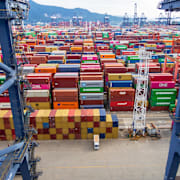
China is a global hub for manufacturing, and is the largest manufacturing economy in the world as well as the largest exporter of goods in the world. China is also the world's fastest growing consumer market and second largest importer of goods in the world. China is a net importer of services products.
China is the largest trading nation in the world and plays the most important role in international trade, and has increasingly engaged in trade organizations and treaties in recent years. China became a member of the World Trade Organization in 2001. China also has free trade agreements with several nations, including Australia, South Korea, ASEAN, New Zealand, Switzerland and Pakistan.
On a per capita income basis, China ranked 72nd by nominal GDP and 84th by GDP (PPP) in 2015, according to the International Monetary Fund (IMF). The provinces in the coastal regions of China tend to be more industrialized, while regions in the hinterland are less developed. As China's economic importance has grown, so has attention to the structure and health of the economy.
To avoid the long-term socioeconomic cost of environmental pollution in China, it has been suggested by Nicholas Stern and Fergus Green of the Grantham Research Institute on Climate Change and the Environment that the economy of China be shifted to more advanced industrial development with high-tech, low carbon emissions with better allocation of national resources to innovation and R&D for sustainable economic growth in order to reduce the impact of China's heavy industry. This is in accord with the planning goals of the central government.
Xi Jinping’s Chinese Dream is described as achieving the "Two 100s": the material goal of China becoming a "moderately well-off society" by 2021, the 100th anniversary of the Chinese Communist Party, and the modernization goal of China becoming a fully developed nation by 2049, the 100th anniversary of the founding of the People's Republic.
The internationalization of the Chinese economy continues to affect the standardized economic forecast officially launched in China by the Purchasing Managers Index in 2005. At the start of the 2010s, China became the sole Asian nation to have a GDP (PPP) above the $10-trillion mark (along with the United States and the European Union). As China's economy grows, so does China's Renminbi, which undergoes the process needed for its internationalization. China initiated the founding of the Asian Infrastructure Investment Bank in 2015.
China has been criticized by Western media for unfair trade practices, including artificial currency devaluation, intellectual property theft, protectionism, and local favoritism due to one-party oligopoly by the Communist Party of China and its socialist market economy.
The rate of economic growth of the Chinese economy has started slowing with fears of an impending hard landing of the economy. The slowdown manifested in industrial regions as excess capacity in basic industries such as coal, steel, and cement, in the auto industry as reduced sales.
bakgrund
Australiens ekonomi
Wikipedia (en)
Throughout this article, the unqualified term "dollar" and the $ symbol refer to the Australian dollar unless as noted.
The economy of Australia is one of the largest mixed market economies in the world, with a GDP of AUD$1.62 trillion as of 2015. Australia's total wealth is AUD$6.4 trillion in 2013. In 2012, it was the 12th largest national economy by nominal GDP and the 17th-largest measured by PPP-adjusted GDP, about 1.7% of the world economy. Australia is the 19th-largest importer and 19th-largest exporter. The Reserve Bank of Australia publishes quarterly forecasts of the economy.
The Australian economy is dominated by its service sector, comprising 68% of GDP. The mining sector represents 7% of GDP; including services to mining, the total value of the mining industry in 2009-10 was 8.4% of GDP. Economic growth is largely dependent on the mining sector and agricultural sector (12% of GDP) with the products to be exported mainly to the East Asian market. Despite the recent decline of the mining boom in the country, the Australian economy has remained resilient and stable.
The Australian Securities Exchange in Sydney is the largest stock exchange in Australia and in the South Pacific and ranks 14th in the world in terms of market capitalisation. Australia is home to some of the largest companies in the world, including but not limited to: Wesfarmers (Coles Group), Woolworths, BHP Billiton, National Australia Bank, ANZ, Commonwealth Bank, Westpac, Rio Tinto Group, Telstra & Caltex – which are the 10 largest companies in Australia. The Australian dollar is the currency of the Commonwealth of Australia and its territories, including Christmas Island, Cocos (Keeling) Islands, and Norfolk Island. It is also the official currency of the independent Pacific Island nations of Kiribati, Nauru and Tuvalu.
Australia is a member of the APEC, G20, OECD and WTO. The country has also entered into free trade agreements with ASEAN, Canada, Chile, China, Korea, Malaysia, New Zealand, Japan, Singapore, Thailand and the United States. The ANZCERTA agreement with New Zealand has greatly increased integration with the economy of New Zealand and in 2011 there was a plan to form an Australasian Single Economic Market by 2015.
Tidigare
Omni är politiskt obundna och oberoende. Vi strävar efter att ge fler perspektiv på nyheterna. Har du frågor eller synpunkter kring vår rapportering? Kontakta redaktionen