USA:s Nordkorea-taktik: Svartlistar kinesisk bank
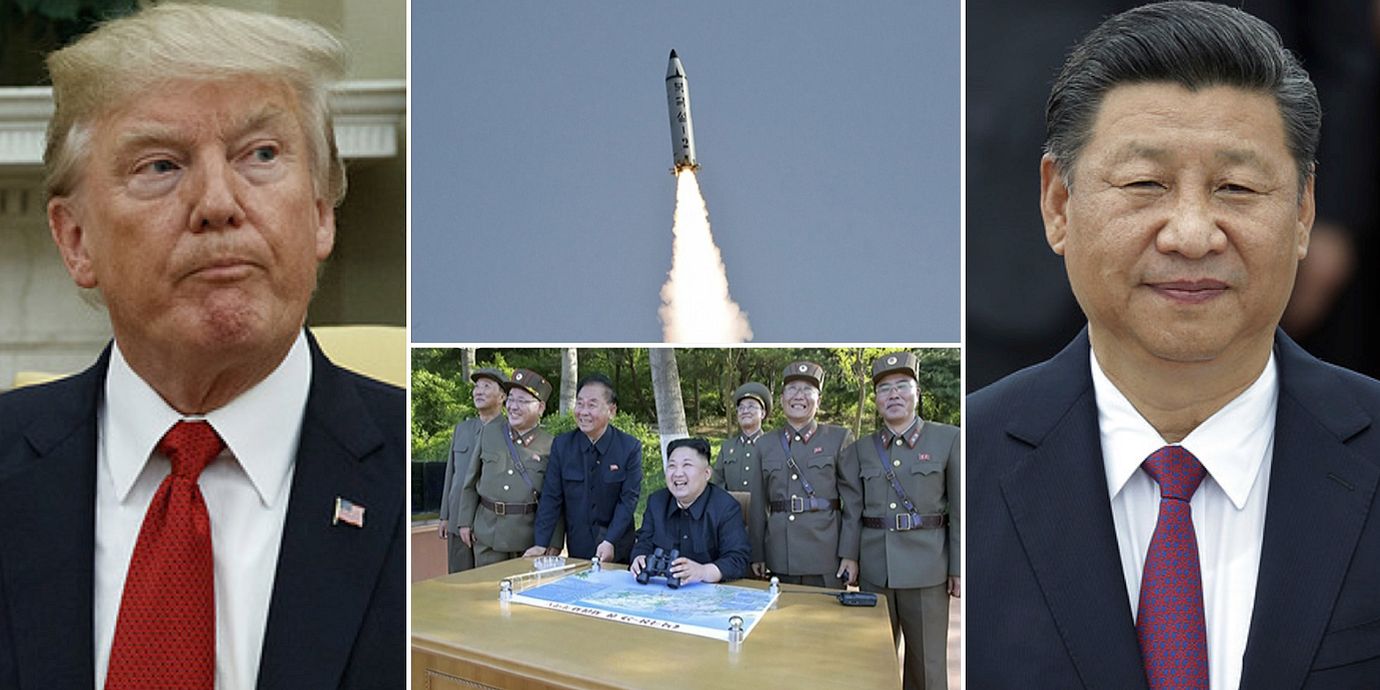
USA:s finansdepartement har beslutat om en rad sanktioner mot kinesiska institutioner för att sätta press mot Nordkoreas kärnvapenprogram, rapporterar CNBC. Bland annat bannlyser man banken Dandong som USA menar agerar front för illegala nordkoreanska transaktioner, skriver CNN Money.
Dessutom svartlistar finansdepartementet ett kinesiskt företag och två kinesiska medborgare. Finansminister Steven Mnuchin underströk i ett tal på torsdagen att åtgärderna inte är riktade mot Kina som land, utan mot aktörer som underlättar för Nordkorea att utveckla sitt missilprogram.
Läs också
bakgrund
Relationerna mellan USA och Nordkorea
Wikipedia (en)
North Korea–United States relations (Chosŏn'gŭl: 북미관계; Hancha: 北美關係; RR: Bugmi gwangye) are hostile and have developed primarily during the Korean War, during which the U.S. Air Force bombed and napalmed parts of North Korea leaving 20% of its population dead. In recent years relations have been largely defined by North Korea's five tests of nuclear weapons, its development of long-range missiles capable of striking targets thousands of miles away, and its ongoing threats to strike the United States and South Korea with nuclear weapons and conventional forces. During his presidency, George W. Bush referred to North Korea as part of "The Axis of evil" because of the threat of its nuclear capabilities.
As the Democratic People's Republic of Korea and the United States of America have no formal diplomatic relations, the Kingdom of Sweden (a EU member state) acts as the protecting power of United States interests in North Korea for consular matters. Since the Korean War, the United States has maintained a strong military presence in South Korea. However, the United States has considered, de jure, South Korea as the sole legitimate representative of all of Korea.
In 2015, according to Gallup's annual World Affairs survey, only 9% of Americans have a favorable view of North Korea, while 87% of Americans have a negative view. According to a 2014 BBC World Service Poll, only 4% of Americans view North Korea's influence positively with 90% expressing a negative view, one of the most negative perceptions of North Korea in the world.
Omni är politiskt obundna och oberoende. Vi strävar efter att ge fler perspektiv på nyheterna. Har du frågor eller synpunkter kring vår rapportering? Kontakta redaktionen