”Självständigt Skottland kan vara enda vägen”
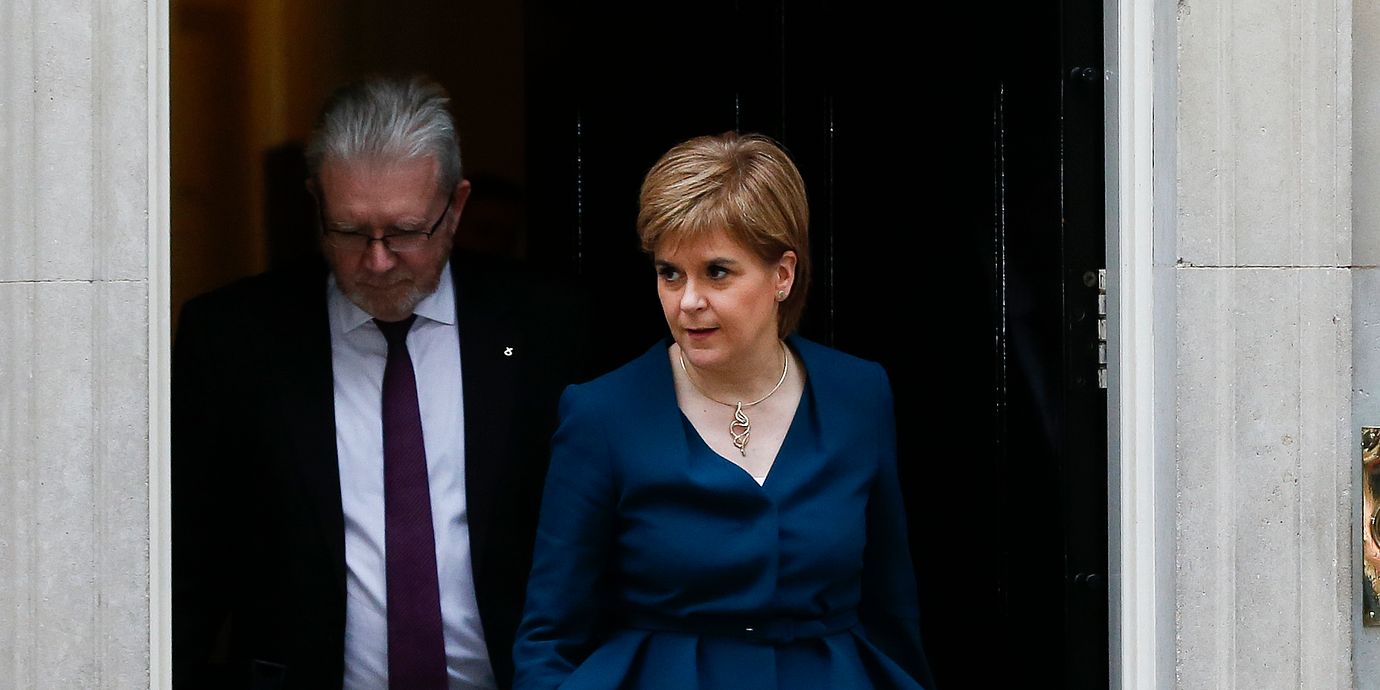
Försteminister Nicola Sturgeon försöker uppenbarligen få till en ”win win”-situation i svallvågorna efter den brittiska EU-omröstningen i somras, skriver BBC:s korrespondent för skotsk politik, Glenn Campbell. Av Sturgeons tal i parlamentet på tisdagen anser han att det går att uttyda två möjliga vägar för riksdelen: Antingen att övertala Storbritannien att stanna i EU:s inre marknad, eller att övertala Storbritannien om att Skottland ska få stanna i EU:s inre marknad. Inget av alternativen lär däremot falla i god jord, enligt Campbell.
Det enda som då finns kvar i den skotska verktygslådan är en ny omröstning om självständighet, menar han. Men även där finns det förbehåll – det kan bli ytterligare ett nej från det skotska folket.
bakgrund
Förslaget om en självständighetsomröstning för Skottland
Wikipedia (en)
After the United Kingdom European Union membership referendum in June 2016, Nicola Sturgeon, the First Minister of Scotland, indicated that a second referendum on Scottish independence could be held.
A referendum on Scottish independence was previously held in September 2014, where 55.3% voted against the proposal. One of the reasons cited by those opposed to Scottish independence was that it would endanger Scotland being part of the European Union (EU). Following the Conservative victory in the May 2015 UK general election, a referendum on UK membership of the EU was organised. The Scottish National Party (SNP), which supports Scottish independence, stated in its manifesto for the May 2016 Scottish Parliament election that it would consider holding a second independence referendum if there was a material change of circumstances, such as the UK leaving the EU. The "Leave" side won the June 2016 referendum with 52% of the vote. In Scotland, 62% of votes were to "Remain" in the EU, including a majority of voters in every local authority area.
There has since been political debate and negotiation about whether there should be a second Scottish independence referendum, or if it is possible for Scotland to maintain links with the EU after the UK leaves.
Omni är politiskt obundna och oberoende. Vi strävar efter att ge fler perspektiv på nyheterna. Har du frågor eller synpunkter kring vår rapportering? Kontakta redaktionen