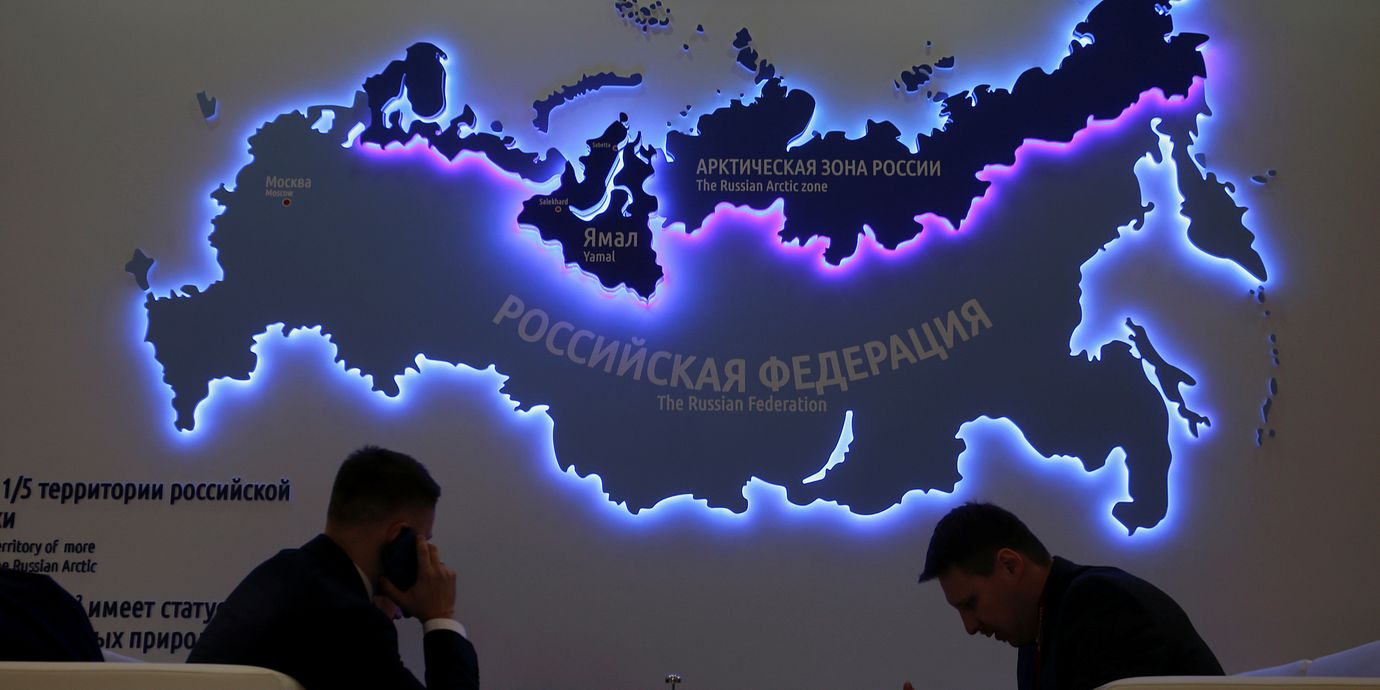
Saint Petersburg 2019-04-09 Participants attend the International Arctic Forum in Saint Petersburg, Russia. (ANTON VAGANOV / TT NYHETSBYRÅN)

Ryssland rustar vid Arktis – vill kontrollera viktig rutt

Ryssland har sedan 2013 byggt sju nya militärbaser längs den så kallade norra havsrutten i en storsatsning för att kunna dominera regionen, skriver Financial Times.

Det är Arktis krympande istäcke som öppnar en förbindelse, över ett hav som i tusentals år varit otillgängligt, mellan Asien och Europa. Resan går mellan 10 och 15 dagar snabbare än den traditionella rutten genom Suezkanalen.

Budskapet är tydligt, fortsätter den brittiska tidningen. De länder som vill nyttja rutten kommer stå under Rysslands tillsyn.

– Det här är vår transportartär. Det är uppenbart, som med trafikregler. När du reser till ett annat land och kör bil så följer du det landets regler, sa utrikesminister Sergei Lavrov i samband med det Internationella arktiska forumet där bland andra Stefan Löfven deltog.

bakgrund
 
Norra havsrutten
Wikipedia (en)
The Northern Sea Route (Russian: Се́верный морско́й путь, Severnyy morskoy put, shortened to Севморпуть, Sevmorput) is a shipping route officially defined by Russian legislation as lying east of Novaya Zemlya and specifically running along the Russian Arctic coast from the Kara Sea, along Siberia, to the Bering Strait. The entire route lies in Arctic waters and within Russia's exclusive economic zone (EEZ). Parts are free of ice for only two months per year. The overall route on Russia's side of the Arctic between North Cape and the Bering Strait has been called the Northeast Passage, analogous to the Northwest Passage on the Canada side. While the Northeast Passage includes all the East Arctic seas and connects the Atlantic and Pacific oceans, the Northern Sea Route does not include the Barents Sea, and it therefore does not reach the Atlantic.Melting Arctic ice caps are likely to increase traffic in and the commercial viability of the Northern Sea Route. One study, for instance, projects "remarkable shifts in trade flows between Asia and Europe, diversion of trade within Europe, heavy shipping traffic in the Arctic and a substantial drop in Suez traffic. Projected shifts in trade also imply substantial pressure on an already threatened Arctic ecosystem."
Omni är politiskt obundna och oberoende. Vi strävar efter att ge fler perspektiv på nyheterna. Har du frågor eller synpunkter kring vår rapportering? Kontakta redaktionen