Källor: Företagsledare vill att folket avgör brexit
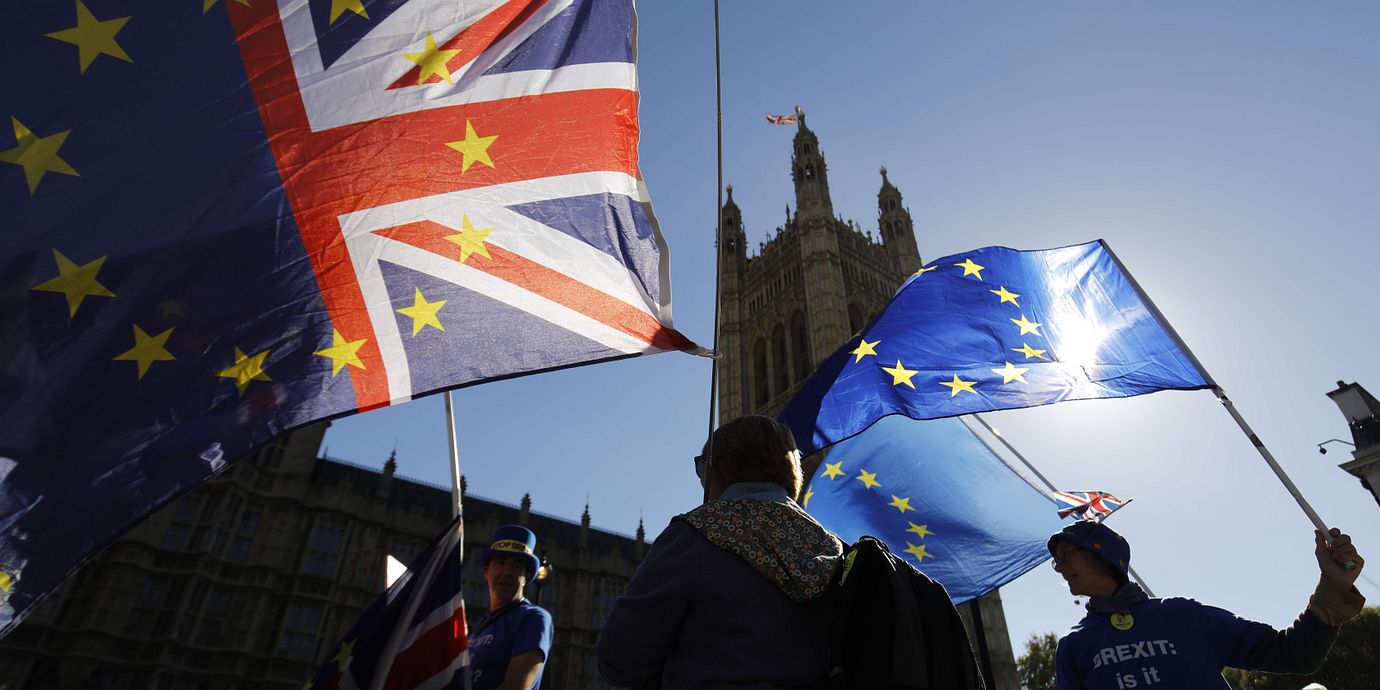
Över 50 brittiska affärsmän kräver att folket får rösta om de slutgiltiga brexitvillkoren i ett brev som publicerades i The Times på lördagen. De varnar där för att ett ”destruktivt” EU-utträde kommer att orsaka ekonomisk skada.
Bland dem som undertecknat brevet finns bokhandelskedjan Waterstones vd James Daunt, dagligvarukedjan Sainsburys tidigare vd Justin King, baronessan Lane-Fox som bland annat sitter i styrelsen för Marks & Spencer samt telekombolaget BT Groups tidigare ordförande Sir Mike Rake, erfar kanalen.
Läs också
bakgrund
Brexit
Wikipedia (en)
Brexit ( or ), short portmanteau of "British exit from the European Union", is the impending withdrawal of the United Kingdom from the European Union (EU). It follows from the referendum of 23 June 2016 when a majority of 52% of British voters supported leaving the EU. On 29 March 2017, the UK government invoked Article 50 of the Treaty on European Union. The United Kingdom is due to leave the EU on 29 March 2019 at 11 p.m. UK time, when the period for negotiating a withdrawal agreement will end unless an extension is agreed.The UK had joined the European Communities (EC) in 1973, with membership confirmed by a referendum in 1975. In the 1970s and 1980s, withdrawal from the EC was advocated mainly from the left of the political spectrum, while from the 1990s, the main advocates of withdrawal were on the right in particular the new UK Independence Party. Prime Minister David Cameron held the referendum in fulfilment of a 2015 manifesto pledge. Cameron, who had campaigned for "Remain", resigned after the referendum result and was succeeded by Theresa May, who called a snap general election less than a year later, in which she lost her overall majority. Her minority government is supported in key votes by the Democratic Unionist Party.
Prime Minister Theresa May announced the government's intention not to seek permanent membership of the European single market or the EU customs union after leaving the EU and promised to repeal the European Communities Act of 1972 and incorporate existing European Union law into UK domestic law. A new government department, the Department for Exiting the European Union, was created in July 2016. In 2018, the British Cabinet agreed to the Chequers Agreement, and these are the current proposals suggested from the UK under the Premiership of Theresa May. Negotiations with the EU officially started in June 2017, aiming to complete the withdrawal agreement by October 2018. In June 2018, the UK and the EU published a joint progress report outlining agreement on issues including customs, VAT and Euratom.
There is a broad consensus in existing economic research that Brexit is likely to reduce the UK's real per capita income in the medium term and long term. There is also agreement among economists that the Brexit referendum itself damaged the economy in the subsequent two years. Studies on effects that have materialised since the referendum show annual losses of £404 for the average UK household from increased inflation, and losses between 2% and 2.5% of UK GDP. Brexit is likely to reduce immigration from European Economic Area (EEA) countries to the UK, and poses challenges for UK higher education and academic research. As of September 2018, the size of the "divorce bill", the UK's inheritance of existing EU trade agreements, and relations with Ireland and other EU member states remains uncertain. The precise impact on the UK depends on whether the process will be a "hard" or a "soft" Brexit.
Omni är politiskt obundna och oberoende. Vi strävar efter att ge fler perspektiv på nyheterna. Har du frågor eller synpunkter kring vår rapportering? Kontakta redaktionen