USA-politiker vill blåsa nytt liv i kärnkraften
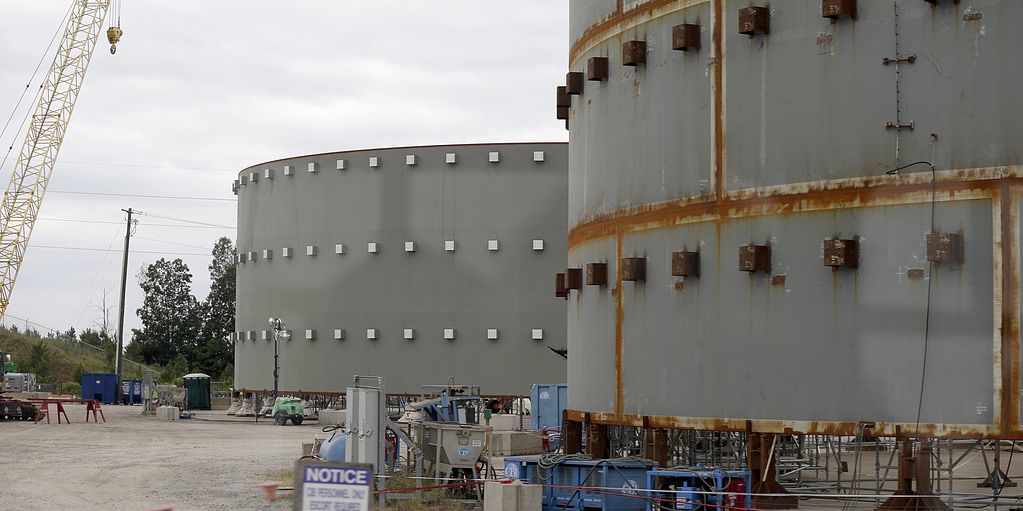
Amerikanska politiker vill blåsa nytt liv i utvecklingen av USA:s kärnkraft genom att återuppta ett misslyckat projekt med två kärnreaktorer som inleddes i South Carolina för tio år sedan.
Tillsammans med lagstiftare från båda partierna kräver den republikanske senatorn Lindsey Graham att kongressen ska förlänga de regler för produktionsskatter. Det skulle innebära att projektet och två kärnreaktorer som är under uppbyggnad i Georgia får flera miljarder dollar.
– Att dessa reaktorer misslyckas kan vara slutet på en kärnkraftsrenässans innan den ens har startat, säger Lindsey Graham enligt TT.
bakgrund
USA:s kärnkraft
Wikipedia (en)
Nuclear power in the United States is provided by 100 commercial reactors with a net summer capacity of 100,350 megawatts (MW), 66 pressurized water reactors and 34 boiling water reactors. In 2015 they produced a total of 797.2 terawatt-hours of electricity, which accounted for 19.50% of the nation's total electric energy generation. In 2016, nuclear energy comprised nearly 60 percent of U.S. emission-free generation.
As of August 2017, there are two new reactors under construction with a gross electrical capacity of 2,500 MW, while 33 reactors have been permanently shut down. The United States is the world's largest producer of commercial nuclear power, and in 2013 generated 33% of the world's nuclear electricity.
As of October 2014, the NRC has granted license renewals providing a 20-year extension to a total of 74 reactors. In early 2014, the NRC prepared to receive the first applications of license renewal beyond 60 years of reactor life, as early as 2017, a process which by law requires public involvement. Licenses for 22 reactors are due to expire before the end of the next decade if no renewals are granted. The Vermont Yankee Nuclear Power Plant was the most recent nuclear power plant to be decommissioned on December 29, 2014. Another four aging reactors were permanently closed in 2013 before their licenses expired because of high maintenance and repair costs at a time when natural gas prices have fallen: San Onofre 2 and 3 in California, Crystal River 3 in Florida, and Kewaunee in Wisconsin, and New York State is seeking to close Indian Point in Buchanan, 30 miles from New York City.
Most reactors began construction by 1974; following the Three Mile Island accident in 1979 and changing economics, many planned projects were canceled. More than 100 orders for nuclear power reactors, many already under construction, were canceled in the 1970s and 1980s, bankrupting some companies. Up until 2013, there had also been no ground-breaking on new nuclear reactors at existing power plants since 1977. Then in 2012, the NRC approved construction of four new reactors at existing nuclear plants. Construction of the Virgil C. Summer Nuclear Generating Station Units 2 and 3 began on March 9, 2013 but was abandoned on July 31, 2017. On March 12, 2013 construction began on the Vogtle Electric Generating Plant Units 3 and 4. In addition, on October 19, 2016 TVA's Unit-2 reactor at the Watts Bar Nuclear Generating Station became the first US reactor to enter commercial operation since 1996.
There was a revival of interest in nuclear power in the 2000s, with talk of a "nuclear renaissance", supported particularly by the Nuclear Power 2010 Program. A number of applications were made, but facing economic challenges, and later in the wake of the Fukushima Daiichi nuclear disaster, most of these projects have been cancelled, and as of 2012, "nuclear industry officials said in 2012 they expect five new reactors to enter service by 2020 – Southern's two Vogtle reactors, two at Summer in South Carolina and one at Watts Bar in Tennessee"; these are all at existing plants. As of August 1, 2017, there are construction delays at Vogtle and construction at Summer has been abandoned.
Omni är politiskt obundna och oberoende. Vi strävar efter att ge fler perspektiv på nyheterna. Har du frågor eller synpunkter kring vår rapportering? Kontakta redaktionen