Dokument: EU ger upp försök att stoppa gasledningen
EU ger upp hoppet om att stoppa projektet Nord Stream 2. I stället bjuder man nu in bekymrade medlemsstater att vädra sin oro och söker samtidigt mandat att börja förhandla med Ryssland kring de befarade riskerna. Det framgår av ett dokument som EU-kommissionen skickat till Danmarks och Sveriges regeringar i veckan, som Wall Street Journal tagit del av.
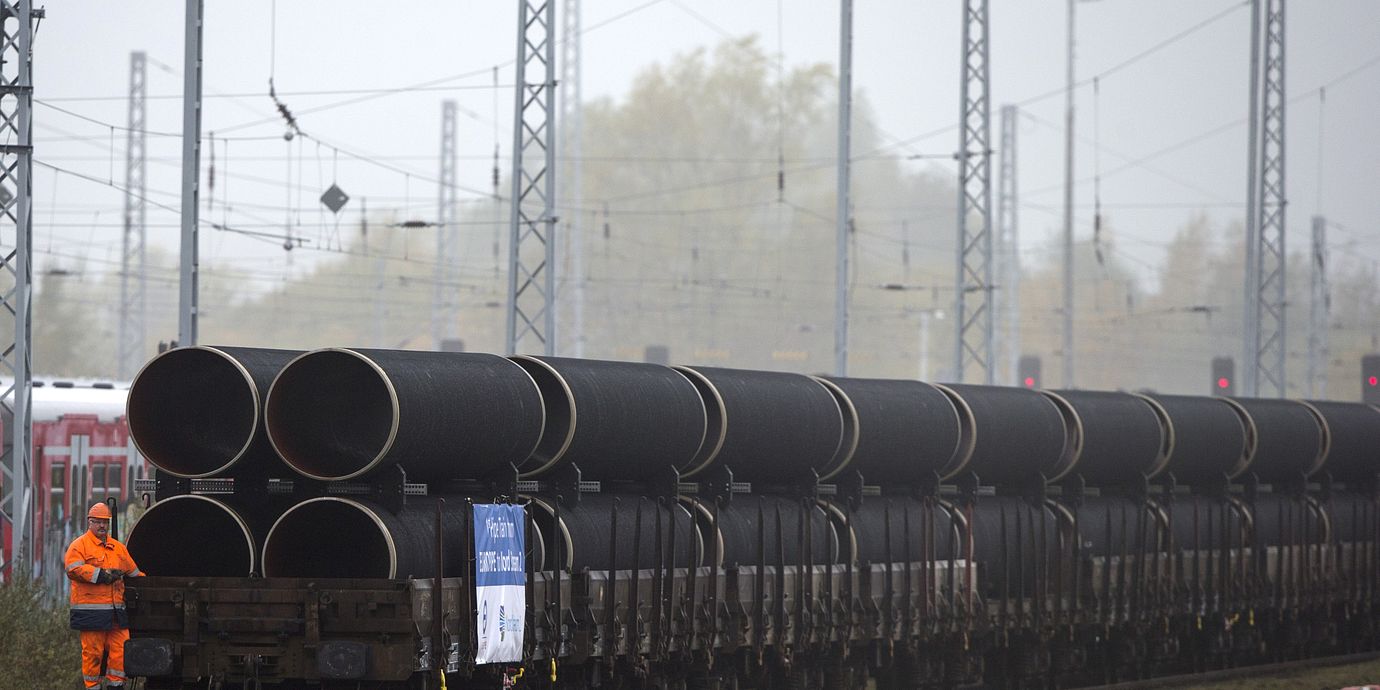
Den statliga ryska energijätten Gazprom vill hastigt få gasledningen Nord Stream 2 på plats i Östersjön, för att på så vis öka sin kapacitet till EU-länderna och minska sitt beroende av att forsla gasen genom Ukraina. Men frågan har splittrat unionen mot oro om att bli för beroende av Ryssland.
Läs även
bakgrund
Nord Stream
Wikipedia (en)
Nord Stream (former names: North Transgas and North European Gas Pipeline; Russian: Северный поток, Severny potok) is an offshore natural gas pipeline from Vyborg in the Russian Federation to Greifswald in Germany that is owned and operated by Nord Stream AG. The project includes two parallel lines. The first line was laid by May 2011 and was inaugurated on 8 November 2011. The second line was laid in 2011–2012 and was inaugurated on 8 October 2012. At 1,222 kilometres (759 mi) in length, it is the longest sub-sea pipeline in the world, surpassing the Langeled pipeline.
It has an annual capacity of 55 billion cubic metres (1.9 trillion cubic feet), but its capacity is planned to be doubled to 110 billion cubic metres (3.9 trillion cubic feet) by 2019, by laying two additional lines. Due to EU restrictions on Gazprom, only 22.5 billion cubic metres (790 billion cubic feet) of its capacity is actually used. The name occasionally has a wider meaning, including the feeding onshore pipeline in the Russian Federation, and further connections in Western Europe.
Omni är politiskt obundna och oberoende. Vi strävar efter att ge fler perspektiv på nyheterna. Har du frågor eller synpunkter kring vår rapportering? Kontakta redaktionen