Hem
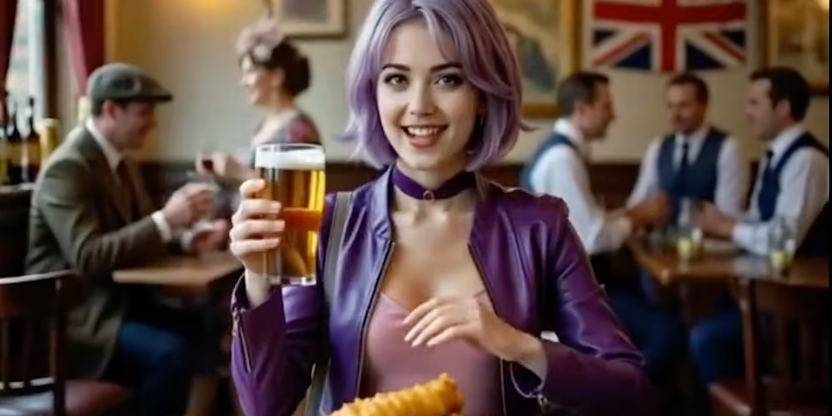
(En av de AI-genererade klipp och bilder av ”Amelia” som har fått stor spridning på nätet.)

AI-skapade ”Amelia” sprider sig snabbt från högerextrema nätmiljöer

En AI-genererad ung kvinna med lila hår, kallad ”Amelia”, har blivit en viral symbol i högerextrema nätmiljöer i Storbritannien. Det rapporterar Metro UK.

Karaktären skapades ursprungligen till ett datorspel mot radikalisering som togs fram av Storbritanniens inrikesdepartement. Nu förekommer hon i stället i memes där hon framför rasistiska och islamofobiska budskap.

Enligt analytikern Siddharth Venkataramakrishnan har ”Amelia” fått en anmärkningsvärd spridning på kort tid. Han säger att det sexualiserade bildspråket spelar en central roll.

– Det rör sig både om provokativa ”shitpostare” och om andra som lockas av ironiska eller gulligt förpackade memes. Ett helt ekosystem har tagit till sig detta [...] Målgruppen är nästan uteslutande unga män, säger han till The Guardian.

bakgrund
 
Memes
Wikipedia (en)
An Internet meme, or meme (), is a cultural item (such as an idea, behavior, or style) that spreads across the Internet, now primarily through social media platforms. Internet memes manifest in a variety of formats, including images, videos (e.g. GIFs), and other viral content. Key characteristics of memes include their tendency to be parodied, their use of intertextuality, their viral dissemination, and their continual evolution. The term meme was originally introduced by Richard Dawkins in his 1976 book The Selfish Gene to describe the concept of cultural transmission of a singular unit, analogous to biology. The term Internet meme was coined by Mike Godwin in 1993 in reference to the way memes proliferated through early online communities, including message boards, Usenet groups, and email. The emergence of social media platforms such as YouTube, Twitter, Facebook, and Instagram further diversified memes and accelerated their spread. Dank and surrealist memes are some of the newer genres, with newer formats like short-form videos popularized by platforms like Vine and TikTok. Newer internet memes (specifically those of low quality) are often classified as brain rot. Memes are now recognized as a significant aspect of Internet culture and are the subject of academic research. They appear across a broad spectrum of contexts, including marketing, economics, finance, politics, social movements, religion, and healthcare. While memes are often viewed as falling under fair use protection, their incorporation of material from pre-existing works can result in copyright disputes.
Omni är politiskt obundna och oberoende. Vi strävar efter att ge fler perspektiv på nyheterna. Har du frågor eller synpunkter kring vår rapportering? Kontakta redaktionen