Efter öppningen – hälften av britterna vill tillbaka till EU
49 procent av britterna vill att landet åter går med i EU, visar en stor opinionsundersökning av Messina Group som The Guardian rapporterar om. 28,5 procent svarar att de inte vill återförenas med unionen.
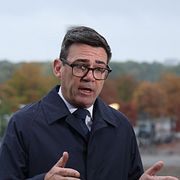
Mätningen kommer sedan premiärminister Andy Burnham aviserat en översyn av relationen till EU och sagt att även ett återinträde ska övervägas. Flera ministrar och Labourledamöter oroar sig för att frågan ska väcka gamla motsättningar och gynna Reform UK.
– Han måste gå försiktigt fram, för vi vill inte blåsa liv i splittringen igen, säger en anonym minister till The Guardian.
Storbritannien lämnade EU efter folkomröstningen 2016.
bakgrund
Brexit
Wikipedia (en)
Brexit (; a portmanteau of "Britain" and "exit") was the withdrawal of the United Kingdom (UK) from the European Union (EU).
Brexit took place at 23:00 GMT on 31 January 2020 (00:00 1 February 2020 CET). The UK, which joined the EU precursor, the European Communities (EC), on 1 January 1973, is the only EU member state to have withdrawn, although four overseas territories of member states had previously ceased to exercise membership. Following Brexit, EU law and the Court of Justice of the European Union no longer have primacy over British law, but the UK remains bound by obligations in treaties it has with other countries around the world, including many with EU member states and with the EU itself. The European Union (Withdrawal) Act 2018 retains relevant EU law as domestic law, which the UK can amend or repeal.
The EU and its institutions developed gradually after their establishment. Throughout the period of British membership, Eurosceptic groups had existed in the UK, opposing aspects of the EU and its predecessors. The Labour prime minister Harold Wilson's pro-EC government held a referendum on continued EC membership in 1975, in which 67.2% voted to stay. Despite growing political opposition by a minority of UK politicians to further European integration aimed at "ever closer union" between 1975 and 2016, from factions of the Conservative Party in the 1980s–2000s, no further referendums on the issue were held.
By the mid-2010s, the growing popularity of the UK Independence Party (UKIP), as well as pressure from Eurosceptics within his own party, persuaded the Conservative prime minister David Cameron to promise a referendum on British membership of the EU if the Conservatives were returned to government in 2015. Following the 2015 general election, which produced a small and unexpected Conservative majority, the promised referendum on continued EU membership was held on 23 June 2016. Supporters of the Remain campaign included Cameron, the future prime ministers Theresa May, Liz Truss, Keir Starmer and Andy Burnham, and the former prime ministers John Major, Tony Blair and Gordon Brown; supporters of the Leave campaign included the future prime ministers Boris Johnson and Rishi Sunak. The electorate voted to leave the EU by a slight margin, with a 51.9% share of the vote, all regions of England and Wales except Greater London voting in favour of Brexit, and Scotland, Northern Ireland and the British Overseas Territory of Gibraltar voting to remain. The result led to Cameron's sudden resignation, his replacement by May, and four years of negotiations with the EU over the terms of departure and future relations, completed under a Johnson-led government, with the Conservatives in office.
The negotiation was both politically challenging and deeply divisive, leading to two snap general elections in 2017 and 2019. One proposal under the second May ministry was overwhelmingly rejected by the UK Parliament, causing great uncertainty and leading to postponement of the withdrawal date to avoid a no-deal Brexit. The UK officially left the European Union on 31 January 2020 after a withdrawal deal was passed by Parliament, but continued to participate in many EU institutions (including the single market and customs union) during an eleven-month transition period during which it was hoped that details of the post-Brexit relationship could be agreed and implemented. Trade deal negotiations continued within days of the scheduled end of the transition period, and the EU–UK Trade and Cooperation Agreement was signed on 30 December 2020. The effects of Brexit in the UK are in part determined by the cooperation agreement, which provisionally applied from 1 January 2021, until it formally came into force on 1 May 2021.
Omni är politiskt obundna och oberoende. Vi strävar efter att ge fler perspektiv på nyheterna. Har du frågor eller synpunkter kring vår rapportering? Kontakta redaktionen