grafik
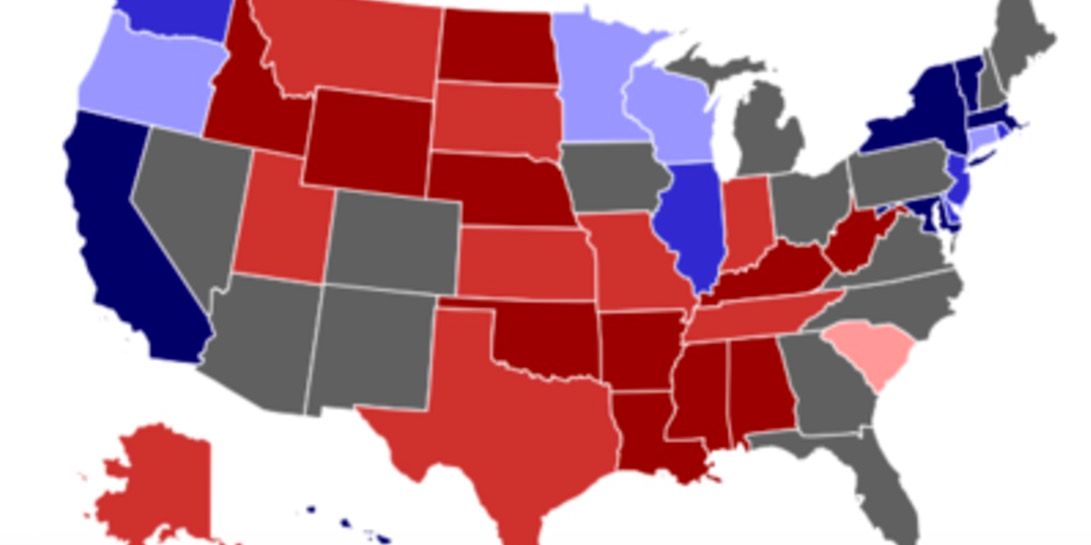
Så många elektorer har respektive delstat
Wikipedia (en)
The United States Electoral College is the body that elects the President and Vice President of the United States every four years. Citizens of the United States do not directly elect the president or the vice president; instead they choose "electors", who usually pledge to vote for particular candidates.
The number of electors in each state is equal to the number of members of Congress to which the state is entitled, while the Twenty-third Amendment grants the District of Columbia the same number of electors as the least populous state, currently three. Therefore, there are currently 538 electors, corresponding to the 435 Representatives and 100 Senators, plus the three additional electors from the District of Columbia. The Constitution bars any federal official, elected or appointed, from being an elector.
All states, except for Maine and Nebraska, have chosen electors on a "winner-take-all" basis since the 1880s. Under winner-take-all, a state has all of its electors pledged to the presidential candidate who wins the most votes in that state. Maine and Nebraska use the "congressional district method", selecting one elector within each congressional district by popular vote and selecting the remaining two electors by a statewide popular vote. Although no elector is required by federal law to honor a pledge, there have been very few occasions when an elector voted contrary to a pledge. The Twelfth Amendment, in specifying how a president and vice president are elected, requires each elector to cast one vote for president and another vote for vice president.
The candidate who receives an absolute majority of electoral votes (currently 270) for the office of president or of vice president is elected to that office. The Twelfth Amendment provides for what happens if the Electoral College fails to elect a president or vice president. If no candidate receives a majority for president then the House of Representatives will select the president, with each state delegation (instead of each representative) having only one vote. If no candidate receives a majority for vice president, then the Senate will select the vice president, with each senator having one vote. On four occasions, most recently in the 2000 presidential election, the Electoral College system has resulted in the election of a candidate who did not receive the most popular votes in the election.