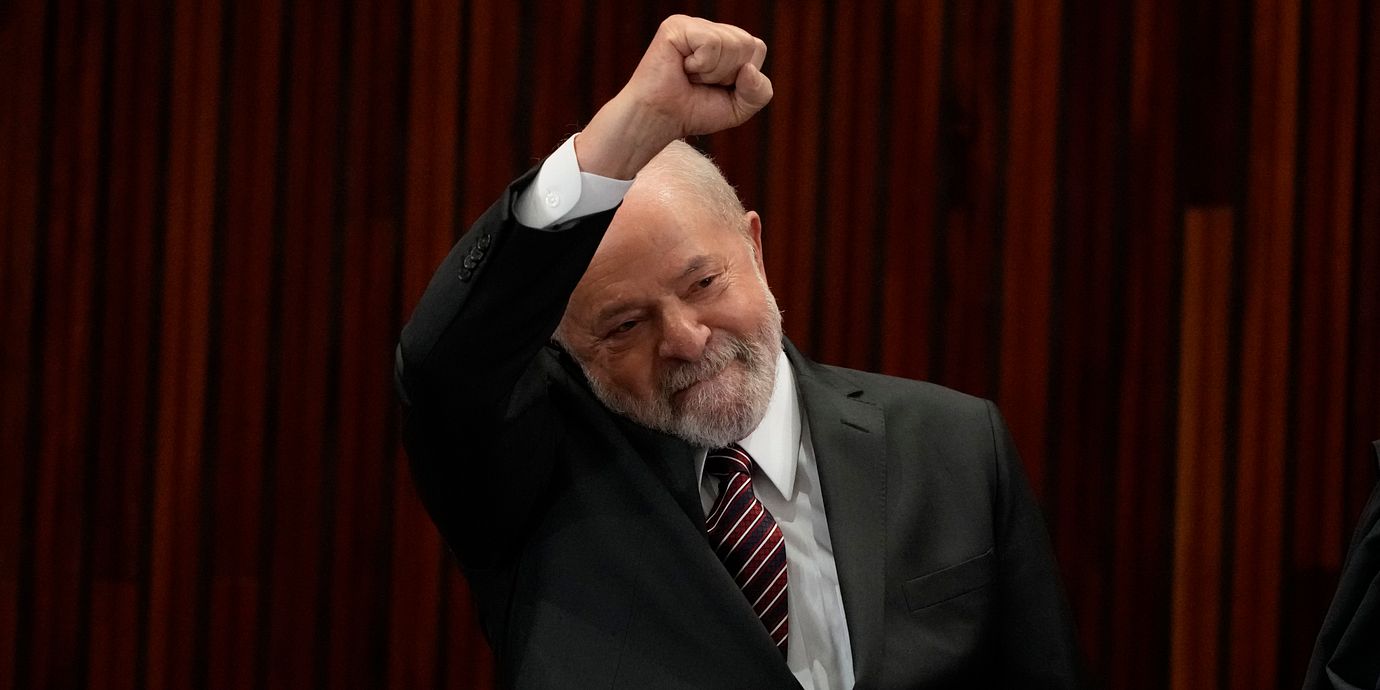
Lulas valseger nu officiell: ”Seger för demokratin”
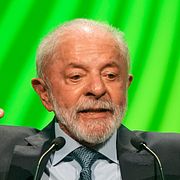
På måndagen ratificerades Lula da Silvas valseger över Jair Bolsonaro och med det kommer Lula officiellt bli Brasiliens nye president, skriver AFP.
– Sällan i vårt lands moderna historia har demokratin varit så hotad, sällan har folkets vilja prövats så hårt, sällan har de fått övervinna så mycket för att kunna göra sig hörda, säger han tårögt.
Talet kom under en ceremoni där valresultatet fastslogs, något han kallade ”en seger för demokratin”.
Trots att det har gått över en månad sedan Bolsonaro förlorade valet har han ännu inte officiellt erkänt sig besegrad. Han har dock inte motsatt sig att lämna över makten den 1 januari.
Lula da Silva
Wikipedia (en)
Luiz Inácio Lula da Silva (Brazilian Portuguese: [luˈiz iˈnasju ˈlulɐ dɐ ˈsiwvɐ] (listen); born Luiz Inácio da Silva; 27 October 1945), known mononymously as Lula, is a Brazilian politician, trade unionist, and former metalworker who is the president-elect of Brazil. A member of the Workers' Party, he was the 35th president of Brazil from 2003 to 2010. After winning the 2022 Brazilian general election, he will be sworn in on 1 January 2023 as the 39th president of Brazil, succeeding Jair Bolsonaro.Of working-class origin, he migrated as a child from Pernambuco to São Paulo with his family. He began his career as a metalworker and trade unionist. During the military dictatorship in Brazil, he led major workers' strikes between 1978 and 1980, and helped start the Workers' Party in 1980, during Brazil's political opening. Lula was one of the main leaders of the Diretas Já movement which demanded democratic elections. In the 1986 Brazilian legislative election, he was elected as a federal deputy in the state of São Paulo with the most votes nationwide. He ran his first major campaign in the 1989 Brazilian presidential election, losing in the second round to Fernando Collor de Mello. He ran twice more in the 1994 and 1998 presidential elections, losing both elections in the first round to Fernando Henrique Cardoso. He won the 2002 Brazilian presidential election, defeating José Serra in the second round. He was reelected in the 2006 Brazilian presidential election, beating Geraldo Alckmin in the second round.Described as left-wing, Lula's first presidency, which coincided with the first pink tide in the region, was marked by the consolidation of social programs like Bolsa Família and Fome Zero, leading Brazil to leave the UN's Hunger Map. During his two terms in office, he undertook radical reforms, leading to growth in GDP, a reduction in public debt and inflation, and helping 20 million Brazilians escape poverty. Poverty, inequality, illiteracy, unemployment, infant mortality, and child labor rates fell significantly, while the minimum wage and average income increased, and access to school, university, and health care were expanded. He played a prominent role in foreign policy, on a regional level (as part of the BRICS) and as part of global trade and environmental negotiations. Lula was considered one of the most popular politicians in the history of Brazil and was one of the most popular in the world while president. His first term was marked by numerous scandals, notably the Mensalão scandal and Escândalo dos Sanguessugas. After the 2010 Brazilian general election, he was succeeded by his former Chief of Staff, Dilma Rousseff.After his first presidency, Lula remained active in the political scene and began giving lectures in Brazil and abroad. In 2016, he was appointed as Rousseff's Chief of Staff, but the appointment was suspended by the Supreme Federal Court. In July 2017, Lula was convicted on charges of money laundering and corruption in a controversial trial, and sentenced to nine and a half years in prison. The federal judge of the case, Sergio Moro, later became Minister of Justice and Public Security in Bolsonaro's government. After an unsuccessful appeal, Lula was arrested in April 2018 and spent 580 days in jail. Lula attempted to run in the 2018 Brazilian presidential election but was disqualified under Brazil's Ficha Limpa law. In November 2019, the Supreme Federal Court ruled that incarcerations with pending appeals were unlawful and Lula was released from prison as a result. In March 2021, Supreme Federal Court Justice Edson Fachin ruled that all of Lula's convictions must be nullified because he was tried by a court that did not have proper jurisdiction over his case. Fachin's ruling, which was confirmed by other Supreme Court Justices in April 2021, restored Lula's political rights. The Supreme Federal Court ruled later in March 2021 that judge Moro, who oversaw his corruption trial, was biased. All of the cases Moro had brought against Lula were annulled by 24 June 2021. Following the court ruling, Lula was legally allowed to run for president again in the 2022 elections, and defeated Bolsonaro in the runoff.
Omni är politiskt obundna och oberoende. Vi strävar efter att ge fler perspektiv på nyheterna. Har du frågor eller synpunkter kring vår rapportering? Kontakta redaktionen