Mamdani inför kungamöte: ”Ge tillbaka diamanten”
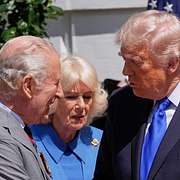
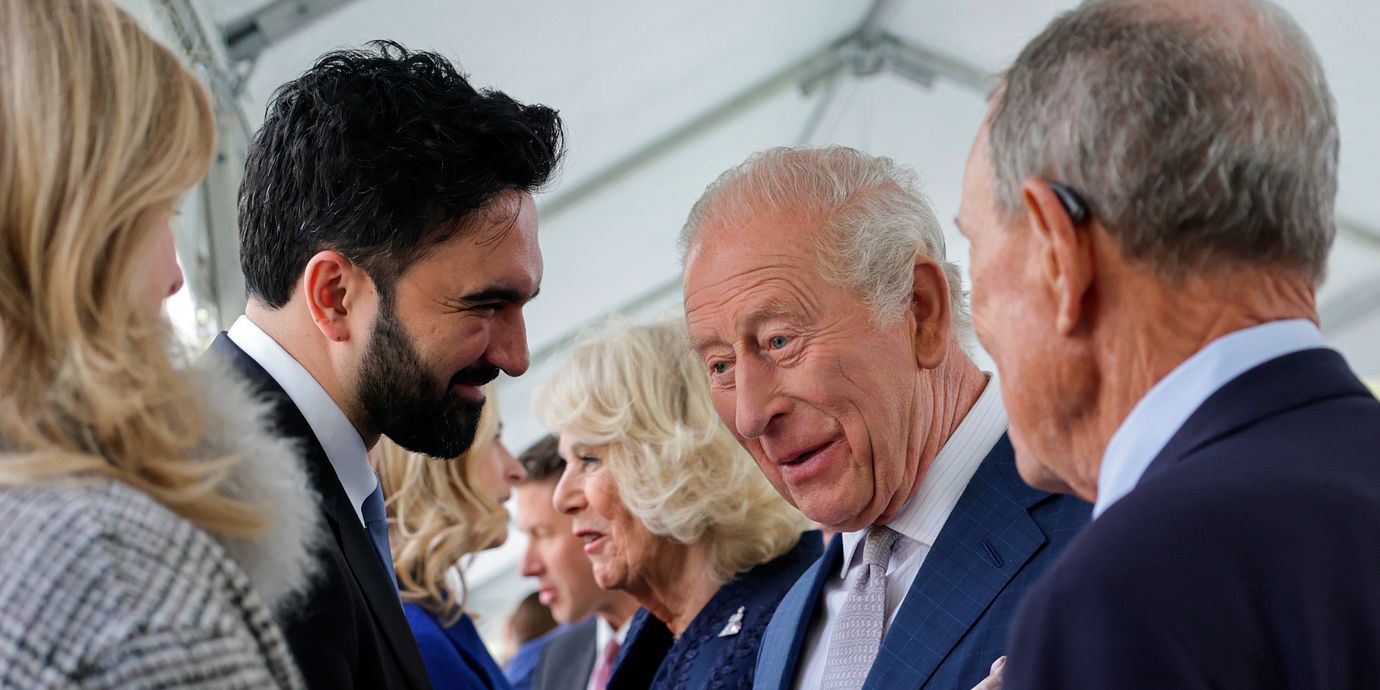
På onsdagen reste det brittiska kungaparet till New York, där de bland annat mötte borgmästaren Zohran Mamdani och besökte minnesmonumentet över 11 september-attackernas offer.
Inför mötet höll Mamdani en pressträff, skriver Sky News.
– Om jag får ett enskilt samtal med kungen ska jag nog uppmana honom att återlämna diamanten Koh-i-noor, sa han.
Diamanten Koh-i-noor är en av de brittiska kronjuvelerna, som gavs till drottning Victoria efter Brittiska ostindiska kompaniets annektering av Punjab i mitten av 1800-talet. Den ses av många indier som en symbol för det brittiska kolonialväldet.
Det framgår inte huruvida Mamdani, som har indiskt påbrå, tog upp frågan med kung Charles.
Kungabesöket i USA — det gäller saken
- Storbritanniens kung Charles och drottning Camilla genomför ett fyra dagar långt statsbesök i USA med anledning av landets 250-årsfirande.
- Besöket sker i ett läge med ansträngda relationer mellan USA och Storbritannien, bland annat på grund av Trumps kritik mot Nato och brittiskt stöd i Irankriget.
- Kung Charles höll tal inför USA:s kongress, där han betonade vikten av transatlantiskt samarbete och fortsatt stöd till Ukraina.
- Under statsbesöket deltog kungaparet i en middag i Vita huset, där Charles skämtade och överlämnade en historisk gåva till Trump.
- Besöket omfattade även ett möte med New Yorks borgmästare och ett besök vid minnesplatsen för 11 september-attackerna.
bakgrund
Koh-i-noor
Wikipedia (en)
The Koh-i-Noor ( KOH-in-OOR) is one of the largest cut diamonds in the world, weighing 105.6 carats (21.12 g). It is currently set in the Crown of Queen Elizabeth the Queen Mother. The diamond originated in the Kollur mine in present day Andhra Pradesh, India. According to the colonial administrator Theo Metcalfe, there is "very meagre and imperfect" evidence of the early history of the Koh-i-Noor before the 1740s. There is no record of its original weight, but the earliest attested weight is 186 old carats (191 metric carats or 38.2 g). The first verifiable record of the diamond comes from a history by Muhammad Kazim Marvi of the 1740s invasion of Northern India by Afsharid Iran under Nader Shah. Marvi notes the Koh-i-Noor as one of many stones on the Mughal Peacock Throne that Nader looted from Delhi.
The diamond then changed hands between various empires in south and west Asia, until being given to Queen Victoria after the Second Anglo-Sikh War and the British East India Company's annexation of the Punjab in 1849, during the reign of the then 11-year-old Maharaja of the Sikh Empire, Duleep Singh. The young king ruled under the shadow of the Company ally Gulab Singh, the first Maharaja of Jammu and Kashmir, who had previously possessed the stone.
In 1851, it went on display at the Great Exhibition in London, but the lackluster cut failed to impress viewers. Prince Albert, husband of Queen Victoria, ordered it to be re-cut as an oval brilliant by Coster Diamonds. By modern standards, the culet (point at the bottom of a gemstone) is unusually broad, giving the impression of a black hole when the stone is viewed head-on; it is nevertheless regarded by gemologists as "full of life".
Since arriving in the UK, it has only been worn by female members of the British royal family. It is said to bring bad luck if it is worn by a man. Victoria wore the stone in a brooch and a circlet. After she died in 1901, it was set in the Crown of Queen Alexandra. It was transferred to the Crown of Queen Mary in 1911, and to the Crown of Queen Elizabeth the Queen Mother in 1937 for her coronation.
Today, the diamond is on public display in the Jewel House at the Tower of London. The governments of India, Iran, Pakistan and Afghanistan have all claimed ownership of the Koh-i-Noor, demanding its return ever since India gained independence from the British Empire in 1947. The British government insists the gem was obtained legally under the terms of the Last Treaty of Lahore in 1849 and has rejected the claims.
In 2018, at a hearing of the Supreme Court of India, the Archaeological Survey of India clarified that the diamond was surrendered to the British and "was neither stolen nor forcibly taken away".
Omni är politiskt obundna och oberoende. Vi strävar efter att ge fler perspektiv på nyheterna. Har du frågor eller synpunkter kring vår rapportering? Kontakta redaktionen