Marco Rubio: Iran menar inte allvar med fredssamtalen
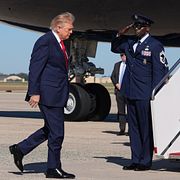
USA:s utrikesminister Marco Rubio anklagar Iran för att inte mena allvar med fredssamtalen, det säger han under ett möte med sydostasiatiska samarbetsorganisationen Asean, skriver Sky News.
Samtidigt varnar han utrikesministrarna på mötet.
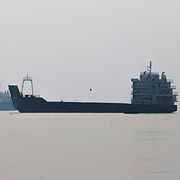
– Om vi skapar ett prejudikat i Mellanöstern där en nationalstat kan besluta att kontrollera en internationell farled, ta ut en avgift och spränga fartyg som inte betalar, då har vi skapat ett mycket farligt prejudikat, säger han.
Rubio menar att det inte bara påverkar Hormuzsundet, utan hela den globala ekonomin och internationell handel, skriver CNN.
bakgrund
Asean
Wikipedia (en)
The Association of Southeast Asian Nations (ASEAN) is an intergovernmental forum of all 11 states in Southeast Asia. ASEAN primarily focuses on Southeast Asian economic development, peaceful coexistence and adherence to international norms. ASEAN operates on the principle of consensus and respecting national sovereignty, meaning that ASEAN as a whole cannot force another member state to change its domestic laws.
ASEAN has a population of more than 680 million people and a purchasing power parity-adjusted gross domestic product (GDP) of around 6.3% global GDP. ASEAN member states represent a diverse set of economies: the least developed countries like Laos, to emerging economies like Vietnam, to developed economies like Singapore. Many Southeast Asian projects have originated from decentralised initiatives between member states, such as the ASEAN Power Grid, ASEAN Free Trade Area, ASEAN Integrated QR Code Payment System, or the mutual ASEAN visa-free policies. Every two years, it organises a sporting event to promote cultural exchange known as SEA Games.
ASEAN has strong ties with East Asian and South Asian countries. It has a vested interest in the security of the South China Sea and the greater Indo-Pacific region. In terms of diplomacy, ASEAN operates on a principle of centrality, meaning that all concerns from other countries or organisations about Southeast Asia should be routed to ASEAN instead of individual states. All Southeast Asian countries, many great powers, and international organisations have dedicated diplomatic presence near ASEAN headquarters in Jakarta.
The roots of ASEAN came from the ASEAN Declaration signed by five Southeast Asian countries in 1967. Originally, ASEAN was founded to contain communism, but gradually ASEAN was reoriented to focus on economic development and prevent foreign interference in Southeast Asia as a whole. As ASEAN expanded and admitted other countries, the member states eventually signed a binding ASEAN Charter in 2008. As of 2026, ASEAN are currently dealing with many threats, such as the worsening civil war in Myanmar, territorial disputes in the South China Sea and managing US–China tensions. Nevertheless, it is widely considered to be a successful example of regional collaboration, and its emphasis on de facto standards is seen as an opposite to the legal nature of the European Union.
Omni är politiskt obundna och oberoende. Vi strävar efter att ge fler perspektiv på nyheterna. Har du frågor eller synpunkter kring vår rapportering? Kontakta redaktionen