
Nordkoreas markering: Avfyrade robot från ubåt
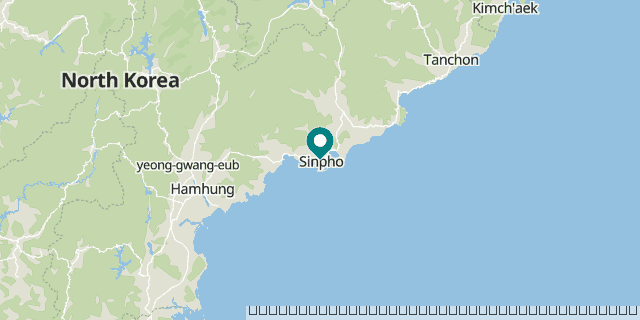
Nordkorea avfyrade på lördagen vad som tros vara en robot från en ubåt utanför landets östkust, uppger Sydkoreas försvarsdepartement i ett uttalande.
Testet, som enligt Sydkorea ska ha misslyckats, sker bara en dag efter att USA och Sydkorea beslutat att placera ut ett missilförsvarssystem av typen THAAD i Sydkorea.
bakgrund
Terminal High Altitude Area Defense (THAAD)
Wikipedia (en)
Terminal High Altitude Area Defense (THAAD), formerly Theater High Altitude Area Defense, is a United States Army anti-ballistic missile system designed to shoot down short, medium, and intermediate ballistic missiles in their terminal phase using a hit-to-kill approach. The missile carries no warhead but relies on the kinetic energy of the impact to destroy the incoming missile. A kinetic energy hit minimizes the risk of exploding conventional warhead ballistic missiles, and nuclear tipped ballistic missiles will not explode upon a kinetic energy hit, although chemical or biological warheads may disintegrate or explode and pose a risk of contaminating the environment. THAAD was designed to hit Scuds and similar weapons.
The THAAD system is being designed, built, and integrated by Lockheed Martin Space Systems acting as prime contractor. Key subcontractors include Raytheon, Boeing, Aerojet, Rocketdyne, Honeywell, BAE Systems, Oshkosh Defense, MiltonCAT, and the Oliver Capital Consortium.
Although originally a U.S. Army program, THAAD has come under the umbrella of the Missile Defense Agency. The Navy has a similar program, the sea-based Aegis Ballistic Missile Defense System, which now has a land component as well ("Aegis ashore"). THAAD was originally scheduled for deployment in 2012, but initial deployment took place May 2008.
Sinpo:
Omni är politiskt obundna och oberoende. Vi strävar efter att ge fler perspektiv på nyheterna. Har du frågor eller synpunkter kring vår rapportering? Kontakta redaktionen