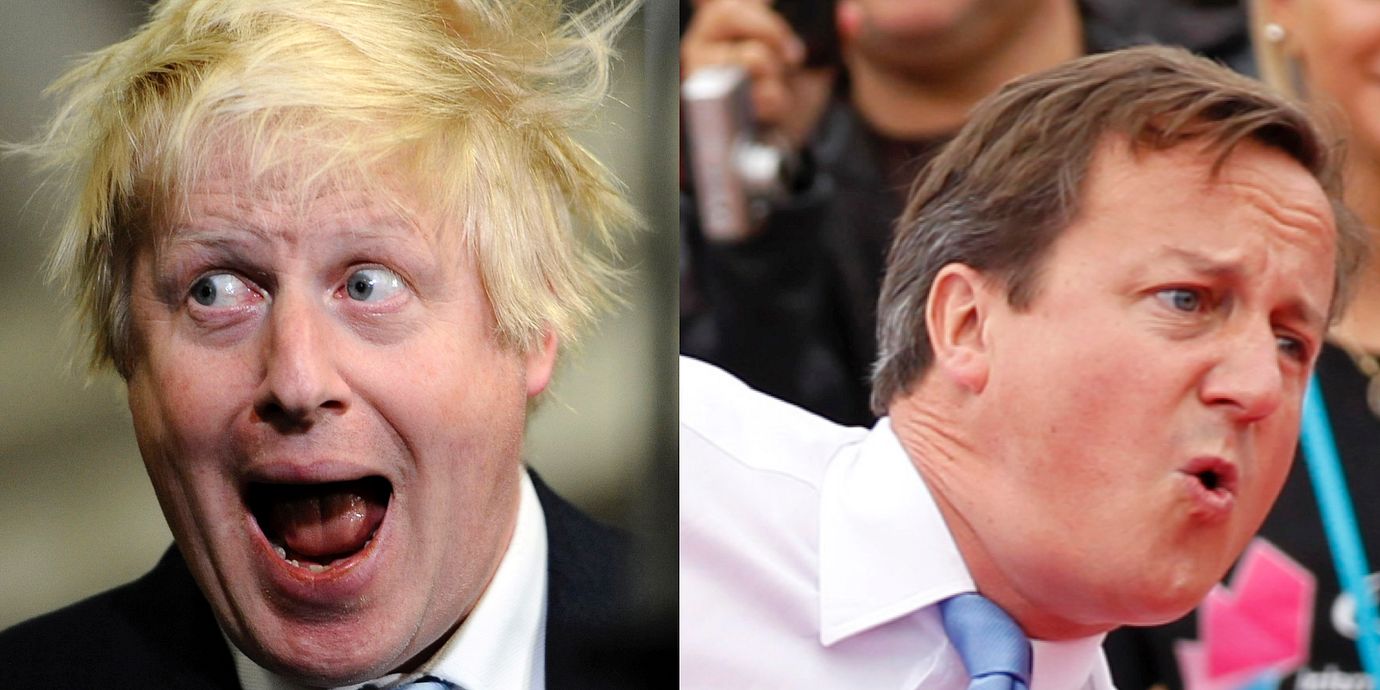
Porträtt: Boris Johnson är Camerons mardröm
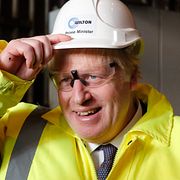
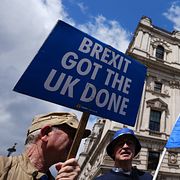
För Dagens Nyheter porträtterar journalisten Katrine Marcal Londons förre borgmästare Boris Johnson, som nu leder kampanjen för att Storbritannien ska lämna EU. Hon konstaterar att Johnson säger sig leda ett folkligt uppror mot unionen:
”Andra säger att han är en cynisk karriärist, en pompös mytoman som gör allt för att ersätta David Cameron som premiärminister. Till och med låtsas vara emot EU”, skriver Katrine Marcal.
Hon konstaterar att Cameron och Johnson visserligen känt varandra ända sedan de var privatskoleelever på Eton, men:
”Varken som pojkar, eller som vuxna, var David Cameron och Boris Johnson någonsin vänner”.
bakgrund
Boris Johnson
Wikipedia (en)
Alexander Boris de Pfeffel Johnson (born 19 June 1964) is an English politician, popular historian, and journalist who has served as Member of Parliament (MP) for Uxbridge and South Ruislip since 2015. Johnson previously served as the MP for Henley from 2001 until 2008, and as Mayor of London from 2008 to 2016. A member of the Conservative Party, Johnson considers himself a "One-Nation Tory" and has been described as a libertarian due to his association with both economically liberal and socially liberal policies.
Born in New York City to upper middle-class English parents, Johnson was educated at the European School of Brussels, Ashdown House School, and Eton College. He studied Classics at Balliol College, Oxford, where he was elected President of the Oxford Union in 1986. Beginning his career in journalism at The Times, he later became The Daily Telegraph's Brussels correspondent, with his articles exerting a strong influence on growing Eurosceptic sentiment among the British right-wing. He became assistant editor from 1994 to 1999 before taking the editorship of The Spectator from 1999 to 2005. Joining the Conservatives, he was elected as MP for Henley in 2001 and under Conservative leaders Michael Howard and David Cameron he served on the Shadow Cabinet as Minister for Culture, Communications and Creative Industries and then for Higher Education. Making regular television appearances, authoring books, and remaining active in journalism, Johnson became one of the most conspicuous politicians in Britain.
Selected as Conservative candidate for the London mayoral election of 2008, Johnson defeated Labour incumbent Ken Livingstone and resigned his seat in parliament. During his first term as Mayor, he banned alcohol consumption on public transport, introduced the New Routemaster buses, oversaw the launch of the cycle hire scheme instigated by Livingstone, and championed London's financial sector. In 2012, he was re-elected as Mayor, again defeating Livingstone; during his second term he oversaw the 2012 London Olympic Games. In 2015 he was elected as MP for Uxbridge and South Ruislip, stepping down as Mayor the following year and becoming a prominent figure in the Brexit campaign.
Johnson is a controversial figure in British politics and journalism. Supporters have praised him as an entertaining, humorous, and popular figure with appeal beyond traditional Conservative voters. Critics have accused him of laziness and dishonesty, using racist and homophobic language, and elitism. The author of various books, he is also the subject of several biographies and a number of fictionalised portrayals.
bakgrund
David Cameron
Wikipedia (en)
David William Donald Cameron, (/ˈkæmᵊrən/; born 9 October 1966), is a British politician who is the Prime Minister of the United Kingdom, Leader of its Conservative Party, and Member of Parliament for the Oxfordshire constituency of Witney. In 2005, he won the Conservative Party leadership election. Following the election of a hung parliament in the 2010 general election, Cameron became Prime Minister as the leader of a coalition between the Conservatives and Liberal Democrats. He was re-elected Prime Minister in the 2015 election, when his party won a parliamentary majority for the first time since 1992. He was first elected to the Parliament of the United Kingdom in 2001.
His premiership has been marked by the ongoing effects of the late-2000s financial crisis leading to a large deficit in government finances, which his government has emphasised the need to reduce through austerity measures. Cameron's administration introduced large-scale changes to welfare, immigration policy, education and healthcare, by introducing the Welfare Reform Act of 2012, the Education Act of 2011, the Health and Social Care Act of 2012 and a range of immigration reforms from 2010 onwards, culminating in the Immigration Act of 2014.
In 2011, Cameron became the first UK Prime Minister to 'veto' a European Union treaty. Cameron's government introduced a nationwide referendum on voting reform in 2011, and agreed to a Scottish independence referendum in September 2014, which resulted in a 'No' to independence majority. David Cameron is the first Conservative Party leader to set out the case for same-sex marriage in the Marriage (Same Sex Couples) Act 2013. Cameron's government met the United Nations target of spending at least 0.7% of GNI on aid to developing countries. In 2013, Cameron promised an 'In/Out' referendum on the UK's membership of the European Union before the end of 2017, which would follow a period of renegotiation with the EU. The referendum is to occur on 23 June 2016.
Omni är politiskt obundna och oberoende. Vi strävar efter att ge fler perspektiv på nyheterna. Har du frågor eller synpunkter kring vår rapportering? Kontakta redaktionen