Testplats för kemiska stridsmedel byggs vid Moskva
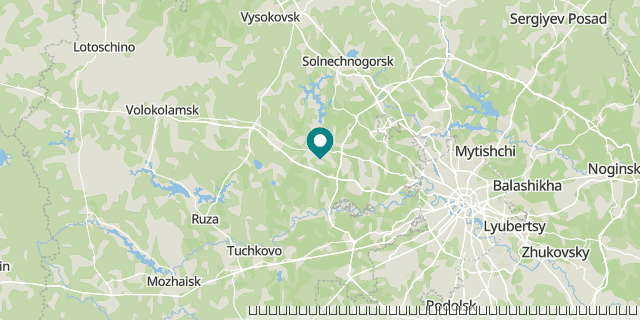
En testplats för kemiska och biologiska vapen planeras nära den ryska huvudstaden Moskva, tillkännager chefen för de militära specialstyrkor som ska använda platsen för utbildning.
Den finns en gammal anläggning på platsen som ska uppgraderas till vad generalen Eduard Tjerkasov kallar för världsklass, skriver TT.
bakgrund
Ryssland och massförstörelsevapen
Wikipedia (en)
According to the Federation of American Scientists, an organization that assesses nuclear weapon stockpiles, as of 2016, Russia possesses 7,300 total nuclear warheads, of which 1,790 are strategically operational. This is in large part due to the special bomber counting rules allowed by the treaty which counts each strategic nuclear bomber as one warhead irrespective of the number of warheads—gravity bombs and/or cruise missiles carried by the aircraft. The figures are, by necessity, only estimates because "the exact number of nuclear weapons in each country's possession is a closely held national secret." In addition to nuclear weapons, Russia declared an arsenal of 39,967 tons of chemical weapons in 1997, of which 57% have been destroyed. The Soviet Union ratified the Geneva Protocol on April 5, 1928 with reservations. The reservations were later dropped on January 18, 2001. Russia is also party to the Biological Weapons Convention and the Chemical Weapons Convention. The Soviet Union had a peak stockpile of 45,000 nuclear warheads in 1988. It is estimated that from 1949 to 1991 the Soviet Union produced approximately 55,000 nuclear warheads.
Omni är politiskt obundna och oberoende. Vi strävar efter att ge fler perspektiv på nyheterna. Har du frågor eller synpunkter kring vår rapportering? Kontakta redaktionen