Wikipedia (en)
Afghanistan (/æfˈɡænᵻstæn/; Pashto/Dari: افغانستان, Afġānistān), officially the Islamic Republic of Afghanistan, is a landlocked country located within South Asia and Central Asia. It has a population of 33 million, making it the 42nd most populous country in the world. It is bordered by Pakistan in the south and east; Iran in the west; Turkmenistan, Uzbekistan, and Tajikistan in the north; and China in the far northeast. Its territory covers 652,000 square kilometers (252,000 sq mi), making it the 41st largest country in the world.
Human habitation in Afghanistan dates back to the Middle Paleolithic Era, and the country's strategic location along the Silk Road connected it to the cultures of the Middle East and other parts of Asia. Through the ages the land has been home to various peoples and witnessed numerous military campaigns, notably by Alexander the Great, Mauryas, Muslim Arabs, Mongols, British, Soviet, and in the modern era by Western powers. The land also served as the source from which the Kushans, Hephthalites, Samanids, Saffarids, Ghaznavids, Ghorids, Khiljis, Mughals, Hotaks, Durranis, and others have risen to form major empires.
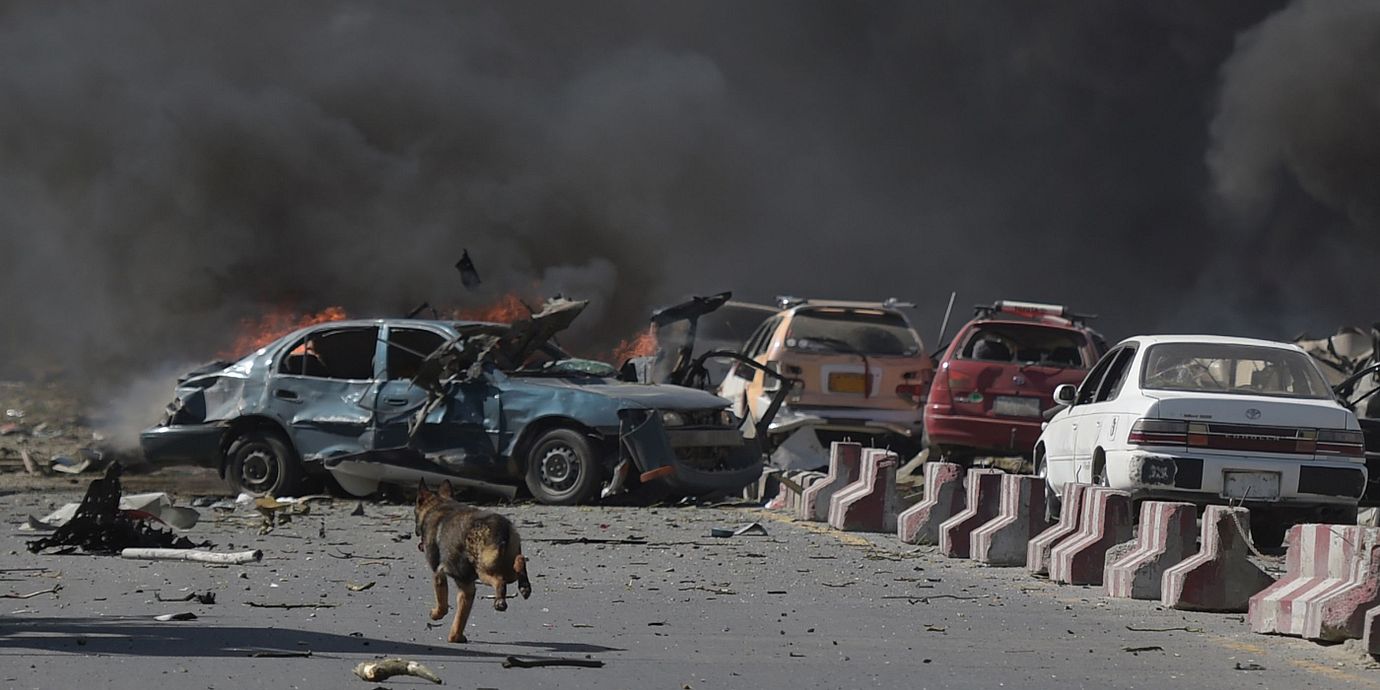
The political history of the modern state of Afghanistan began with the Hotak and Durrani dynasties in the 18th century. In the late 19th century, Afghanistan became a buffer state in the "Great Game" between British India and the Russian Empire. Following the Third Anglo-Afghan War in 1919, King Amanullah unsuccessfully attempted to modernize the country. It remained peaceful during Zahir Shah's forty years of monarchy. A series of coups in the 1970s was followed by a series of civil wars that devastated much of Afghanistan which began when the country became a socialist state under the influence of the Soviet Union during the Soviet–Afghan War. Following the departure of the Soviet forces, the country became an Islamic state under the Peshawar Accord but much of its territory was then held by the Islamic supremacist group, the Taliban who ruled the country as an totalitarian regime for almost five years. Since the September 11 attacks were held in the United States in 2001, in which the Taliban was forcibly removed by the NATO-led coalition, Afghanistan's previous political structure was replaced with a more pro-Western, democratically-elected government.
Afghanistan is a unitary presidential Islamic republic with Islam as an official state religion. It is a member of the United Nations, the Organisation of Islamic Cooperation, the Group of 77, the Economic Cooperation Organization, and the Non-Aligned Movement. The country's economy is ranked 108th in the world with the GDP of $64.08 billion.