Ukraina straffar Ryssland – förbjuder direktflyg
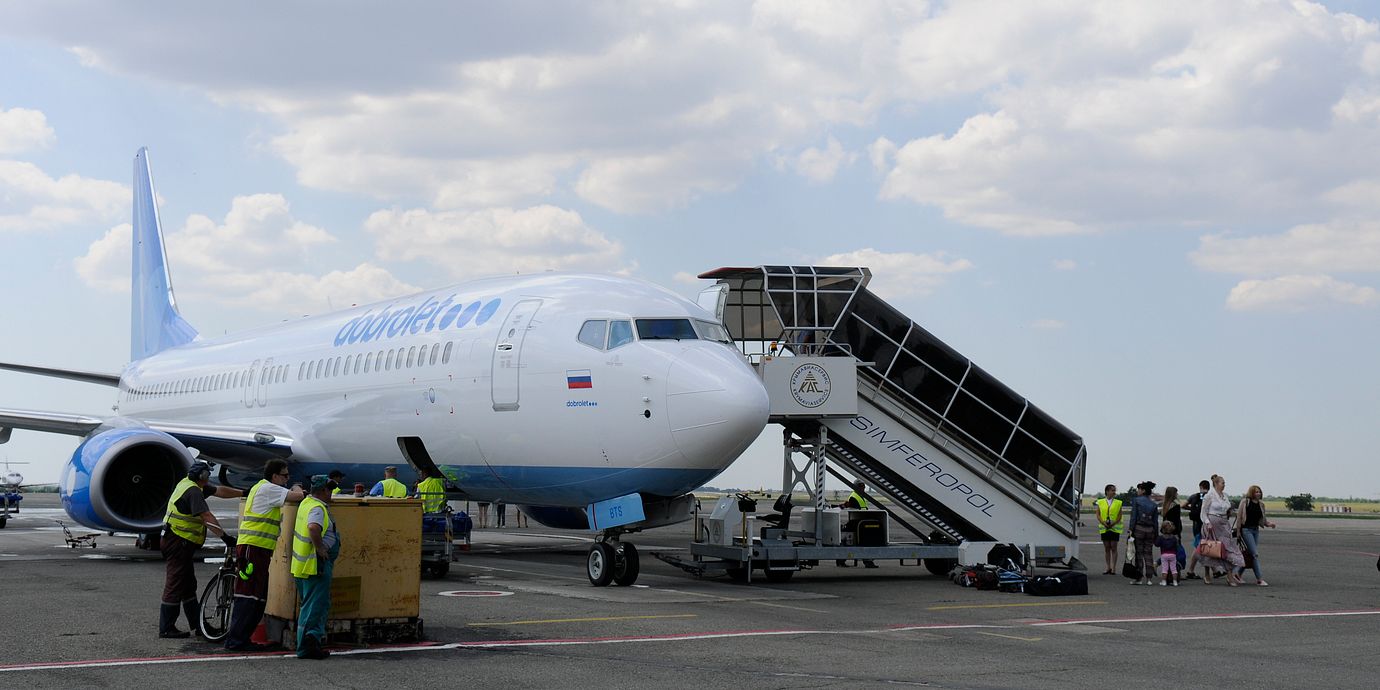
Från och med midnatt kommer det inte längre gå att flyga direkt mellan Ukraina och Ryssland. Flygförbudet är sanktioner från Kiev som svar på annekteringen av Krimhalvön, skriver BBC.
Rysslands regering har kallat metoden för ”galenskap” och menar att Ukraina främst straffar sig själva. De indragna linjerna tros påverka omkring 70 000 människor varje månad.
Moskva har svarat med att porta ukrainska flygbolag från resor till Ryssland.
bakgrund
Relationen mellan Ryssland och Ukraina
Wikipedia (en)
Russia–Ukraine relations (Russian: Российско-украинские отношения, Ukrainian: Українсько-російські відносини) were transitioned into international during 1990s immediately upon the dissolution of the Soviet Union of which both had been founding constituent republics. Established sometime in the 17th century, the relations were discontinued upon liquidation of Cossack Hetmanate's autonomy by the Catherine the Great in the 18th century. For a short period of time the relations were reinstated during the World War I, soon after the Communist October Revolution. In 1920 Ukraine was overrun by Soviet Russia and relations between the two states transitioned from international to internal ones within the Soviet Union.
On 10 February 2015, the Verkhovna Rada registered a draft decree on suspending diplomatic relations with Russia.
Russia has an embassy in Kiev and consulates in Kharkiv, Lviv, and Odessa. Ukraine has an embassy in Moscow and consulates in Rostov-on-Don, Saint Petersburg, Yekaterinburg, Tyumen and Vladivostok. The Ukrainian ambassador to Russia has been called off since March 2014.
Intergovernmental relations between the two countries are complex and since 1991 underwent periods of ties, tensions, and outright hostility. Prior to Euromaidan, under Ukrainian president Viktor Yanukovich (February 2010–February 2014), relations were cooperative, with various trade agreements in place. After the 2014 Ukrainian Revolution, which saw the pro-Russian Yanukovych ousted on 21 February 2014, relations between Russia and Ukraine deteriorated rapidly: the administration in the Autonomous Republic of Crimea was swiftly replaced with one which demanded unification of Crimea with the Russian Federation and demonstrators seized or attempted to seize control of administrative buildings in the Donbass and southern Ukraine. In March 2014, the Russian Federation annexed Crimea following a disputed referendum. Throughout March and April 2014, pro-Russian unrest spread with pro-Russian "People's Republics" being proclaimed in Donetsk and Luhansk. Ukraine suspended military cooperation with, and exports to, Russia Military clashes between pro-Russian rebels with Russian mercenaries and the Armed Forces of Ukraine began in the East of the country in April 2014. On 5 September 2014, a tentative truce (ceasefire) agreement between the Ukrainian government and representatives of the Donetsk People's Republic and Lugansk People's Republic was signed; the ceasefire definitively imploded amidst intense new fighting in January 2015. A new ceasefire agreement has been in place since mid-February 2015.
Some analysts believe that the current Russian leadership is determined to prevent an equivalent of the Ukrainian Orange Revolution in Russia. This perspective is supposed to explain not only Russian domestic policy but its sensitivity to events abroad. Many in Ukraine and beyond believe that Russia has periodically used its vast energy resources to bully its smaller, dependent neighbour, but the Russian government argues it was the internal squabbling amongst Ukraine's political elite that is to blame for the deadlock. The conflict in Ukraine and the alleged role of Russia in it greatly escalated tensions in the relationship between Russia and major Western powers, especially relations between Russia and the US, which caused observers to characterize those in 2014 as assuming an adversarial nature, or the advent of Cold War II.
Omni är politiskt obundna och oberoende. Vi strävar efter att ge fler perspektiv på nyheterna. Har du frågor eller synpunkter kring vår rapportering? Kontakta redaktionen