22 000 IS-medlemmar avslöjas i läckt IS-register
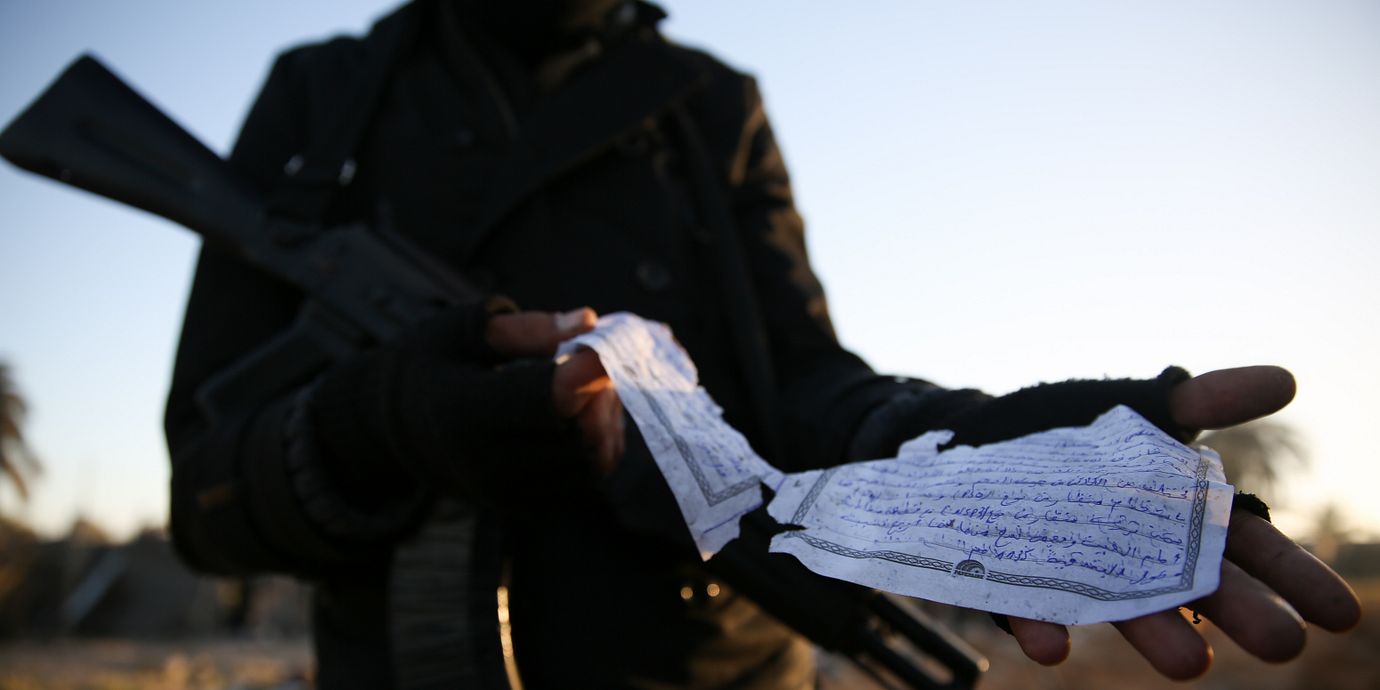
Tiotusentals dokument innehållandes 22 000 namn, adresser, telefonnummer och uppgifter om familjer. Det uppger Sky News sig ha kommit över via en ”desillusionerad avhoppare” från terrorgruppen Islamiska staten.
Dokumenten uppges innehålla information om personer från 51 länder – uppgifter som de själva lämnat ifrån sig i samband med att de anslutit sig till terrorgruppen. Sky News beskriver dokumenten som ”ansökningshandlingar”.
Mediebolaget har träffat avhopparen i Turkiet där han uttrycker sin besvikelse över ledarskapet inom terrorgruppen, som han menar helt har tagits över av före detta soldater från den tidigare irakiska diktatorn Saddam Husseins Baathparti.
bakgrund
Baathpartiet
Wikipedia (en)
The Arab Socialist Ba'ath Party (Arabic: حزب البعث العربي الاشتراكي Ḥizb Al-Ba‘ath Al-‘Arabī Al-Ishtirākī) was a political party founded in Syria by Michel Aflaq, Salah al-Din al-Bitar and associates of Zaki al-Arsuzi. The party espoused Ba'athism (from Arabic: البعث Al-Ba'ath or Ba'ath meaning "renaissance" or "resurrection"), which is an ideology mixing Arab nationalist, pan-Arabism, Arab socialist and anti-imperialist interests. Ba'athism calls for unification of the Arab world into a single state. Its motto, "Unity, Liberty, Socialism", refers to Arab unity, and freedom from non-Arab control and interference.
The party was founded by the merger of the Arab Ba'ath Movement, led by Aflaq and al-Bitar, and the Arab Ba'ath, led by al-Arsuzi, on 7 April 1947 as the Arab Ba'ath Party. The party quickly established branches in other Arab countries, although it would only hold power in Iraq and Syria. The Arab Ba'ath Party merged with the Arab Socialist Party, led by Akram al-Hawrani, in 1952 to form the Arab Socialist Ba'ath Party. The newly formed party was a relative success, and became the second-largest party in the Syrian parliament in the 1954 election. This, coupled with the increasing strength of the Syrian Communist Party, led to the establishment of the United Arab Republic (UAR), a union of Egypt and Syria. The union would prove unsuccessful, and a Syrian coup in 1961 dissolved the union.
Following the break-up of the UAR, the Ba'ath Party was reconstituted. However, during the UAR, military activists had established the Military Committee to take control of the Ba'ath Party from civilian hands. In the meantime, in Iraq, the local Ba'ath Party branch had taken power by orchestrating and leading the Ramadan Revolution, only to lose power a couple of months later. The Military Committee, with Aflaq's consent, took power in Syria in the 8th of March Revolution of 1963.
A power struggle quickly developed between the civilian faction led by Aflaq, al-Bitar and Munif al-Razzaz and the Military Committee led by Salah Jadid and Hafez al-Assad. As relations between the two factions deteriorated, the Military Committee initiated the 1966 Syrian coup d'état which ousted the National Command led by al-Razzaz, Aflaq and their supporters. The 1966 coup split the Ba'ath Party between the Iraqi-dominated Ba'ath movement and the Syrian-dominated Ba'ath movement.
Omni är politiskt obundna och oberoende. Vi strävar efter att ge fler perspektiv på nyheterna. Har du frågor eller synpunkter kring vår rapportering? Kontakta redaktionen